

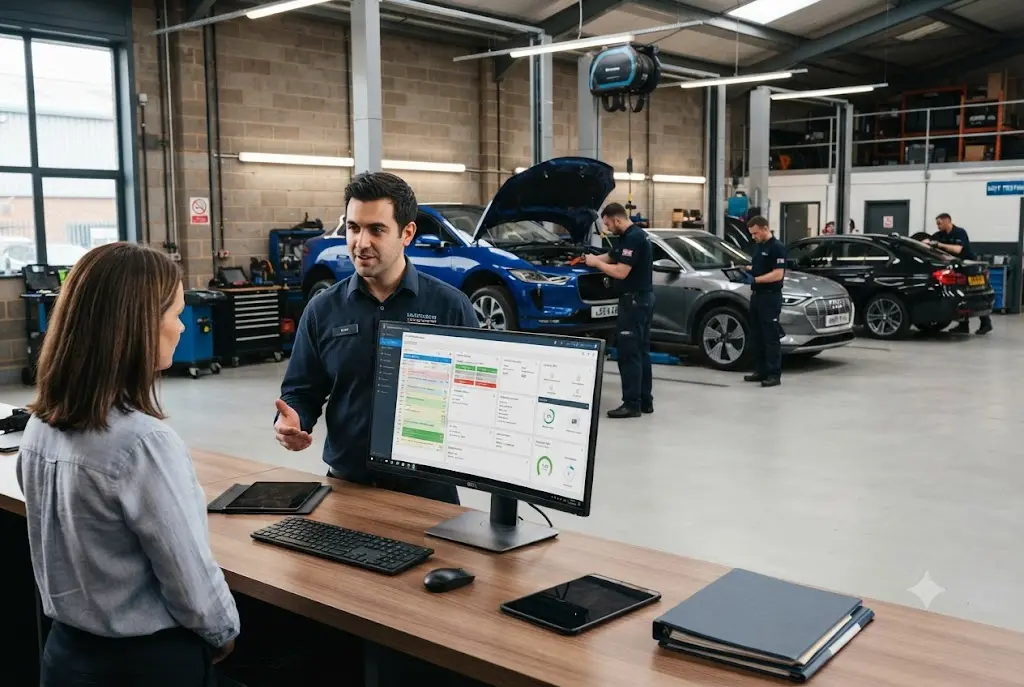
Automotive software is becoming an essential part of modern garage operations across the UK. As workshops handle more bookings, increasingly complex vehicles and higher customer expectations, digital systems can help organise everything from appointment scheduling and job management to invoicing, customer communication and vehicle records.
For a small independent garage, the right software can reduce repetitive administration and give staff a clearer view of daily work. For larger garage chains, connected systems can provide a consistent way to manage multiple sites. In both cases, technology works best when it supports technicians and front-of-house teams rather than adding unnecessary complexity.
The move towards digital garage operations also connects with wider developments in the automotive aftermarket. Hybrid and electric vehicles require new diagnostic capabilities, while equipment such as digital wheel alignment systems increasingly produces electronic data. A capable software platform can help bring these different parts of workshop management together.
What Is Automotive Software?
Automotive software refers to digital tools designed to help vehicle-related businesses manage their operational, administrative and customer-facing activities. Depending on the platform, this can include workshop scheduling, service bookings, vehicle records, estimates, invoices, parts management, customer notifications and business reporting.
Some systems are designed specifically for independent garages, while others are built for larger multi-site operations. The features can therefore vary considerably.
At its simplest, automotive software replaces fragmented spreadsheets, paper records and disconnected processes with a central digital system. More advanced platforms can connect multiple workflows so that information entered during a booking can continue through the repair process and into invoicing and customer follow-up.
Why Automotive Software Matters for UK Garages
Running a workshop involves much more than repairing vehicles. Staff need to manage appointments, communicate with customers, allocate technicians, order parts, track work and complete financial administration.
When these activities are handled manually, information can become scattered across notebooks, spreadsheets, emails and separate applications. This can make it harder to see what is happening across the workshop.
Automotive software provides a central place for many of these activities. A service adviser can see upcoming appointments, workshop staff can access job information, and management can review operational data without relying entirely on separate records.
This becomes especially useful as a garage grows. More technicians, more bookings and additional service bays naturally create more information to coordinate.
Key Features of Modern Workshop Software
Not every garage needs the same technology, but several features are particularly useful across the automotive aftermarket.
Workshop scheduling
Workshop scheduling helps garages organise appointments around available technicians, service bays and expected job durations. Instead of maintaining a purely manual diary, staff can use a digital calendar to understand the workload throughout the day.
Good scheduling can also make it easier to identify busy periods and avoid unnecessary clashes between appointments.
Service booking software
Service booking software can connect customer enquiries with workshop availability. Customers may be able to request or book an MOT, service, inspection or repair through an online interface.
This can reduce the number of routine booking calls and give customers more flexibility. For garage businesses, online bookings can also provide information before the vehicle arrives.
Digital booking is particularly relevant to larger garage networks, where customers may need to select a location based on availability. This creates a direct connection between the digital customer journey and the physical workshop.
Vehicle and customer records
A workshop needs accurate information about the vehicles it services and the customers associated with them. Digital records can bring together registration details, previous work, service information and customer contact details in one place.
When customers return, staff can review relevant history instead of starting the process from scratch. This can make conversations more efficient and help the workshop understand previous work carried out on the vehicle.
Estimates and invoicing
Repair and maintenance work often involves changing requirements once a vehicle has been inspected. Software can help garages create estimates, record additional work and produce invoices based on the completed job.
A connected process can reduce duplicate data entry. For example, information recorded against a job can potentially flow into the invoice instead of being manually recreated.
Garage Management Systems and Workshop Automation
Garage management systems are designed to bring several operational functions together. Rather than using separate tools for appointments, customer information and job administration, a workshop may use one platform as its central operational system.
Workshop automation can then reduce repetitive administrative tasks. Automated appointment reminders, customer notifications and internal workflow prompts are examples of processes that can save staff time.
Automation does not mean removing human involvement. Vehicle repairs still require skilled technicians and professional judgement. Instead, automation can handle predictable administrative steps so staff can spend more time on activities that require experience and attention.
Reducing administrative repetition
Consider a customer booking a service online. Without connected software, staff might need to manually transfer the booking into a diary, create a customer record, prepare paperwork and later update another system when the job is completed.
A connected platform can potentially reduce these repeated steps by carrying relevant information through the workflow.
Improving workshop visibility
Digital job boards can provide a clearer picture of which vehicles are waiting, being inspected, undergoing repairs or ready for collection. This can help service advisers communicate more accurately with customers.
For workshop managers, visibility can also help identify bottlenecks. If vehicles are consistently waiting for parts or technician time, operational data may highlight an area that needs attention.
Cloud Garage Platforms: What Are the Benefits?
Cloud garage platforms allow workshop data and applications to be accessed through internet-connected systems rather than relying entirely on software installed on one local computer.
This can be useful for garages with multiple users or locations. Staff may be able to access relevant information from different devices, while management teams can have broader visibility across operations.
Cloud systems can also simplify software updates because the provider can manage the underlying platform centrally. However, businesses should still assess security, access controls, backups, support and data handling before choosing a solution.
The most important consideration is not whether a platform is labelled “cloud”. It is whether the system is reliable, secure and practical for the garage’s actual workflow.
Automotive Software and MOT Operations
MOT testing is an area where digital records and regulated processes already play an important role. The Driver and Vehicle Standards Agency states that the electronic MOT record is the legal record of the test, and authorised testers record test results through the MOT testing service.
Garage businesses involved in MOT testing therefore need systems and procedures that work alongside the official testing environment. The DVSA MOT testing guide provides the official requirements and guidance for authorised MOT test stations in England, Scotland and Wales.
This illustrates an important point about workshop technology: automotive software does not operate in isolation. Garage systems may need to interact with regulated processes, diagnostic equipment and other industry platforms while maintaining appropriate data security.
Repair Management Software for Modern Workshops
Repair management software focuses on organising the work involved when a vehicle needs investigation or repair. This can include creating a job, recording inspection findings, preparing estimates, assigning work and tracking completion.
For larger repairs, having a structured digital workflow can be especially useful. A vehicle may move through several stages before it is ready for collection, and multiple staff members may need access to the same job information.
Digital repair records can also help service advisers communicate with customers. Instead of relying on informal updates, staff can refer to the information recorded against the job when discussing work that has been recommended or completed.
How Automotive Software Supports Customer Experience
Customers rarely see the complete workshop management system, but they experience its effects throughout the service journey.
An online booking process can make arranging a visit easier. Automated reminders can reduce missed appointments. Digital estimates can make proposed work easier to review. Timely progress updates can help customers understand what is happening with their vehicle.
These small improvements can influence how professional and organised a garage appears.
For garage chains, consistency is particularly important. A centralised software platform can help different branches follow similar booking and communication processes while still allowing local teams to manage individual repairs.
This supports the broader development of garage chains and digital garage networks, where technology connects multiple physical workshops with a more consistent customer experience.
Preparing Software for Hybrid and Electric Vehicles
Vehicle technology is changing quickly, and garage software needs to support workshops dealing with new powertrains.
Hybrid vehicles can involve battery systems, electric motors, high-voltage components and electronic control systems alongside a conventional engine. Workshops therefore need appropriate training, diagnostic equipment and processes.
Our guide to hybrid servicing explores the maintenance side of this transition in more detail.
Electric vehicles introduce further considerations, including battery management, charging systems, thermal management and software-controlled vehicle functions. Garages planning to expand their EV capabilities should consider whether their wider digital systems can support these new workflows.
The growing role of software in vehicles also means technicians may increasingly need to interpret digital diagnostic information rather than relying only on traditional mechanical inspection.
Connecting Workshop Software with Diagnostic Technology
Modern garages increasingly use electronic diagnostic equipment to investigate faults. A useful software environment should make it easy for staff to record relevant findings and connect technical information with the customer job.
This does not mean every diagnostic device must be directly integrated into every garage management system. Instead, businesses should look for practical ways to avoid duplicated work and keep important information accessible.
As connected vehicles become more common, this relationship between workshop software and diagnostic technology is likely to become increasingly important.
What Should Garages Consider Before Choosing Software?
Buying automotive software is a significant operational decision. The most expensive or feature-heavy system is not automatically the best choice.
Workshop fit
Start with the actual workflow. Consider how customers book, how vehicles are checked in, how jobs are allocated, how technicians receive information and how completed work is invoiced.
The software should simplify these processes rather than forcing the business into an unnecessarily complicated structure.
Ease of use
Technicians and service advisers need to use the system during busy working conditions. A complicated interface can create resistance and lead staff to develop workarounds.
Clear navigation, sensible workflows and appropriate user permissions can make adoption much easier.
Integration
Consider whether the platform can work alongside existing accounting, booking, diagnostic or customer communication systems. Strong integration can reduce duplicate data entry and help maintain consistent information.
Scalability
A growing garage should consider future requirements. A system that works for one workshop may need additional capabilities when the business adds service bays, technicians or locations.
Security and data protection
Garage systems can contain customer contact information, vehicle details and operational data. Businesses should assess how information is stored, who can access it and what security measures are available.
This is particularly important when using cloud garage platforms or connecting multiple sites to a central system.
The Future of Automotive Software
Automotive software is likely to become increasingly connected as workshops deal with more digital vehicle systems and customer expectations continue to evolve.
Future platforms may make greater use of automated diagnostics, connected vehicle information, predictive maintenance data and intelligent scheduling. However, the most useful technology will remain focused on solving practical workshop problems.
Garage owners do not need technology simply for the sake of digitalisation. They need systems that help staff work efficiently, give customers useful information and provide managers with better operational visibility.
The wider shift towards hybrid and electric vehicles will reinforce this requirement. As discussed in our EV servicing guide, electric vehicle maintenance introduces new technical considerations that workshops need to accommodate.
Final Thoughts on Automotive Software
Automotive software has moved beyond basic digital record keeping. Modern workshop platforms can connect bookings, customer records, repair management, scheduling, invoicing and operational reporting into a more structured workflow.
For UK garages, the value comes from using these tools intelligently. A good system can reduce administrative repetition, improve visibility and create a smoother customer journey while allowing technicians to focus on vehicle maintenance and repair.
As garage chains expand their digital operations and workshops prepare for hybrid and electric vehicles, software will become an increasingly important part of the modern automotive aftermarket. The strongest platforms will be those that connect people, vehicles, workshop processes and customer service without making everyday operations unnecessarily complicated.
