

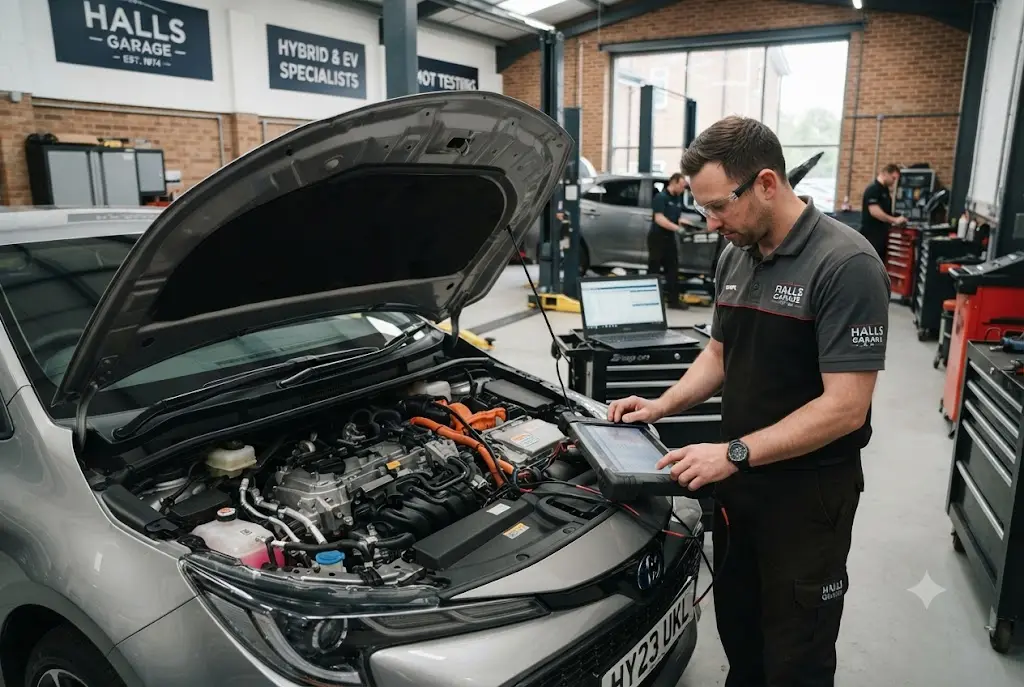
Hybrid servicing is becoming an increasingly important part of vehicle maintenance in the UK as more drivers choose cars that combine an internal combustion engine with electric propulsion. Although hybrids share some familiar components with conventional cars, their electrical systems, batteries, motors and control electronics introduce additional maintenance requirements.
For motorists, understanding how hybrid services differ from conventional servicing can make it easier to choose an appropriate garage and recognise the importance of specialist equipment. For workshops, hybrid technology creates a need for suitable diagnostic tools, technician training, safety procedures and digital systems.
Modern hybrid maintenance is therefore about more than checking the engine and replacing consumable parts. Technicians may also need to assess the vehicle’s hybrid system, electronic controls and battery-related components. This is where smart diagnostic technology and connected workshop processes are becoming increasingly valuable.
What Is Hybrid Servicing?
Hybrid servicing is the inspection, maintenance and repair of vehicles that use both an internal combustion engine and an electric drive system. The exact service requirements vary according to the vehicle manufacturer, model, age, mileage and hybrid architecture.
A hybrid can contain many of the familiar components found in petrol-powered vehicles, including brakes, suspension, steering, tyres, fluids and an engine. However, it also has additional electrical components that require appropriate knowledge and equipment.
Some hybrids use electric motors primarily to assist the combustion engine, while others can drive using electric power under suitable conditions. Plug-in hybrids add another dimension because their larger batteries can be charged externally.
Consequently, hybrid servicing needs to account for both conventional mechanical maintenance and the vehicle’s electrical systems.
Why Hybrid Servicing Requires Specialist Knowledge
Hybrid vehicles contain high-voltage electrical systems that require appropriate precautions. The Health and Safety Executive notes that people working in motor vehicle repair may need additional skills, knowledge, specialist tools and equipment when working with electric and hybrid vehicles. ([HSE](https://www.hse.gov.uk/mvr/topics/electric-hybrid.htm))
This is important because hybrid systems can contain components operating at substantially higher voltages than the traditional 12-volt electrical systems found in conventional vehicles.
Technicians working on relevant components need to understand the vehicle-specific procedures for isolation, testing and repair. The correct approach can vary between manufacturers and models, so garages should use reliable manufacturer information and appropriate technical guidance.
For drivers, this means that choosing a garage with suitable hybrid capability can be an important part of responsible vehicle maintenance.
What Is Checked During Hybrid Services?
The precise contents of hybrid services depend on the manufacturer’s service schedule and the vehicle’s condition. However, a comprehensive inspection may involve both conventional maintenance and checks relating to the hybrid system.
Engine and conventional components
The petrol engine in a hybrid still requires appropriate maintenance. Depending on the vehicle, technicians may inspect or replace engine oil, filters, spark plugs and other scheduled service items.
Brakes, tyres, suspension, steering, cooling systems and other mechanical components also remain important. A hybrid is still a road vehicle that needs regular safety and maintenance checks.
Hybrid system inspection
The hybrid system can include an electric motor, inverter, battery pack, high-voltage cabling and electronic control systems. Appropriate diagnostic and inspection procedures can help identify faults or abnormalities.
Technicians should follow the manufacturer’s procedures when working around high-voltage components. The HSE advises that vehicle-specific information should be used when determining the precautions required for maintenance and repair. ([HSE](https://www.hse.gov.uk/mvr/topics/electric-hybrid.htm))
Battery-related checks
The hybrid battery is one of the most important components in the vehicle’s electric powertrain. Depending on the manufacturer and model, servicing may involve assessing battery condition, cooling systems, diagnostic information or other relevant components.
A battery inspection does not necessarily mean dismantling or physically opening the battery pack. In many cases, diagnostic systems can provide useful information about the vehicle’s hybrid system while technicians follow manufacturer-specific procedures.
Hybrid Battery Management Explained
Hybrid battery management is an important part of modern vehicle technology. The battery management system helps monitor and control battery operation, including factors such as charge and discharge behaviour and system conditions.
The exact technology varies between manufacturers, but the underlying principle is to keep the battery operating within appropriate parameters while coordinating power between the battery, electric motor and combustion engine.
Because the battery is integrated into the wider powertrain, problems affecting related components can influence hybrid operation. This makes accurate diagnosis more useful than simply replacing parts based on a warning light.
For workshops, reliable diagnostic information can help distinguish between different potential causes of a fault and determine what further testing may be required.
Hybrid Diagnostics and Modern Workshop Technology
Hybrid diagnostics are becoming an increasingly important skill for automotive technicians. Modern diagnostic systems can communicate with electronic control modules and help identify fault codes or system abnormalities.
However, diagnostic equipment is only one part of the process. A fault code does not automatically mean that the component named in the code needs replacing. Skilled technicians need to interpret diagnostic information alongside vehicle symptoms, manufacturer procedures and physical inspection.
This is one reason hybrid servicing benefits from a combination of technician expertise and appropriate digital tools.
Electronic health checks
Some manufacturers and service networks use electronic vehicle health checks to identify maintenance issues and provide customers with digital information about the condition of their vehicle.
Toyota UK, for example, states that its service process can include an electronic vehicle health check, while its hybrid programme includes checks of the hybrid system and hybrid battery. ([Toyota UK](https://www.toyota.co.uk/hybrid))
These systems illustrate how modern hybrid maintenance can combine physical inspection with electronic information.
Toyota Hybrid Service: What Drivers Should Know
Toyota has one of the longest-established hybrid vehicle ranges in the UK, making Toyota hybrid service a useful example when discussing the wider hybrid servicing market.
Toyota UK states that its hybrid vehicles should generally be serviced every 12 months or 10,000 miles, whichever comes first, although drivers should always follow the service requirements for their specific vehicle. Toyota also describes checks of the hybrid system and battery as part of its Hybrid Service offering. ([Toyota UK](https://www.toyota.co.uk/hybrid))
For Toyota owners, service history can therefore be particularly relevant when maintaining a hybrid vehicle over the long term. Toyota also provides online service booking and digital service-history access through its customer services. ([Toyota UK](https://www.toyota.co.uk/owners/servicing-and-aftercare/service-mot-maintenance))
However, Toyota is only one example. Other manufacturers use different hybrid architectures, service intervals and diagnostic procedures, so a generic hybrid checklist should never replace the manufacturer’s maintenance schedule.
Do Hybrid Cars Need More Maintenance?
It is tempting to assume that hybrids automatically require more servicing because they contain additional technology. In reality, the maintenance requirement depends on the vehicle and its manufacturer.
Some hybrid components can reduce wear on certain conventional systems. For example, regenerative braking can change how frequently conventional friction brakes are used. At the same time, hybrid vehicles introduce additional electrical components that require appropriate diagnostic knowledge.
The important point is that hybrid maintenance is different rather than simply more extensive in every respect.
Drivers should follow the manufacturer’s recommended schedule and arrange inspections when warning lights, unusual behaviour or other symptoms appear.
Smart Hybrid Maintenance and Preventive Care
Smart hybrid maintenance means using service information, diagnostic data and regular inspections to identify potential issues before they develop into larger problems.
Preventive maintenance can include keeping scheduled services up to date, monitoring warning messages, checking tyres and brakes, and responding promptly to unusual vehicle behaviour.
Drivers should also pay attention to the vehicle’s handbook. Service intervals, fluid specifications and inspection requirements can vary considerably between hybrid models.
Digital service records can make this process easier. When maintenance information is stored electronically, owners and workshops may have a clearer history of previous work.
Hybrid Servicing and Brake Maintenance
Braking systems deserve particular attention on hybrid vehicles. Regenerative braking allows the electric motor to contribute to slowing the vehicle, which can alter the balance between regenerative and conventional friction braking.
That does not mean conventional brakes can be ignored. Brake discs, pads, callipers and related components still need inspection according to the vehicle’s condition and service requirements.
A technician should assess the braking system as part of the wider vehicle inspection rather than assuming that regenerative braking eliminates conventional brake maintenance.
Cooling Systems Are Important Too
Hybrid powertrains can rely on thermal management to keep various components within appropriate operating temperatures. Depending on the design, cooling systems may serve the engine, inverter, battery or other components.
Maintaining the correct coolant level and condition is therefore part of following the vehicle manufacturer’s service requirements.
Because hybrid designs vary, technicians should use model-specific information rather than applying one generic cooling-system procedure to every vehicle.
Hybrid Software and Connected Vehicle Systems
Software is increasingly important to hybrid vehicles. Electronic control systems coordinate the interaction between the engine, battery, motor and other components.
This means hybrid software can influence how technicians diagnose faults and understand vehicle behaviour. As connected workshop systems become more advanced, diagnostic information can also become part of a broader digital service record.
This connects hybrid maintenance with the wider role of automotive software, where workshop management systems can help organise customer records, service bookings and repair information.
For larger businesses, connected digital systems can also help standardise workflows across multiple locations. This is particularly relevant to garage chains and digital garage networks serving customers with increasingly technology-heavy vehicles.
Choosing a Garage for Hybrid Services
Not every workshop will have the same level of hybrid capability. Before booking hybrid services, motorists should consider whether the garage has appropriately trained technicians and equipment for the vehicle they own.
Useful questions may include:
- Does the workshop regularly service hybrid vehicles?
- Do its technicians have relevant hybrid training?
- Does the garage have suitable diagnostic equipment?
- Can it follow manufacturer-specific service information?
- Does it have appropriate safety procedures for high-voltage systems?
For routine servicing, a qualified workshop with the appropriate equipment may be suitable. For complex high-voltage repairs, the required level of technical competence can be significantly higher.
Hybrid Vehicle Safety in the Workshop
Safety is one of the most important differences between conventional and hybrid vehicle maintenance. High-voltage systems require controlled procedures, suitable tools and appropriate competence.
The HSE identifies different levels of work involving electric and hybrid vehicles, ranging from lower-risk activities to maintenance and work on high-voltage electrical systems. It also states that the competence required depends on the work being undertaken. ([HSE](https://www.hse.gov.uk/mvr/topics/electric-hybrid.htm))
This means a garage should not assume that general mechanical experience alone is sufficient for every hybrid repair. Appropriate training and manufacturer-specific procedures matter, particularly when work involves high-voltage components.
Hybrid Servicing as the UK Vehicle Market Evolves
Hybrid vehicles occupy an important position between conventional petrol and diesel cars and fully electric vehicles. They allow manufacturers and drivers to combine internal combustion technology with electric propulsion, creating a different set of service requirements.
For garages, the growth of hybrid vehicles means that traditional mechanical expertise increasingly needs to be complemented by electronic diagnostics, high-voltage safety knowledge and digital workshop processes.
It also creates opportunities for businesses that invest in technician training and appropriate equipment. As vehicle technology develops, workshops capable of confidently servicing multiple powertrain types can offer broader support to motorists.
The transition also connects naturally with the growing importance of EV servicing. Although hybrid and fully electric vehicles are not identical, both require workshops to understand high-voltage electrical systems and increasingly software-driven vehicle technology.
Final Thoughts on Hybrid Servicing
Hybrid servicing combines many familiar vehicle maintenance tasks with additional checks relating to electric motors, batteries, electronic control systems and high-voltage components.
For drivers, the most important step is to follow the manufacturer’s maintenance schedule and choose a workshop with appropriate hybrid knowledge and equipment. For garages, investing in training, diagnostics and safe working procedures can help them meet the needs of modern hybrid vehicles.
As hybrid technology continues to evolve, smart maintenance will depend on bringing together skilled technicians, accurate diagnostic information and well-managed digital service processes. That combination can help workshops maintain modern hybrid vehicles safely and effectively while giving UK motorists greater confidence in the technology that powers their cars.
