

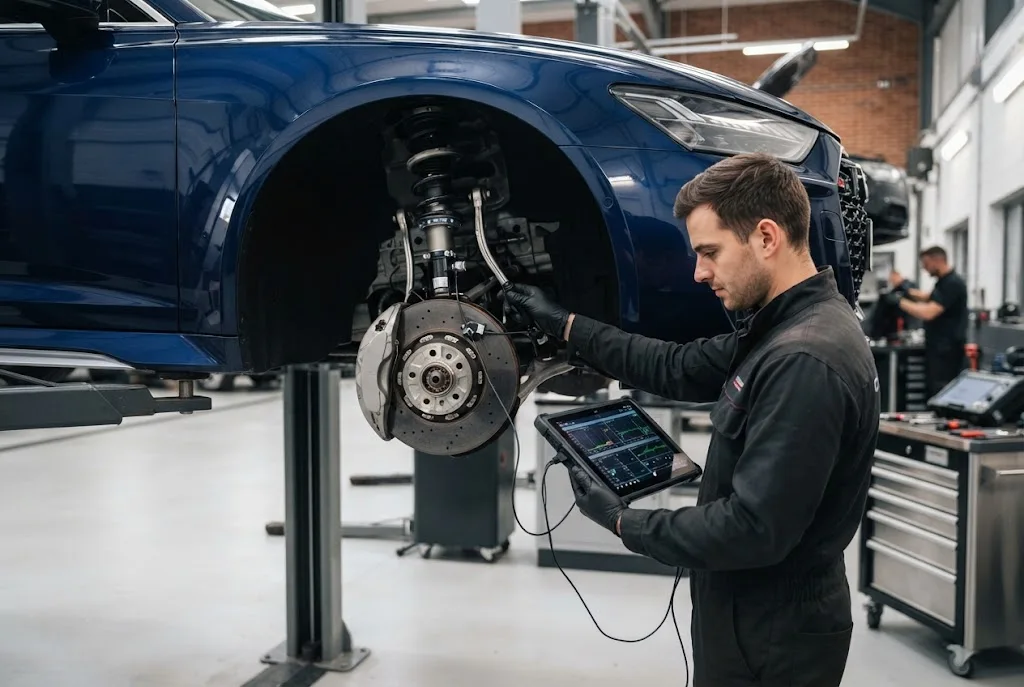
For drivers, this technology can make it easier to understand problems such as uneven tyre wear, excessive bouncing, steering changes, unusual noises or poor handling. For workshops, combining physical inspections with sensor data and diagnostic equipment provides a broader view of how suspension and steering systems are performing.
Why Suspension Repair Is Becoming More Advanced
A vehicle’s suspension does much more than provide a comfortable ride. It helps keep the tyres in contact with the road while supporting steering, braking and overall vehicle stability. When suspension components become worn or damaged, the effects can extend beyond ride quality.
Modern vehicles can also include electronically controlled suspension, ride-height sensors and other components connected to vehicle control systems. As a result, a suspension problem may sometimes involve both mechanical and electronic factors.
This is why modern workshops increasingly combine traditional inspection methods with suspension diagnostics. The diagnostic process does not replace physical inspection, but it can provide additional information when investigating complex faults.
What Suspension Diagnostics Can Identify
Suspension diagnostics can help technicians investigate electronic faults, sensor-related problems and unusual vehicle behaviour. Depending on the vehicle, diagnostic equipment may communicate with relevant control modules and identify stored fault information.
A diagnostic result should not automatically be treated as proof that a particular component has failed. Instead, it provides a starting point for further testing. A technician may then inspect wiring, sensors, suspension components and associated systems before confirming the cause.
This approach can be particularly useful when a vehicle has an intermittent warning or handling problem that is difficult to reproduce during a short road test.
The Role of Steering Sensors
Steering sensors are an important part of many modern vehicle stability and driver-assistance systems. Information about steering angle and vehicle movement can be used by electronic control systems when determining how the vehicle is behaving.
If sensor information is incorrect, a vehicle may display warning messages or behave differently from what the driver expects. However, the underlying cause can vary. A sensor fault may be caused by the sensor itself, wiring, calibration or another related issue.
Proper diagnosis therefore matters. Replacing a component without identifying the actual cause can result in unnecessary repairs and may leave the original problem unresolved.
Smart Suspension and Adaptive Suspension
Smart suspension systems can use electronic information to influence how a vehicle responds to changing road and driving conditions. More advanced vehicles may use adaptive suspension technology to adjust damping or other suspension characteristics according to available vehicle data.
These systems introduce additional components compared with a conventional suspension setup. Sensors, control modules and electronically controlled dampers can all form part of the system.
Consequently, technicians working on vehicles equipped with adaptive technology may need both mechanical knowledge and suitable diagnostic equipment. A conventional visual inspection remains important, but electronic testing can also be necessary when the vehicle reports a system fault.
Suspension Monitoring and Vehicle Condition
Suspension monitoring can provide useful information about changes in vehicle behaviour over time. Depending on the technology available, monitoring may involve sensor readings, warning information or data from electronic vehicle systems.
The practical value of monitoring is strongest when it is combined with service history. A workshop that can review previous inspection findings may have more context when investigating a new problem.
For example, a vehicle with a history of uneven tyre wear may require technicians to examine several related areas rather than focusing only on the tyres. Suspension condition, steering geometry and wheel alignment can all influence how tyres wear and how a vehicle behaves on the road.
Vehicle Stability Systems and Suspension
Vehicle stability systems rely on information from multiple parts of a vehicle to help manage traction, steering and braking behaviour. Suspension condition can therefore have an important relationship with the wider stability system.
Electronic stability functions can use information from sensors associated with wheel speed, steering and vehicle movement. When a warning appears, the problem may not necessarily originate from the suspension itself. It may require broader diagnostic investigation.
This is another reason why modern suspension repair can involve more than replacing a worn mechanical component. Technicians may need to understand how suspension, steering and electronic safety systems interact.
Suspension Analytics for Workshops
Suspension analytics involves using available vehicle information and inspection records to identify patterns. In a workshop environment, historical data can help technicians understand whether a vehicle has experienced repeated suspension-related issues.
For fleet operators, the potential benefits can be greater because maintenance teams may manage many vehicles with different service histories. Organised inspection data can help identify vehicles that require closer attention or recurring checks.
Analytics should remain a supporting tool rather than a replacement for physical inspection. Suspension components can deteriorate in ways that electronic data alone cannot fully describe.
Steering Diagnostics and Suspension Problems
Steering diagnostics can be useful when a driver reports pulling, unusual steering behaviour, instability or changes in steering response. These symptoms can involve steering components, suspension components, wheel alignment or electronic systems.
A structured diagnostic process helps narrow down the possible causes. The technician can combine electronic information with physical inspection and relevant measurements before deciding whether repair or adjustment is required.
This broader approach can also prevent related problems from being overlooked. For instance, replacing a suspension component without checking alignment afterwards may leave the vehicle with incorrect geometry.
Signs Your Vehicle May Need Suspension Repair
Drivers should pay attention to noticeable changes in the way their vehicle handles. Common warning signs can include excessive bouncing after travelling over bumps, unusual knocking sounds, uneven tyre wear, vehicle pulling to one side or a noticeable change in steering response.
A visible fluid leak around a damper or shock absorber can also warrant professional inspection. However, symptoms alone cannot reliably identify the failed component. Several suspension or steering issues can produce similar driving sensations.
That is why professional inspection remains important. A workshop can assess the vehicle systematically rather than relying on one symptom to determine the repair required.
How Suspension Repair Connects With Other Vehicle Systems
Suspension technology does not operate in isolation. Vehicle handling can also be affected by tyres, wheel geometry, steering components and braking systems.
For example, braking behaviour and suspension condition can influence the driver’s perception of stability. Modern brake services can use diagnostic equipment and sensor information to investigate electronic braking systems alongside conventional mechanical inspections.
Likewise, wheel alignment can be particularly relevant when suspension components have been replaced or when a vehicle shows uneven tyre wear. Connecting these maintenance areas helps create a more complete picture of vehicle condition.
The Future of Suspension Technology
As vehicles become more connected, suspension systems are likely to generate and use more electronic information. Workshops may increasingly rely on diagnostic platforms that bring together sensor readings, fault information, inspection records and service history.
This development could make suspension maintenance more data-driven. However, technology will continue to work alongside fundamental mechanical inspection. Components still need to be examined for wear, damage, corrosion and other physical problems.
The future of suspension repair is therefore likely to combine two approaches: experienced technicians assessing physical components and intelligent systems providing additional information about how the vehicle is operating.
Choosing a Workshop for Modern Suspension Repair
When choosing a workshop, drivers with modern or electronically controlled suspension can ask whether the business has appropriate diagnostic equipment for their vehicle. This is particularly relevant for vehicles equipped with adaptive suspension or multiple electronic stability systems.
A professional inspection should clearly explain what has been found and why a particular repair has been recommended. Where electronic diagnostics are involved, technicians should interpret the results rather than simply replacing components based on a stored fault code.
Ultimately, smart suspension technology can make vehicle maintenance more informed, but it does not remove the need for skilled inspection. Combining suspension diagnostics, steering sensors, physical checks and appropriate measurements gives workshops a stronger foundation for maintaining safe and predictable vehicle handling.
