

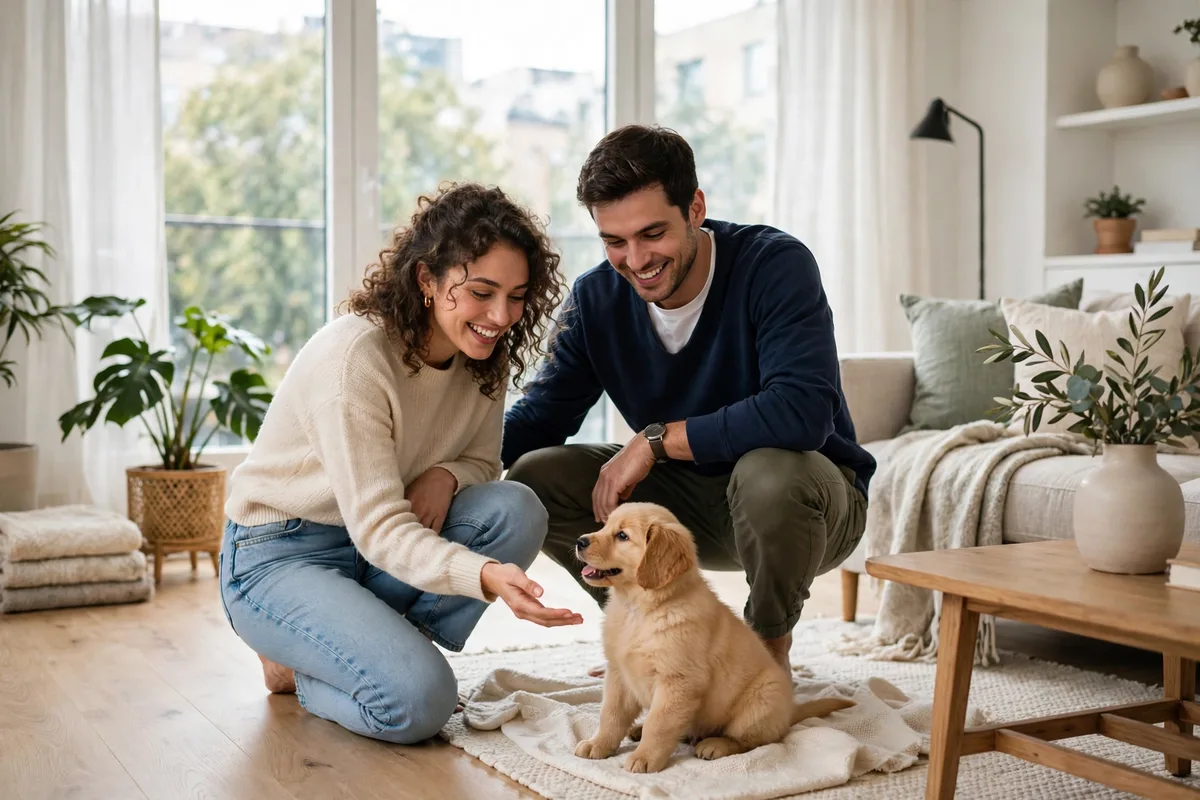
Bringing home a puppy is one of the most exciting moments for any household, but the first few days can also feel overwhelming if you are not prepared. A puppy leaves its mother and littermates, travels to a strange place and meets new people, sounds and smells all at once. How you handle that transition shapes how quickly your puppy settles, how house training progresses and how confident your dog becomes. This guide walks first-time owners through everything that matters, from preparing your home before collection day to feeding, sleep, house training and early socialisation.
Before Bringing Home a Puppy: Preparing Your Home
Good preparation removes most of the stress from the first week. Start by puppy-proofing the rooms your puppy will use. Get down to puppy height and look for hazards: trailing cables, cleaning chemicals, small objects that could be swallowed, houseplants, and gaps under furniture where a small puppy could become stuck. A stair gate across doorways and a playpen or crate give your puppy a safe area while you cannot supervise directly.
Stock up on the essentials before collection day. You will need a collar and lead, an ID tag with your phone number, food and water bowls, the food your puppy is already eating, puppy training pads, an enzymatic cleaner for accidents, chew toys, a comfortable bed and poop bags. If you are redesigning shared spaces to work better for everyone at home, our guide to creating comfortable and safe living spaces has useful ideas on layouts that put safety first without sacrificing comfort. Decide in advance where your puppy will sleep, eat and toilet, because consistency from day one makes training far easier.
The First 24 Hours With Your Puppy
Keep the first day calm. Let your puppy explore one or two rooms at its own pace, meet household members quietly and spend plenty of time resting. Puppies sleep a great deal, and excitement from visitors can wait a few days. Offer water straight away and a small meal of the food the breeder or rescue centre provided, even if you plan to change diet later; a sudden food change on top of a house move often causes an upset stomach.
The first night is usually the hardest. Your puppy has never slept alone before, so expect some crying. A crate beside your bed, or sleeping near the crate for the first nights, reassures your puppy while building the routine you want. A warm blanket and a worn item of your clothing can help. Take your puppy out to toilet last thing at night and expect at least one trip outside during the early hours; set an alarm rather than waiting to be woken by an accident.
Feeding Your Puppy in the First Weeks
Young puppies need several small meals a day rather than one or two large ones. As a general guide, puppies under three months usually eat four meals a day, reducing to three meals until around six months, then two meals a day. Follow the feeding guide on your puppy food as a starting point, then adjust according to your puppy’s body condition and your vet’s advice. Fresh water should always be available.
If you want to move your puppy onto a different food, do it gradually over seven to ten days, mixing a little more of the new food and a little less of the old each day. Treats should be small, puppy-safe and counted as part of the daily food allowance, because rapid weight gain puts strain on growing joints. A designated feeding spot in a calm corner helps your puppy learn the routine; a hard, washable floor under the bowls will save your carpets, and if you are refreshing the room anyway, our article on creating a stylish and functional dining space covers practical flooring and layout choices that suit busy family life.
House Training and Sleep
House training is mostly about timing and repetition. Take your puppy outside first thing in the morning, after every meal, after play, after naps and last thing at night, plus at least every hour in between during the early weeks. Always go to the same spot, use a consistent cue word as your puppy toilets, and praise warmly straight afterwards. Accidents indoors should be cleaned without fuss using an enzymatic cleaner so no scent remains to attract a repeat performance.
Sleep is when puppies process learning and grow. Most young puppies need 18 to 20 hours of sleep a day, so build enforced nap times into the routine, especially after play. An overtired puppy becomes bitey and frantic, which owners often mistake for bad behaviour. A consistent daily rhythm of eat, toilet, play, toilet, sleep will make the whole household calmer. Good hygiene matters more with a young dog in the house too, so keep handwashing simple for children after play; the touchless dispensers in our round-up of touchless hand sanitizer dispensers for homes are a practical option by the back door.
Socialisation and Vet Care
Book a vet appointment within the first few days of bringing home a puppy. The vet will check your puppy’s health, confirm which vaccinations have been given and what is still needed, and advise on worming, flea prevention and microchipping, which is a legal requirement for dogs in the UK. Until vaccinations are complete, your puppy should not walk on the ground in public places, but socialisation does not have to wait. The early socialisation window is short, so carry your puppy to see traffic, people, other vaccinated dogs and everyday sounds in a safe, positive way.
Short car journeys are part of that early training. Start with brief, pleasant trips so your puppy learns the car means good things, and keep your vehicle safe and roadworthy for vet visits and puppy classes; our complete guide to car servicing for UK drivers explains the checks that matter. Once your puppy is fully vaccinated and confident on the lead, you can build up to longer adventures together, and our UK road trip guide is a good place to start planning dog-friendly journeys.
Chewing, Teething and Play
Puppies explore the world with their mouths, and from around three to six months old they also teethe, which makes chewing a necessity rather than a naughty habit. Provide a rotation of safe chew toys and frozen carrots or dampened, knotted cloths for sore gums, and redirect your puppy calmly whenever it chews furniture or shoes. Play should be frequent but gentle: short games of tug with a soft toy, simple fetch in a secure garden and plenty of sniffing games that tire the brain as much as the body. Avoid rough wrestling, which teaches puppies that biting people is fun, and end play before your puppy becomes overtired and overexcited. Ten minutes of play followed by a toilet trip and a nap is a pattern that suits most young puppies well.
Settling Into a Routine
By the end of the second week, most puppies understand the shape of the day and are sleeping and toileting more predictably. Keep training sessions short and fun, reward the behaviour you want, and remember that every puppy develops at its own pace. Bringing home a puppy asks for patience, but the effort you invest in these first weeks pays off for years in a calm, confident and well-mannered dog.
