

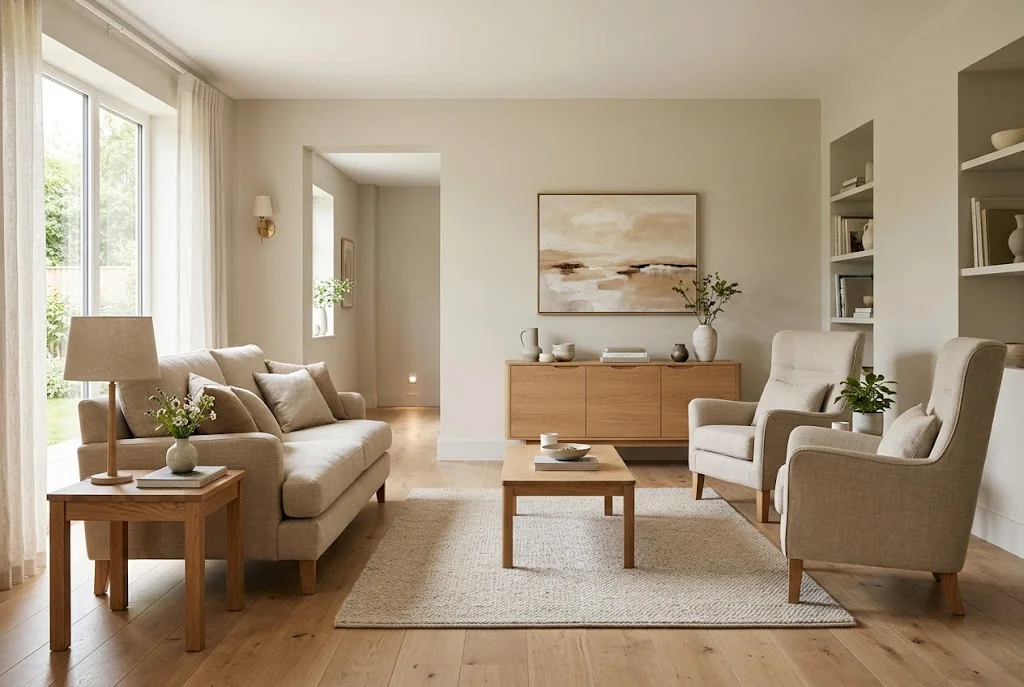
Interior design and elderly people is therefore about much more than choosing attractive furniture and colours. It involves considering movement, lighting, accessibility, storage, bathroom safety, bedroom layouts, flooring and the changing needs of the person using the space.
The best approach combines practical design with warmth and personality. A home can include helpful adaptations such as grab rails, better lighting and clearer walkways while still feeling stylish, familiar and comfortable.
Why Interior Design Matters for Older Adults
As people get older, everyday movement around the home can sometimes become more challenging. Changes in mobility, balance, eyesight, hearing or strength can affect how easily someone uses stairs, bathrooms, kitchens and bedrooms.
This does not mean that an older person’s home needs to be completely redesigned. Often, relatively simple changes can improve usability and reduce avoidable hazards.
The NHS recommends considering home adaptations when someone is struggling with everyday activities or is worried about falling. Depending on individual needs, adaptations can include stair rails, grab rails, walk-in showers, improved lighting, ramps and other equipment.
Key Principles of Elderly-Friendly Interior Design
Good interior design for older adults should balance five important principles:
- Safety: Reduce avoidable trip, slip and fall hazards.
- Accessibility: Make important areas easier to reach and use.
- Comfort: Choose furniture and materials that support everyday living.
- Clarity: Make rooms easy to understand and navigate.
- Independence: Allow people to perform everyday tasks with as little unnecessary assistance as possible.
These principles can be incorporated into attractive interiors without making safety the only design consideration.
1. Create Clear and Unobstructed Walkways
One of the simplest improvements is to make movement through the home easier. Furniture should be positioned so that there is a clear route between frequently used areas.
Avoid unnecessary objects in corridors, loose cables across walking routes and furniture that forces people to squeeze through narrow spaces.
Age UK recommends keeping walkways clear and removing potential trip hazards such as loose rugs and cables.
Think about the routes that are used most often, particularly the path between the bedroom, bathroom, kitchen and living room.
2. Improve Lighting Throughout the Home
Lighting is one of the most important elements of an elderly-friendly interior. Dark corridors, poorly lit stairs and dim bathrooms can make navigation more difficult.
The NHS advises using bright, even lighting and reducing glare, shadows and reflections, particularly in areas such as stairs and toilets. Motion-sensor lighting can also be useful in suitable locations.
Consider using:
- Bright general lighting
- Bedside lamps that are easy to reach
- Motion-sensor lights for night-time routes
- Under-cabinet lighting in kitchens
- Well-lit stairways
- Night lights between bedrooms and bathrooms
Good lighting should make the route easier to see without creating uncomfortable glare.
3. Make the Bedroom Easier to Use
The bedroom should provide a comfortable place to rest while also allowing the person to get in and out of bed safely.
Bed height is worth considering. A bed that is too low may make standing difficult, while a bed that is too high can make getting into it uncomfortable. The appropriate height depends on the individual and their mobility.
Keep essential items such as a lamp, phone, glasses and water within easy reach. The route from the bed to the bedroom door should also remain clear.
Age UK notes that bed raisers, specialist beds and other equipment can sometimes help people who find it difficult to get into or out of bed.
For additional bedroom inspiration, you can also explore WebVibe’s guide to 50 stunning bed designs and consider which bed styles combine comfort with practical access.
4. Choose Supportive and Stable Furniture
Furniture should be attractive, but stability is particularly important in an older person’s home.
Chairs should provide adequate support and should not move unexpectedly when someone sits down or stands up. Extremely low sofas and chairs may be uncomfortable for people who have difficulty rising from a seated position.
Avoid using lightweight furniture as an improvised support. If someone needs help with balance, professionally recommended grab rails or other appropriate equipment may be safer than relying on tables or chairs.
5. Design a Safer Bathroom
Bathrooms require particular attention because water can make surfaces slippery and many everyday activities involve standing, sitting and transferring between different positions.
Depending on individual needs, useful adaptations can include grab rails, non-slip surfaces, a suitable shower arrangement and seating. The NHS specifically lists walk-in showers, bath lifts and grab rails among potential home adaptations.
Keep frequently used toiletries within easy reach so that there is less need for unnecessary bending or stretching.
Bathroom doors and layouts should also allow sufficient space for safe movement. Where major adaptations are being considered, professional assessment is preferable to relying solely on decorative design advice.
6. Make the Kitchen More Accessible
The kitchen is another area where small changes can make everyday tasks easier.
Frequently used plates, cups, utensils and ingredients should ideally be stored where they can be reached without excessive bending, stretching or climbing.
Avoid storing everyday items on very high shelves if reaching them requires a stool or unstable step.
Clear work surfaces can also improve safety and make food preparation easier. Good lighting is especially important around worktops, sinks and cooking areas.
7. Use Flooring Carefully
Flooring has a major effect on how easy a room is to navigate. Loose rugs, trailing cables and uneven surfaces can create trip hazards.
The NHS recommends avoiding rugs and mats that could create confusion or trip risks for some people, particularly those living with dementia. It also advises avoiding shiny or highly reflective flooring where this could be misinterpreted or make movement more difficult.
Where possible, choose flooring that provides a stable walking surface and does not create abrupt changes between rooms.
8. Use Colour Contrast Strategically
Colour can be more than a decorative choice. Strong enough contrast between important elements can make objects easier to identify.
For example, a chair that contrasts with the wall behind it may be easier to distinguish than one that blends into the background. Similarly, contrasting colours can help define doors, furniture and other important features.
The NHS recommends considering contrasting colours between walls, floors and furniture when designing environments for people with dementia.
There is no need to make the entire home brightly coloured. Instead, use contrast selectively where it provides a practical benefit.
9. Make Stairs Safer
Stairs can become challenging when balance, strength or eyesight changes. A secure handrail should be available where needed, and stairways should be kept free from objects.
Lighting should allow each step to be clearly seen, including during the evening and at night.
For someone who has significant difficulty using stairs, a professional assessment may determine whether additional adaptations or alternative arrangements are appropriate.
10. Create a Safer Night-Time Route
Many people need to move around the home during the night, particularly when using the bathroom. A dark route between the bedroom and bathroom can therefore create unnecessary risk.
Motion-sensor lighting can be useful because it can illuminate a route without requiring someone to find and operate a switch in the dark.
A bedside lamp should also be easy to reach. Keep the area around the bed free from shoes, bags, cables and other objects that could become obstacles.
NHS guidance specifically recommends good lighting and reducing trip hazards as part of falls prevention.
11. Reduce Clutter Without Removing Personality
A safer home does not have to be an empty home. Personal photographs, books, artwork and meaningful possessions can remain an important part of the interior.
The key is deciding where these items are placed.
Keep walking routes clear while using shelves, cabinets and display areas for decorative objects. This creates a balance between personality and practicality.
If you enjoy using artwork to add character to a room, WebVibe’s guide on why art matters in interior design offers further ideas for combining culture and aesthetics with practical interiors.
12. Make Storage Easier to Reach
Storage should be designed around the items people use most often. Everyday possessions should ideally be accessible without excessive reaching, bending or climbing.
Frequently used clothing can be stored at convenient heights, while heavier objects should not be placed where they need to be lifted from above shoulder level.
Pull-out drawers, open shelving and easy-grip handles can sometimes make cupboards easier to use.
13. Think About Doorways and Circulation
Doorways can become more important when someone uses a walking frame, wheelchair or other mobility equipment.
Where necessary, a professional assessment can determine whether doorways need to be widened or whether changes to door opening arrangements could improve movement.
Age UK notes that widening door frames or changing the direction in which doors open may help some people move through the home more easily.
14. Make Outdoor Areas Accessible
Gardens and outdoor spaces can be valuable extensions of the home. A safe garden can provide opportunities for fresh air, relaxation and social activities.
Paths should be kept clear and reasonably even. Outdoor steps and entrances should have suitable lighting, particularly where they are used after dark.
For people with restricted mobility, raised planting beds and comfortable seating can make gardening and outdoor relaxation more accessible.
The NHS recommends keeping outdoor walking surfaces flat where possible, providing suitable handrails where needed and ensuring outdoor lighting is adequate.
15. Combine Safety With Attractive Design
One of the biggest misconceptions about accessible interior design is that safety features have to look clinical.
Modern interiors can incorporate practical features in ways that complement the overall design. Grab rails are available in different finishes, lighting can be integrated into the architecture and storage can be designed to look like conventional furniture.
The result can be a home that feels personal and stylish while quietly supporting safer everyday living.
Interior Design for Elderly People With Dementia
Homes for people living with dementia may require additional consideration because changes in perception, memory and orientation can affect how a person experiences their surroundings.
The NHS recommends bright, even lighting, reducing glare and shadows, avoiding confusing flooring patterns and using appropriate colour contrast.
Familiarity can also be valuable. Keeping important furniture and everyday objects in consistent locations may make routines easier to understand.
Major changes should not necessarily be introduced all at once. A gradual approach can allow the person to become familiar with modifications.
How to Make an Existing Home Safer
You do not necessarily need to renovate an entire property. Start by identifying the areas that cause the greatest difficulty.
- Walk through the home and identify trip hazards.
- Check whether stairways, hallways and bathrooms are adequately lit.
- Look at the route between the bedroom and bathroom.
- Check whether commonly used storage is easy to reach.
- Assess chairs and beds for comfortable access.
- Consider whether bathroom adaptations are needed.
- Remove unstable or unnecessary furniture.
- Ask for a professional home assessment if safety concerns remain.
The NHS advises that people who are worried about falling or need help with everyday activities can ask their local council about an assessment for equipment or home adaptations.
Why Professional Assessment Can Be Valuable
Interior design can improve the appearance and usability of a home, but some accessibility decisions require specialist knowledge.
An occupational therapist or appropriate local authority service may be able to assess how an individual moves around their home and recommend adaptations based on their specific needs.
This is particularly important when considering structural changes, mobility equipment or bathroom adaptations.
A professional assessment can help ensure that the solution addresses the actual difficulty rather than simply adding a decorative feature that may not provide adequate support.
Balancing Independence and Safety
The goal of elderly-friendly interior design should not be to remove every possible challenge from the home. It should be to create an environment where people can carry out everyday activities as safely and independently as reasonably possible.
This might mean keeping frequently used kitchen items within reach, providing suitable lighting at night or creating enough space around furniture for comfortable movement.
Small changes can sometimes make a meaningful difference without changing the personality of the home.
Frequently Asked Questions
What is elderly-friendly interior design?
Elderly-friendly interior design combines attractive interiors with practical features that support comfort, accessibility and safer movement. It can include better lighting, clearer walkways, suitable furniture, accessible storage and appropriate bathroom adaptations.
What is the most important design feature for older people?
There is no single feature that suits everyone. Clear walkways, good lighting, suitable furniture and easy access to essential areas are important starting points, but individual needs should determine the final design.
How can I make a bedroom safer for an elderly person?
Keep the route around the bed clear, provide accessible lighting, position important items within easy reach and choose a bed height that allows comfortable access. Individual mobility needs should also be considered.
How can lighting improve an elderly person’s home?
Good lighting can make routes, stairs and important objects easier to see. Even lighting, reduced glare and motion-sensor lights can be useful in suitable areas.
Are rugs safe for elderly people?
Loose rugs can create trip hazards. If a rug is necessary, its placement and stability should be carefully considered. In some situations, removing it completely may be safer.
Should an elderly person’s home look clinical?
No. Safety features can be integrated into attractive interiors using appropriate materials, colours, furniture and lighting. The aim is to create a home that is both practical and personal.
Who can assess a home for elderly accessibility?
Depending on the person’s circumstances and location, a local council, occupational therapist or appropriate social care service may be able to assess the home and recommend adaptations.
Conclusion
Interior design and elderly people can work together to create homes that are comfortable, attractive and easier to navigate. Good design considers more than appearance; it looks at how people move, reach, rest, cook, bathe and live within the space.
From clearer walkways and better lighting to supportive furniture, safer bathrooms and accessible storage, many improvements can be introduced without sacrificing style.
The most effective approach is personal. Every older adult has different abilities, preferences and routines, so the home should be adapted around the individual rather than following a one-size-fits-all design.
When comfort, safety and personality are considered together, interior design can help create a home that supports independence while still feeling warm, familiar and genuinely lived in.
