

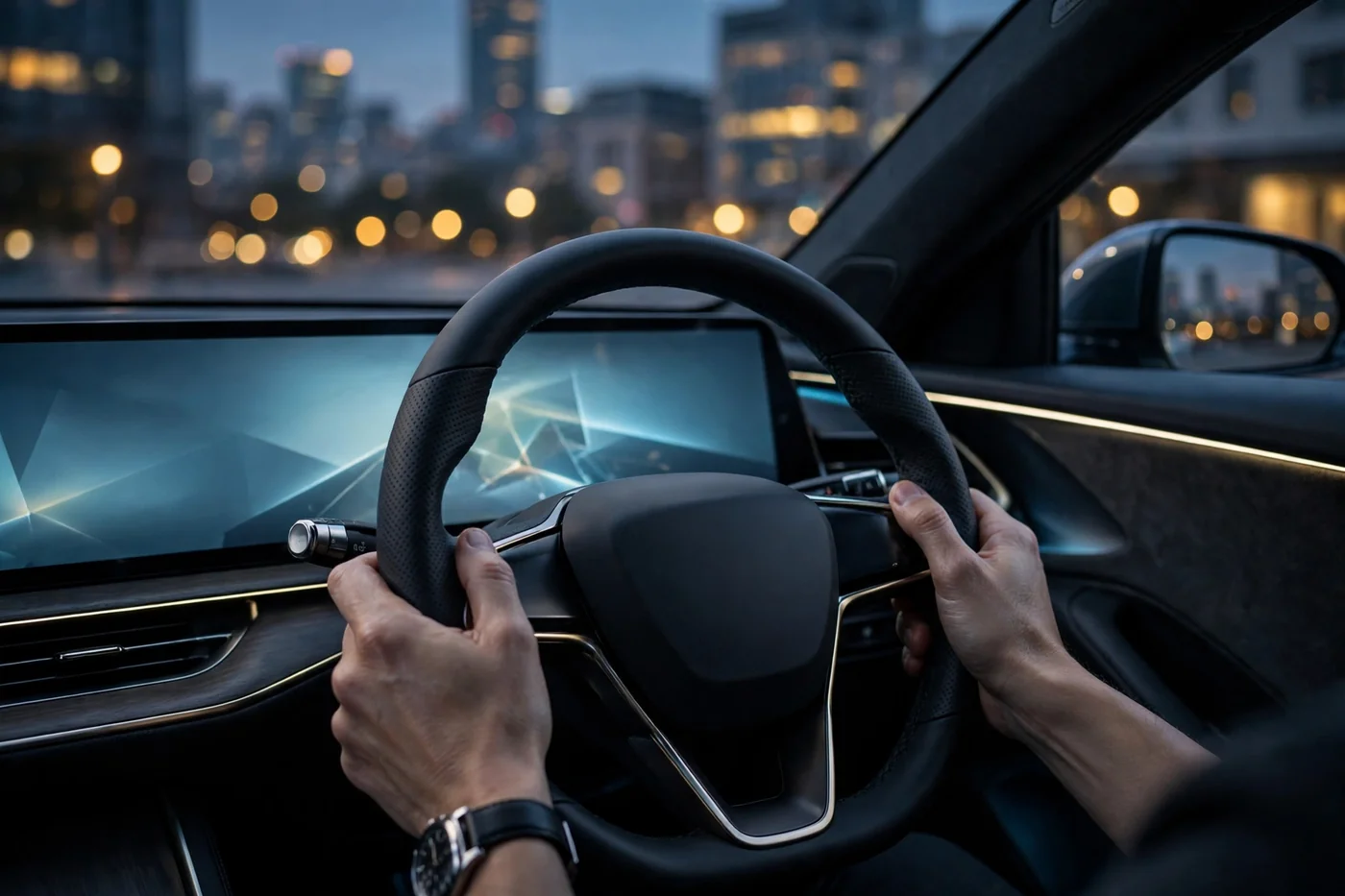
Connected vehicles are, in plain terms, cars that can send and receive data. Instead of being a closed machine that only talks to a mechanic’s plug-in tool, a connected car can communicate with an app on your phone, with the manufacturer’s systems and sometimes with other services you choose to use. That connection is what lets you check whether you locked the doors, find where you parked, or receive a software update while the car sits on your drive.
The good news is that most of this technology is there to make ownership easier and driving safer. The part worth understanding is the trade-off: anything that connects can, in principle, be attacked or misused, and cars now hold data about journeys, locations and habits. This guide explains what connected vehicles really are, how automotive cybersecurity works in general terms, what the realistic risks are for owners, and the simple steps you can take to reduce them, without alarm and without jargon.
What Connected Vehicles Actually Are
A connected car is not one single invention. It is a combination of parts working together. A built-in mobile data connection, similar in spirit to the one in your phone, lets the car go online. Telematics units collect information such as mileage, battery health and fault warnings. Sensors around the car feed those digital vehicle systems, while screens and apps give the driver a way to see and use the information.
That is why two cars of the same age can feel very different. One may simply have Bluetooth for calls and music. Another may offer live traffic, remote climate control, stolen vehicle tracking and service reminders sent straight to an app. Both are sold as connected vehicles, but the second shares far more data and relies on far more vehicle software to do it. Understanding that difference is the first step to judging any claims about safety or privacy, and to understanding what connected car security needs to cover.
The Vehicle Software Running Your Car
Modern cars run on code as much as they run on fuel or electricity. Vehicle software controls everything from engine management and braking assistance to the touchscreen, navigation and driver-assistance features. Different systems are usually separated, so an entertainment glitch should not affect a safety system, but they still need to work together as one car.
Software also changes what ownership feels like. Features can be fixed, improved or occasionally added after you buy the car, rather than waiting for the next model year. The flip side is that software needs looking after, much like a phone or laptop. Updates, bug fixes and security patches are part of car care for connected vehicles now, not an optional extra for enthusiasts. That shift is at the heart of automotive cybersecurity, because protecting the car increasingly means protecting its code.
OTA Updates: Why They Matter
OTA updates, short for over-the-air updates, are software updates delivered to the car through its data connection, rather than during a workshop visit. Depending on the manufacturer, an update might improve battery management, refine a driver-assistance feature, fix a fault or patch a security weakness that has been found in the car’s systems.
For owners, the habit to build is simple: install updates promptly, and follow the instructions that come with them. Some updates need the car parked, charged or locked while they run. Leaving an update uninstalled for months can mean missing a security fix as well as a useful improvement. If your car or its app tells you an update is ready, treat it with the same seriousness as a recall notice, even though most updates for connected vehicles are routine and uneventful.
Secure Diagnostics and the Modern Garage
Diagnostics used to mean a technician plugging a tool into the car and reading fault codes. That still happens, but secure diagnostics now also covers who is allowed to access the car’s systems, what they can change, and how that access is recorded. As our guide to vehicle diagnostics and smarter car care explains, modern diagnostic data can be detailed, so it deserves the same care as any other personal information.
Good practice is straightforward. Garages should use trusted tools, keep their own systems updated and only give access to people who need it. Owners can help by using reputable workshops, asking how a third-party device will use car data before fitting one, and removing access for services they no longer use. A diagnostic port is a doorway into the car, so anything plugged into it should be treated with a little healthy caution.
What Are the Real Security Risks?
This is where balance matters. Headlines can make it sound as if any connected car can be taken over at any moment by a stranger. The realistic risks for connected vehicles are usually more ordinary, and that is useful to know, because ordinary risks have practical defences.
First, account and app security. If someone gets into the account linked to your car, they may be able to see its location or use app features, depending on the service. Weak or reused passwords are a far more common problem than exotic attacks. Second, software vulnerabilities. Like any complex software, vehicle software can contain flaws. Manufacturers look for them, researchers report them, and OTA updates are one of the main ways they get fixed. Third, add-on devices and apps. A cheap plug-in dongle or an unknown app may ask for more access or data than it needs, and its own security may be weaker than the car’s.
None of this means avoiding connected features altogether. It means treating connected vehicles as part of your digital life, with the same sensible habits you would use for online banking or a phone.
Privacy: What Data Can a Connected Car Hold?
Security is about keeping people out. Privacy is about what is collected in the first place, and who it is shared with. Depending on the model and the services switched on, connected vehicles may process journey history, location, driving style information for insurance-style services, voice commands and contacts synced from a phone.
You usually have more control than it first appears. Privacy settings in the car and its app, permissions on your phone, and choices about optional services all make a difference. When you sell the car, sign out of your accounts, unpair your phone and follow the manufacturer’s factory reset guidance, so your data does not go to the next owner with the keys. The same applies when you hand back a hire or company car.
What Manufacturers and Regulators Do
Automotive cybersecurity is not left to owners alone. Manufacturers are expected to design security into a vehicle from the start, test it, monitor for problems after cars are sold and provide updates when issues are found. Industry frameworks support that work: UNECE WP.29 regulations cover cybersecurity management and software updates for new vehicles, and ISO/SAE 21434 is a widely used standard for cybersecurity engineering across a vehicle’s life.
In practice, that means a responsible manufacturer should have a clear update policy, a way for security concerns to be reported, and controls over who can access vehicle systems and data. When you are choosing a car, those points are fair questions to ask a dealer: how long will updates be supported, how will I be told about them, and what happens to my data if I sell the car? Clear answers are a good sign for connected vehicles and for the people who drive them.
Smart Mobility, Vehicle APIs and What Comes Next
A vehicle API is a controlled way for software systems to talk to each other, for example letting an authorised app read mileage or book a service, without giving it free access to the whole car. Vehicle APIs are part of why digital vehicle systems can connect with charging networks, fleets, insurers and service providers in a managed way.
That wider picture is often called smart mobility: transport that uses data to work more smoothly, from live traffic routing to maintenance that is planned around how a car is actually used. Our look at AI-powered auto services shows how vehicle data is already shaping servicing in the UK. The direction is clear, which is why getting the security basics right for connected vehicles now matters more than chasing every new feature.
A Practical Owner Checklist for Connected Car Security
Most owners do not need technical skills to improve their connected car security. Work through this checklist for connected vehicles, and repeat it whenever you change your phone, your car or the apps you use:
- Use a strong, unique password for the car app and manufacturer account, and turn on two-step verification if it is offered.
- Keep the car’s software and your phone apps up to date, and install OTA updates promptly.
- Check app permissions. Does an app really need your location all the time, or access to your contacts?
- Only download the official manufacturer app, and be careful with third-party apps that promise extra features.
- Think twice before plugging in unknown diagnostic dongles, and remove any device you no longer use.
- Turn off or limit features and data sharing you do not use, in the car and in the app.
- When you sell the car, sign out, unpair phones and reset the system following the manufacturer’s guidance.
- Use reputable garages for diagnostics and servicing, and ask how they protect access to your car’s systems.
Final Thoughts
Connected vehicles are best understood as cars that have joined your digital life. That brings real benefits, including easier servicing, useful apps, updates that arrive at home and features that improve over time, alongside responsibilities that will feel familiar to anyone who owns a smartphone. Keep accounts secure, install updates, choose add-ons carefully and stay in control of your data, and the risks stay in proportion. Digital ownership is becoming part of normal car care, as drivers combining servicing with digital car service plans are already finding. A connected car does not need to be a worry. Looked after properly, connected vehicles are simply cars that are easier to live with.
