

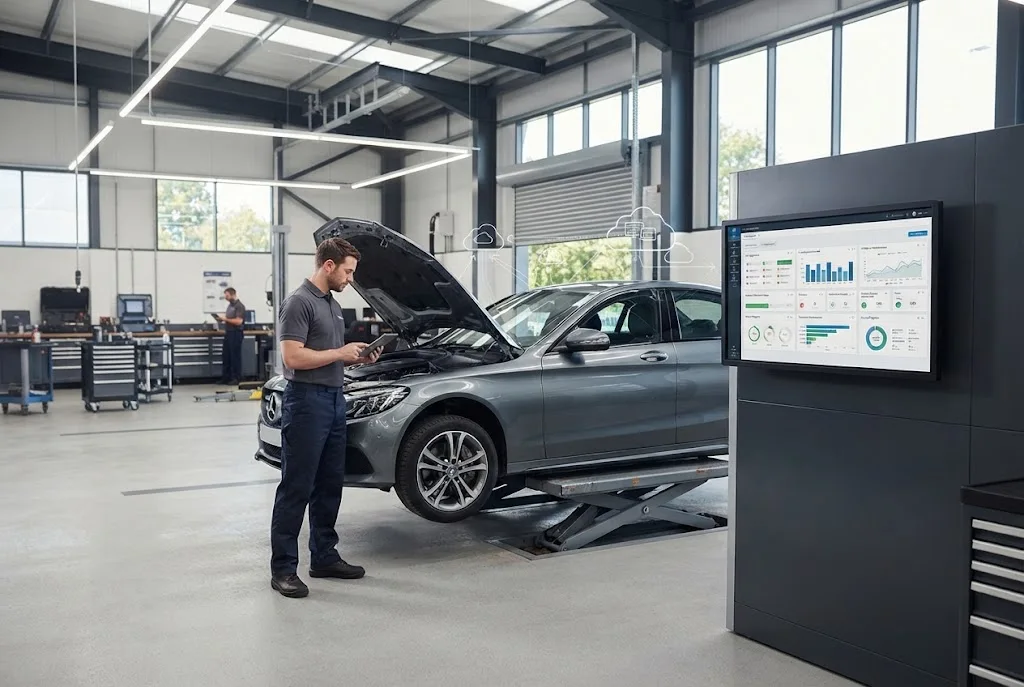
AI-powered auto services are changing how drivers, garages and automotive businesses approach vehicle maintenance in the UK. Instead of relying entirely on fixed service intervals, paper records and manual scheduling, modern platforms can bring vehicle data, digital records, workshop operations and intelligent recommendations into one connected environment.
The technology does not mean replacing experienced mechanics with machines. Rather, artificial intelligence can help technicians and service teams organise information, identify patterns and plan maintenance more effectively. This creates opportunities for faster communication, more proactive servicing and a smoother ownership experience.
For UK motorists, this development sits alongside wider changes in automotive technology. Modern vehicles generate increasing amounts of electronic information, while garages are adopting cloud software, digital inspections and connected workshop systems. The result is a more digital approach to vehicle care that can support both routine maintenance and more complex repair decisions.
What Are AI-Powered Auto Services?
AI-powered auto services combine traditional vehicle maintenance with software capable of analysing information, identifying patterns or automating selected tasks. Depending on the platform, this may include service scheduling, customer communication, vehicle history management, diagnostic information, maintenance reminders and operational reporting.
The exact capabilities vary between systems. Some platforms may use relatively simple rules-based automation, while more advanced solutions can apply machine learning to historical and real-time data. The important distinction is that the technology is designed to support servicing decisions and workflows rather than simply digitise paperwork.
This approach is developing alongside automotive software for modern garage management, where booking, vehicle records, workshop scheduling and customer communication can be connected through a central system.
How AI Is Changing Vehicle Servicing
Traditional servicing often depends on mileage, time intervals and information supplied by the vehicle owner. These remain important, but connected technology can provide additional information that helps businesses understand the condition and maintenance history of a vehicle.
An intelligent platform can potentially combine service records, inspection results, diagnostic information and previous repair activity. When that information is structured consistently, software can identify patterns that may otherwise be difficult to spot manually.
For example, a platform could flag that a vehicle is approaching a scheduled maintenance point, identify an outstanding service requirement or highlight a recurring issue in its recorded history. A technician still needs to inspect the vehicle and make the final professional judgement, but the digital system can make relevant information easier to find.
From Reactive to More Proactive Maintenance
One of the biggest changes associated with AI vehicle servicing is the move from purely reactive maintenance towards more proactive planning.
Reactive maintenance occurs when a vehicle develops a problem and the owner seeks assistance. Preventive maintenance, by contrast, aims to keep a vehicle maintained according to recommended schedules and known requirements. Predictive approaches go a step further by analysing available information to identify potential maintenance needs before a failure occurs.
Predictive servicing should not be treated as a guarantee that a vehicle will never break down. Instead, it can provide another source of information that helps workshops and vehicle owners prioritise inspections and maintenance.
AI Vehicle Servicing and Smart Scheduling
Scheduling is one of the most practical areas for intelligent technology in auto services. A busy workshop needs to balance customer appointments, technician availability, service bays, expected job durations and parts availability.
Manual scheduling can become increasingly difficult as the number of vehicles and technicians grows. Intelligent service platforms can help organise these variables and provide a clearer operational picture.
AI maintenance scheduling may eventually become more responsive to changing conditions. If a workshop receives an unexpected repair, for example, the system could help identify how the additional job affects other appointments. Similarly, service teams can use digital information to plan recurring maintenance rather than relying solely on manual reminders.
This can be particularly useful for larger garage networks. Digital garage networks already connect physical workshops with online booking, customer communication and operational systems, creating a foundation for more intelligent service management.
Businesses exploring this wider transformation can also learn from the development of digital garage networks and connected garage chains, where technology is increasingly used across multiple workshop locations.
Intelligent Service Platforms Connect More Data
An important advantage of intelligent service platforms is their ability to bring different types of information together. A workshop may previously have kept customer details, vehicle history, inspection findings and invoices in separate systems.
A connected platform can create a more complete digital service record. Information entered during a booking can potentially flow into the job record, while inspection findings can be retained alongside previous maintenance information.
This creates a digital automotive ecosystem in which different parts of the service journey can communicate with one another.
For example, a customer might book a service online. The platform records the vehicle details, schedules an appointment and creates a workshop job. After inspection, the technician adds findings to the digital record. The service adviser can then use that information when explaining recommended work to the customer.
Each stage remains important, but the information does not have to be recreated manually at every step.
Automated Maintenance Without Removing Human Expertise
Automation is sometimes misunderstood as an attempt to eliminate human involvement. In automotive servicing, that would be unrealistic. Vehicle inspections, repairs, diagnostics and safety decisions still require appropriate equipment, technical knowledge and professional judgement.
Instead, automated maintenance can handle repetitive administrative processes around the physical work.
Examples can include:
- Appointment reminders and confirmations
- Routine service notifications
- Digital customer updates
- Workshop scheduling prompts
- Service-history organisation
- Internal workflow notifications
- Maintenance task tracking
Reducing repetitive administration can allow service advisers and technicians to spend more time dealing with customers and vehicles. The technology therefore works best as an operational assistant rather than an independent replacement for workshop expertise.
AI Maintenance Scheduling for UK Drivers
For individual motorists, intelligent scheduling could make vehicle ownership easier to manage. Instead of remembering every maintenance date manually, a connected service platform can keep track of relevant information and provide reminders.
Digital records are already an important part of the UK’s vehicle-testing environment. The Driver and Vehicle Standards Agency states that the electronic MOT record is the legal record of an MOT test. [GOV.UK MOT testing guidance](https://www.gov.uk/guidance/mot-testing-guide/a-introduction?utm_source=chatgpt.com)
AI-powered platforms can build on the broader concept of digital vehicle records by combining maintenance information with workshop activity and customer preferences. However, an AI recommendation should not be confused with an official MOT result or a substitute for a legally required inspection.
For motorists, the main benefit is convenience. A well-designed system can make it easier to understand when a vehicle needs attention and what maintenance has already been carried out.
Cloud Servicing and Connected Workshops
Cloud technology provides much of the infrastructure behind modern intelligent service platforms. Instead of keeping all workshop information on a single local computer, cloud servicing can allow authorised users to access relevant information through connected devices.
This can be valuable for businesses with multiple technicians, branches or service locations. Managers can have broader operational visibility, while service advisers and technicians can access the information relevant to their roles.
Cloud platforms can also make software updates and centralised management easier. However, businesses still need to consider security, access controls, backups and data governance before adopting a system.
The wider development of cloud-based automotive service platforms demonstrates how workshop management, digital inspections, vehicle records and customer workflows can increasingly operate within a connected environment.
AI and Vehicle Diagnostics
Vehicle diagnostics is another area where intelligent technology has significant potential. Modern cars contain numerous electronic control systems and sensors, creating large amounts of technical information.
AI-assisted systems can help organise and interpret available diagnostic information. Rather than presenting technicians with disconnected data points, an intelligent platform may help highlight relationships between recorded symptoms, diagnostic results and previous service history.
This does not mean that software can always identify a fault independently. Diagnostic information still needs to be interpreted in the context of the actual vehicle, its condition and the technician’s inspection.
That distinction is important because inaccurate or incomplete data can lead to poor recommendations. The UK government’s guidance on preparing datasets for AI emphasises the importance of data quality, consistency, governance and suitability when building AI capabilities. [GOV.UK AI data guidance](https://www.gov.uk/government/publications/making-government-datasets-ready-for-ai/guidelines-and-best-practices-for-making-government-datasets-ready-for-ai?utm_source=chatgpt.com)
How AI Can Support Garage Businesses
AI-powered platforms can potentially benefit garages as well as drivers. Workshop managers need to balance customer demand, technician capacity and vehicle complexity every day.
Smart service management can help provide a clearer view of upcoming work and operational priorities. Historical data may also help businesses understand recurring patterns, such as periods of higher demand or frequently requested maintenance services.
For multi-site businesses, centralised information can provide greater visibility across branches. Managers can review activity without relying entirely on separate spreadsheets or manually collected reports.
However, technology should be introduced around real operational needs. A platform with dozens of advanced features is not necessarily better than a simpler system that technicians and service advisers can actually use efficiently.
Benefits of an AI-Powered Automotive Ecosystem
A connected digital automotive ecosystem can create benefits across several parts of the vehicle ownership journey.
Better maintenance visibility
Digital records can make previous servicing and upcoming maintenance requirements easier to understand. This can help drivers and workshops make better-informed decisions.
Less repetitive administration
Automated reminders, booking workflows and digital records can reduce the need to enter the same information repeatedly.
Improved customer communication
When service information is organised in one system, customer updates can be more consistent. Service advisers can refer to the latest available job information when discussing work.
More informed planning
Historical data can help workshops identify patterns and plan workloads more effectively. Over time, this may support predictive servicing and more efficient resource allocation.
Scalable workshop operations
Cloud-based systems can make it easier for growing businesses to manage multiple users, service bays and locations from a connected platform.
What Are the Limitations of AI-Powered Auto Services?
AI is not a substitute for good vehicle data, qualified technicians or appropriate servicing procedures. The quality of an intelligent recommendation depends heavily on the quality and relevance of the information available to the system.
There are also privacy and security considerations. Vehicle records can be connected to customer information, while cloud platforms may hold operational data across multiple locations. Businesses therefore need appropriate controls for access, storage and data handling.
Another consideration is transparency. Customers should understand when technology is providing an automated recommendation and when a qualified professional has inspected the vehicle and made a servicing decision.
Finally, workshops should avoid treating predictive technology as certainty. A prediction can identify a potential maintenance requirement, but physical inspection remains important when assessing the actual condition of a vehicle.
The Future of AI-Powered Auto Services
The future of auto services is likely to become increasingly connected. Vehicle data, workshop software, digital inspections, cloud platforms and customer-facing applications can work together to create a more continuous service experience.
AI may become more useful as these systems generate larger and better-structured datasets. Future platforms could provide more sophisticated maintenance recommendations, smarter scheduling, automated customer communication and improved operational forecasting.
The UK’s wider transport sector is already considering how AI can be used to improve experiences and productivity while managing associated risks. The Department for Transport’s Transport Artificial Intelligence Action Plan sets out its approach to using AI across transport while addressing those risks.
For automotive businesses, the practical lesson is straightforward: successful digital transformation will not come from adding AI for its own sake. It will come from connecting useful technology to real workshop processes.
How Garages Can Prepare for Smarter Servicing
Garages considering AI-powered systems can start with their existing workflow rather than the technology itself. The first step is to identify where information is currently duplicated, where customers experience delays and where staff spend unnecessary time on repetitive administration.
From there, businesses can evaluate platforms based on integration, usability, security, scalability and data quality. Staff training is equally important because even an advanced system will provide limited value if employees do not use it consistently.
Workshops should also consider how their systems will handle increasingly digital vehicles. Hybrid and electric cars introduce different technical requirements, making accurate digital records and appropriate diagnostic workflows increasingly valuable. Our guide to hybrid servicing explores some of these changing maintenance requirements, while our EV servicing guide covers the maintenance considerations associated with electric vehicles.
Final Thoughts
AI-powered auto services represent a gradual shift towards more connected, proactive and data-informed vehicle maintenance. The most useful systems are not designed to replace technicians. Instead, they help organise information, automate repetitive tasks, support scheduling and make service history easier to use.
As cloud servicing, digital diagnostics and connected vehicle technology continue to develop, intelligent platforms could become a more familiar part of everyday car ownership and workshop management in the UK.
The strongest approach is likely to be a balanced one: combine reliable technology and high-quality data with skilled technicians, appropriate inspections and clear communication. When those elements work together, AI can become a practical tool for making vehicle servicing more organised, responsive and convenient.
