

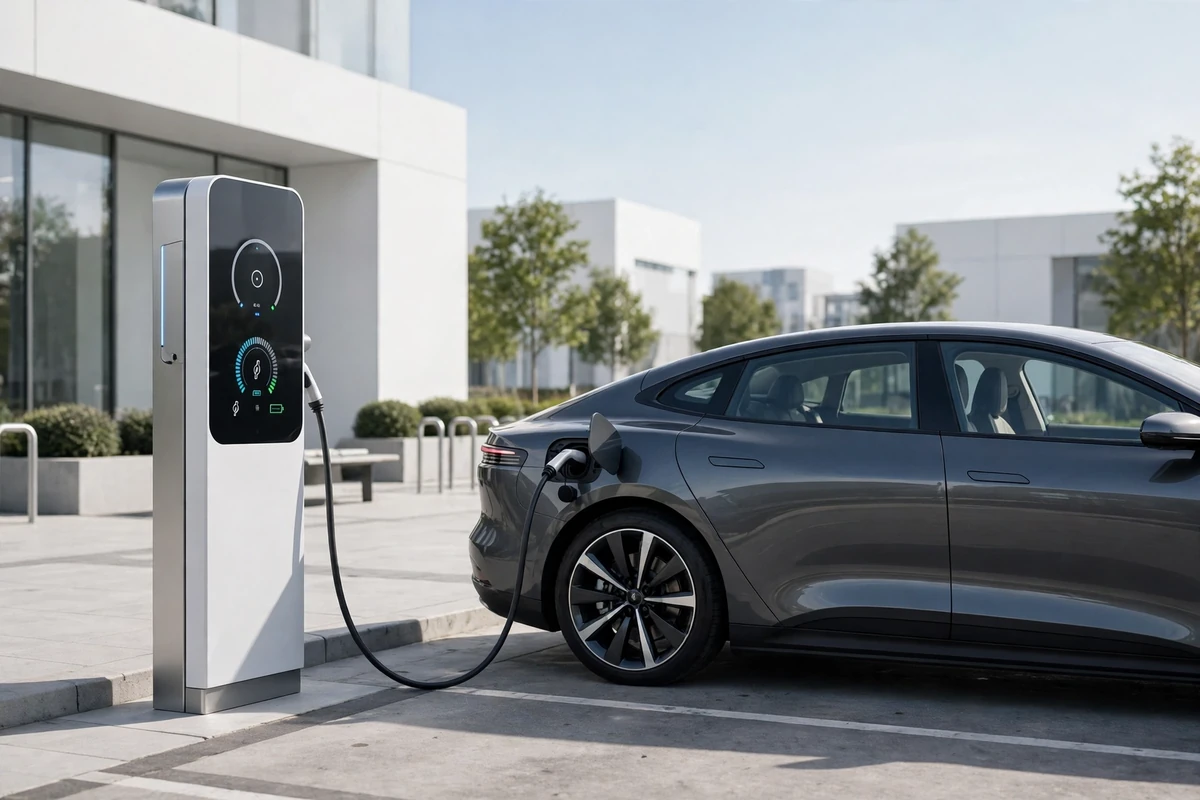
Modern electric cars are as much software as they are machinery. The battery, the motor, the charging, and even the way the car feels to drive are all managed by EV software, and that software is reshaping what car ownership means. In this guide to EV software and smart mobility, we explain what EV software does, how smart charging and diagnostics work, and what UK drivers should understand before choosing an electric car.
Smart mobility is a broad term for transport that uses data and connectivity to work better: cars that plan charging around cheap electricity, fleets that manage themselves, and drivers who can check, update and control their car from a phone. EV software is the engine of that shift, and it affects everyday ownership far more than most buyers expect.
What Is EV Software?
EV software is the set of programs that manage an electric car’s battery, motor, charging, and driver assistance systems. It decides how fast the car charges, how energy is used, when the battery needs cooling or warming, and how regenerative braking recovers energy. It also runs the infotainment system, the driver assistance features, and the connection to the manufacturer’s servers for updates and diagnostics.
Unlike a traditional car, where most behaviour is fixed at the factory, an electric car’s behaviour can change after you buy it. Manufacturers send over-the-air software updates that can improve range, add features, fix issues, or change how the car charges. That makes software quality a real factor in choosing an EV, alongside range and price.
For the connected side of modern cars, see our guide to automotive cybersecurity and connected vehicles, which explains what connectivity means for owners, including the data and security questions worth asking.
EV Servicing in a Software-Defined Car
EV servicing looks different from servicing a petrol or diesel car. There is no oil to change and no exhaust system to maintain, but there are still essential checks: brakes, tyres, suspension, coolant for the battery system, and software diagnostics. EV diagnostics can spot issues before they become faults, because the car continuously monitors its battery, motor, and charging system.
Battery management systems are central to EV servicing. They monitor each battery cell, balance charging, manage temperature, and protect the battery from damage. A healthy battery management system is one reason modern EV batteries last far longer than early sceptics predicted, and it is why regular software and diagnostic checks matter even when the car feels fine.
Our guides to EV servicing and hybrid servicing explain what a service visit actually includes for electric and hybrid cars, and how it differs from a traditional service.
Smart Charging and Charging Software
Smart charging means charging an EV at the best time, at the best rate, for the battery and for your wallet. Charging software can schedule charging for off-peak electricity, when prices are lower and the grid is less stressed. It can also limit charging to a level that protects long-term battery health, such as 80 percent for daily use, reserving a full charge for longer trips.
Connected EV platforms take this further: they can find available chargers, show live availability and pricing, plan a route around charging stops, and precondition the battery for faster charging on arrival. For drivers without home charging, that planning makes electric ownership far more practical, because it removes the guesswork from longer journeys.
EV analytics — data on charging, energy use, and battery health — also help fleets and businesses manage electric vehicles efficiently. A fleet manager can see which vehicles need attention, which chargers are most used, and how to schedule charging to avoid peak costs, all from one platform.
EV Diagnostics and Vehicle Data
Modern EVs generate a large amount of diagnostic data. Vehicle diagnostics can show battery health, charging history, energy consumption, and fault codes, often before a driver notices any problem. That data helps workshops diagnose issues faster and more accurately, and it helps owners understand their car’s real condition.
Our guides to vehicle diagnostics and AI-powered auto services explain how data and artificial intelligence are changing workshops, from predictive maintenance to smarter fault-finding.
Data also raises questions worth asking: what data does your car collect, who can see it, and how is it used? Before buying, it is worth reading the manufacturer’s privacy information and understanding what you can control, such as location sharing and data collection settings.
Automotive Software and Garage Management
EV software is not only in the car. Workshops now rely on automotive software for diagnostics, service scheduling, and parts management, and garage management platforms help workshops handle electric vehicles properly. A workshop that invests in EV training, diagnostic tools, and software updates is far better equipped to look after your car than one that treats an EV like a traditional car.
When choosing a service centre for an EV, ask whether their technicians are EV-trained, whether they have the right diagnostic equipment, and whether they can handle software updates. Our guide to automotive software for garage management explains what good looks like from the workshop side, and it is a useful checklist when judging a garage.
Day-to-day maintenance still matters. Our guides to auto battery service and smart tyre services cover the physical checks that software cannot replace: tyres, brakes, and the battery’s supporting systems.
What UK Drivers Should Ask Before Buying an EV
Before choosing an electric car, ask about software updates: how often they arrive, what they cover, and whether they are free. Ask about charging: what home and public charging options suit your driving, and whether the car’s software supports smart charging. Ask about battery warranty and battery health reporting, so you know how the battery is protected and how its condition is shown.
Also ask about servicing: where the car can be serviced, what a service includes, and what it costs. An EV with good software but poor service support will be frustrating to own, while an EV with both will be easy to live with for years.
Final Thoughts
EV software and smart mobility are not futuristic extras — they are the everyday reality of electric car ownership in the UK today. Software manages the battery, plans charging, diagnoses faults, and keeps the car improving after purchase. Understanding it helps you choose the right car, charge it wisely, service it properly, and get the most from electric driving. As the technology matures, the cars that get software right will be the ones drivers love to live with.
