

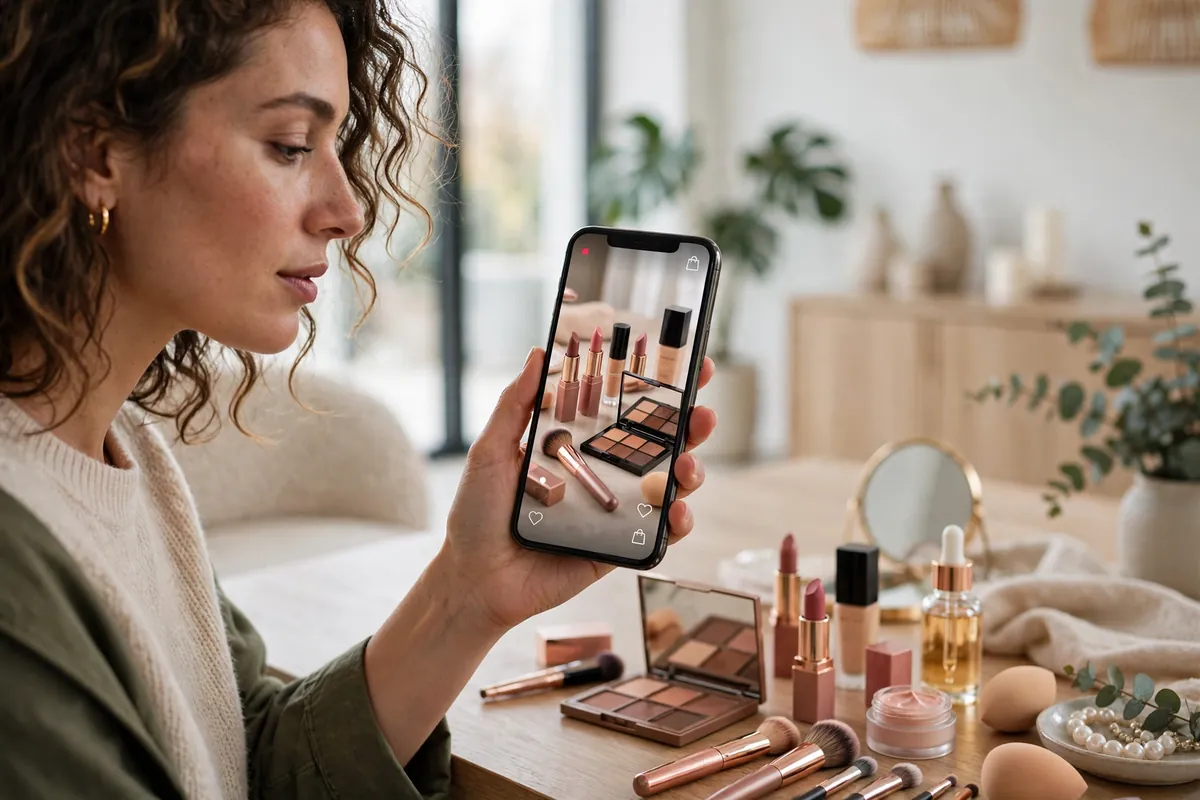
Live shopping is changing how people in the UK buy beauty and fashion. Instead of browsing a static product page, shoppers join a live stream, watch a creator demonstrate products in real time, ask questions in the comments, and buy without leaving the app. In this guide to live shopping for beauty and fashion, we explain how it works, why it has grown so quickly, and how to shop live safely and with confidence.
Live shopping sits at the meeting point of entertainment and retail. It takes the energy of a live broadcast, the trust of a personal recommendation, and the convenience of one-tap checkout, and combines them into a single experience. For beauty and fashion — categories where seeing a product in use matters more than reading a description — that combination is powerful.
What Is Live Shopping?
Live shopping, also called livestream shopping or livestream commerce, is a live video broadcast in which a host presents products, demonstrates them, and answers viewer questions while viewers can buy the featured items directly. It happens mainly on social platforms such as TikTok, where creators and brands run scheduled live sessions, but it is spreading to retailer websites and dedicated shopping apps as well.
A typical live shopping session starts with the host introducing the products, then moves through demonstrations: a foundation blended on skin, a dress tried on, a skincare routine shown step by step. Viewers comment with questions — about shades, sizes, ingredients, or fit — and the host answers live, often by showing the product again from a different angle. Pinned product links let viewers buy instantly, and limited-time offers during the stream create urgency.
For context on how social shopping reached this point, see our guide to TikTok Shop beauty, which explains how short video and in-app checkout changed beauty discovery in the UK.
Why Live Beauty Shopping Works
Beauty is a visual category. A written description cannot show how a foundation blends, how a lip oil looks in daylight, or how a hair tool handles real hair. Live beauty shopping solves that problem by showing products in use, in real time, with no editing tricks. Viewers can see texture, colour, and finish as they truly appear, and they can ask the host to show a shade on a different skin tone or in different lighting.
Trust matters too. Shoppers increasingly trust creators they follow over traditional advertising, and a live demonstration feels more honest than a polished advert. When a host answers a difficult question live — about a product’s limits, for example — it builds more confidence than a perfect review ever could.
Technology is making live shopping richer. Our guide to beauty skin analysis technology shows how AI tools now help shoppers understand their skin before buying, and our guide to augmented reality shopping explains how virtual try-on is adding another layer to online beauty and fashion retail.
Live Fashion Shopping: Trying Before Buying
Live fashion shopping works on the same principle: hosts try on clothes, show how they move and fit, and answer sizing questions live. That matters because sizing is the biggest reason for fashion returns. Seeing a garment on a real person of a similar size and shape, hearing how it fits, and asking about fabric and stretch gives shoppers far more confidence than a size chart alone.
For fashion, live sessions also showcase styling: how to wear a piece several ways, what to pair it with, and how it looks in motion. That styling advice is part of the entertainment, and it is why many viewers watch live fashion sessions even when they do not plan to buy immediately.
Wearable technology is blurring the line between fashion and tech. Our guides to wearable fashion technology and smart glasses fashion explore how clothing and devices are merging, and live shopping is becoming one of the main ways shoppers discover these new categories.
How to Shop Live Safely
Live shopping is fun, but it rewards a calm approach. Before buying, check the seller: look at their reviews, their return policy, and whether the product page shows clear delivery and refund terms. Be wary of claims that sound too good to be true, and of pressure tactics such as countdown timers that reset or stock claims that never change.
Set a budget before joining a live session, and give yourself a pause before checkout for anything expensive. The excitement of a live stream is designed to encourage quick buying, so a simple rule — wait until the stream ends before buying anything over a set amount — can save money and regret.
Check shade, size and ingredient information on the product page itself, not just in the stream. Lighting on camera can change how colours appear, and a host’s skin tone or body shape will differ from yours. When in doubt, order one item first rather than a full set, and test it before buying more.
The Future of Fashion and Beauty Ecommerce
Live shopping is becoming a distinct sales channel in UK social commerce, alongside AI chatbots and native purchasing. As platforms improve live features — better product linking, in-stream checkout, and personalised recommendations — live sessions will become more common, not less. Brands that treat live shopping as a genuine service, with honest demonstrations and real answers, will build lasting trust. Those that treat it as a hard sell will lose viewers quickly.
Our overview of the future of fashion and beauty ecommerce in 2026 puts live shopping in context: it is one part of a wider shift towards shopping that is visual, social, and interactive, rather than a catalogue you scroll alone.
Final Thoughts
Live shopping for beauty and fashion works best when you treat it as a discovery tool first and a checkout second. Watch hosts you trust, ask questions, check the product page, and buy deliberately. Done that way, live shopping can help you find products you genuinely love, with more confidence than a static page ever gave — and that is a real improvement in how we shop.
