

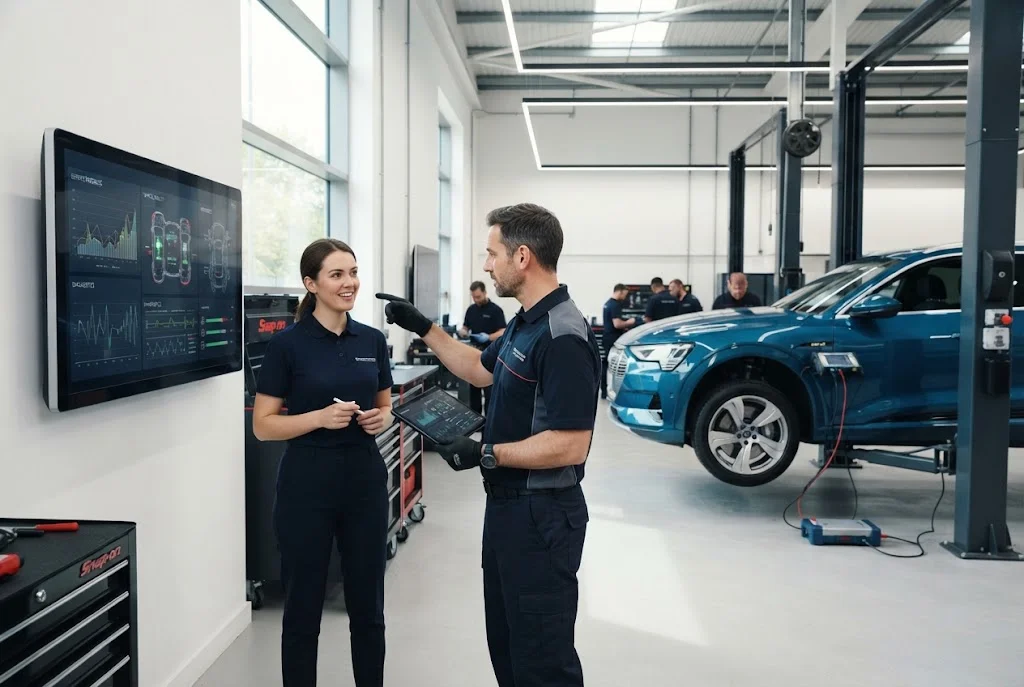
This shift is particularly relevant as workshops increasingly use digital inspections, diagnostic equipment, connected vehicles and online customer communication. Cloud-based technology can help turn information generated by these systems into a more organised service workflow.
What Is an Automotive Service Platform?
An automotive service platform is a software environment designed to connect different parts of automotive servicing and workshop operations. Depending on the platform, it may include customer management, vehicle records, job scheduling, inspection information, technician workflows, invoicing, reporting and integrations with other systems.
The exact features vary between providers. Some platforms focus primarily on workshop management, while others are designed to connect multiple applications and data sources across an automotive business.
The central idea is connectivity. Instead of treating every process as a separate digital task, a platform can provide a shared environment where relevant information is easier to access and manage.
How Automotive SaaS Is Changing Workshops
Automotive SaaS uses cloud-based software that can be accessed through supported devices and browsers rather than relying entirely on locally installed applications. This model can make software updates, data access and collaboration easier to manage.
For workshops, cloud software can be useful when several people need access to the same operational information. A service adviser may need customer and vehicle details, a technician may need inspection information and a manager may need visibility into workshop performance.
Instead of maintaining separate records for each role, a connected platform can provide access to relevant information from a common system.
What Are Cloud Workshops?
Cloud workshops use internet-connected software to manage some or many of their daily operations. This can include appointment scheduling, job management, digital inspections, customer communication and service records.
One practical advantage is accessibility. Authorised users may be able to access relevant information from different devices or locations, subject to the platform’s permissions and security controls.
Cloud-based systems can also make it easier for software providers to introduce improvements without requiring every workshop to manage traditional software installation processes.
Connected Servicing and Vehicle Data
Connected servicing links workshop processes with information generated by modern vehicles and diagnostic equipment. Vehicles increasingly contain sensors and electronic systems that can generate useful diagnostic information during maintenance.
A connected platform can potentially organise this information alongside the vehicle’s service history. For example, a workshop may record diagnostic findings, inspection results and completed repairs against a particular vehicle record.
This creates a more complete service history than a simple list of invoices. It can help technicians understand what has previously been inspected or repaired before beginning new work.
Workshop Dashboards and Operational Visibility
Workshop dashboards can turn operational information into a more accessible overview. Depending on the platform, dashboards may show appointments, jobs in progress, technician workloads, outstanding work or other business information.
The purpose is not simply to display more data. A useful dashboard should help staff understand what needs attention and where workflow may be slowing down.
For example, a workshop manager may want to see which jobs are waiting for parts, which vehicles are ready for collection and which appointments are scheduled for later in the day. A centralised dashboard can make these operational details easier to coordinate.
Digital Inspections Inside a Service Platform
Digital inspections are an important part of modern workshop workflows. Technicians can record findings electronically, helping create a structured record of what was checked and what needs attention.
When inspection information is connected to an automotive service platform, it can become part of the vehicle’s wider service history. This can make it easier for service advisers to communicate findings to customers and for technicians to review previous work.
Digital inspection records can also complement the more specialised systems used for vehicle maintenance. For example, intelligent brake monitoring and brake diagnostics can generate information that may be useful within a wider digital service record.
Fleet Platforms and Multi-Vehicle Management
Fleet platforms extend the value of connected workshop software to businesses managing multiple vehicles. Instead of maintaining isolated service records for each vehicle, fleet managers can use centralised systems to monitor maintenance activity across the fleet.
This can help with scheduling, service planning and maintenance visibility. A fleet manager may need to know which vehicles have upcoming maintenance requirements, which have recently been repaired and which are currently unavailable.
Centralised data can also help businesses identify recurring maintenance patterns. When information is consistently recorded, managers can review historical servicing activity and make more informed operational decisions.
API Integrations and the Digital Service Ecosystem
API integrations allow different software systems to exchange information. This is particularly important in automotive businesses because workshops may already use separate applications for accounting, customer communication, diagnostics, parts ordering, payment processing or fleet management.
Rather than forcing every process into a single application, integrations can allow specialist systems to work together.
This creates a broader digital service ecosystem in which the workshop platform acts as one part of a connected technology environment. The quality of these integrations depends on the systems involved, the available APIs and how the data exchange is configured.
Why Data Connectivity Matters
A disconnected workshop may have useful information spread across multiple systems. A customer record could exist in one application, vehicle history in another and inspection information somewhere else.
Data connectivity can reduce unnecessary duplication by allowing systems to exchange relevant information. It can also improve consistency when the same vehicle or customer information needs to be used by different parts of the business.
However, connectivity should be designed carefully. Automotive businesses handle customer, vehicle and operational information, so access controls, authentication, data protection and system security remain important considerations.
Automotive Cloud Software and Customer Experience
Cloud technology can also influence the customer side of servicing. A workshop may use digital systems to provide appointment confirmations, inspection updates, service recommendations or records of completed work.
Clear communication can make the repair process easier to understand. Instead of relying entirely on telephone calls or paper documentation, a connected workflow can give staff a consistent source of information when communicating with customers.
The technology should support clear communication rather than overwhelm customers with technical data. Service information still needs to be presented in language that ordinary vehicle owners can understand.
Connecting Different Areas of Vehicle Maintenance
The value of a service platform becomes clearer when information from different maintenance areas can be connected. Suspension diagnostics, for example, may produce information that belongs alongside steering and vehicle inspection records.
A workshop dealing with suspension repair and sensor technology can record relevant findings as part of the vehicle’s wider service history. Likewise, digital wheel alignment can generate measurement information that may be useful for future maintenance decisions.
Exhaust and emissions work can also become part of the same digital record. This means auto exhaust repair and emissions diagnostics can be documented alongside other workshop activity rather than existing as an isolated service event.
Benefits and Limitations of Automotive Service Platforms
A well-designed platform can provide several operational benefits. Centralised records can improve visibility, digital workflows can reduce manual administration and integrations can help connect specialist systems.
However, software does not automatically improve a workshop simply because it is cloud-based. Businesses need appropriate processes, staff training, reliable data and suitable integrations. Poorly configured software can create additional complexity rather than removing it.
Data quality is another important consideration. If technicians or service advisers enter incomplete or inconsistent information, the platform cannot produce reliable records from that data.
What to Look for in an Automotive Service Platform
Automotive businesses considering a new platform should first identify the processes they need to improve. Relevant questions can include whether the system supports digital inspections, vehicle history, appointment scheduling, technician workflows, reporting and integrations.
Businesses should also consider scalability. A platform that works for a single workshop may need different capabilities when a company expands to multiple sites or begins managing a larger fleet.
Security and access controls should also be considered. Staff should have access to the information required for their role without unnecessary exposure to other data.
The Future of Automotive Service Platforms
The automotive service environment is becoming increasingly connected. Diagnostic equipment, digital inspections, vehicle sensors, workshop management systems and customer communication tools are generating more data than traditional paper-based processes could easily handle.
An automotive service platform can provide the infrastructure for organising this information. Future systems are likely to place greater emphasis on integrations, real-time information, connected servicing and automated workflows.
Even so, technology should remain a tool for improving workshop operations rather than replacing professional expertise. Technicians still need to inspect vehicles, interpret diagnostic information and make appropriate repair decisions.
For workshops, the most useful digital strategy is therefore one that connects technology with practical servicing. When cloud software, diagnostics, digital inspections and human expertise work together, automotive businesses can build a more organised and transparent service operation.
