

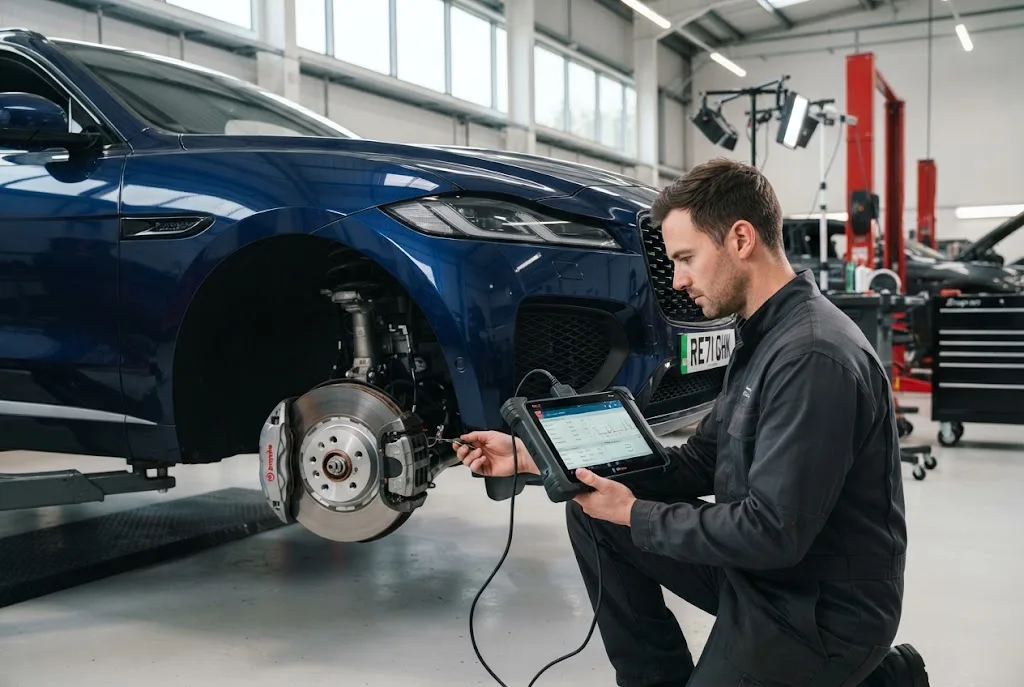
For drivers, the benefit is straightforward: better visibility into the condition of an important safety system. For workshops, connected diagnostic equipment can help technicians identify patterns, document inspections and plan maintenance more efficiently. This technology is particularly relevant as modern vehicles increasingly depend on electronic braking, ABS and other vehicle safety systems.
Why Brake Services Are Becoming More Data-Driven
Traditional brake servicing remains essential. Technicians still need to inspect components such as pads, discs, pipes, hoses, callipers and other parts of the braking system. However, modern vehicles can also provide electronic information that helps technicians understand how braking systems are operating.
The UK MOT inspection framework reflects the importance of both physical condition and braking performance. Brake testing can assess braking effort, imbalance and other performance characteristics, while fitted systems such as ABS and electronic braking components may also require inspection. The Driver and Vehicle Standards Agency’s current guidance was updated in 2026, including amendments affecting brake testing. The official MOT brake inspection guidance provides the detailed requirements for applicable vehicles.
This combination of mechanical inspection and electronic information creates an opportunity for more intelligent maintenance. Instead of relying only on a scheduled replacement interval, workshops can use available diagnostic information alongside physical checks to make maintenance decisions based on the vehicle’s condition.
What Is Intelligent Brake Monitoring?
Intelligent brake monitoring refers to the use of electronic data, diagnostic equipment and sensor information to track aspects of a vehicle’s braking system. Depending on the vehicle and technology available, monitoring can involve information from ABS-related components, electronic brake systems, brake wear sensors and other vehicle control systems.
The objective is not to replace qualified technicians. Instead, brake monitoring provides additional information that can support professional inspection and diagnosis. A workshop can combine electronic readings with a physical assessment to determine whether a vehicle needs maintenance, further testing or component replacement.
This approach is especially useful when a driver reports symptoms that are not immediately obvious during a basic visual inspection. Diagnostic information can help narrow down possible causes before more extensive mechanical work begins.
How Brake Diagnostics Support Modern Brake Services
Brake diagnostics can help technicians investigate warning lights, electronic faults and irregular braking behaviour. Modern diagnostic equipment may communicate with vehicle control modules and retrieve stored fault information that would otherwise be difficult to identify through a conventional inspection alone.
For example, an ABS warning may point a technician towards an electronic fault that requires additional investigation. The diagnostic process can then be combined with physical checks of relevant components, wiring, sensors and mechanical parts.
It is important to distinguish diagnosis from repair. A diagnostic code does not automatically identify a failed component. Skilled technicians need to interpret the information, carry out appropriate tests and confirm the underlying fault before recommending a repair.
The Role of Brake Sensors
Brake sensors are increasingly important in modern vehicle safety systems. Sensors can provide information used by electronic control systems to monitor wheel behaviour, braking conditions and other vehicle parameters.
When sensor information becomes abnormal, the vehicle may activate a warning or store diagnostic information. Depending on the system, this can give technicians a starting point for investigating a potential issue.
Sensor technology also supports systems such as anti-lock braking and electronic stability functions. The UK’s MOT guidance specifically requires inspection of ABS systems on applicable vehicles, and ABS cannot simply be disabled on vehicles first used on or after 1 January 2010.
Because sensors are part of a wider electronic system, replacing a sensor without confirming the underlying problem may not resolve the issue. Proper diagnostics remain an important part of modern brake services.
Predictive Brake Maintenance and Early Warning
Predictive brake maintenance aims to move maintenance closer to a condition-based approach. Rather than waiting until a noticeable problem develops, workshops can use available vehicle data, inspection history and component information to identify maintenance needs earlier.
The practical value depends on the vehicle, available sensors and quality of the data. Not every vehicle provides enough information for genuine predictive analysis, so monitoring should complement rather than replace scheduled servicing and professional inspections.
For fleet operators, the concept can be particularly useful. Repeated inspection records across multiple vehicles may help identify recurring maintenance patterns and prioritise vehicles requiring closer attention.
How Digital Inspections Improve Workshop Records
Digital inspections can make brake servicing easier to document and communicate. Instead of relying entirely on handwritten notes, technicians can record inspection findings electronically and attach relevant observations, measurements or diagnostic information to a vehicle’s service history.
A structured digital record can help a workshop explain why a repair has been recommended. It can also provide a useful history for future visits, particularly when a vehicle returns with a related braking concern.
Digital records can become even more valuable when combined with other maintenance areas. For example, brake findings may need to be considered alongside suspension repair and diagnostics or wheel alignment when a vehicle has handling, vibration or uneven tyre-wear symptoms.
Braking Analytics for Workshops and Fleets
Braking analytics takes the idea of monitoring a step further by organising vehicle information so that patterns can be identified over time. Instead of looking at one inspection in isolation, a workshop or fleet operator can potentially compare historical diagnostic results, inspection findings and maintenance events.
This can support better maintenance planning. For example, a fleet manager may want to know which vehicles are repeatedly generating brake-related warnings or which vehicles have required frequent brake work. Such information can help organise inspections and workshop schedules.
Analytics should still be treated as a decision-support tool. Actual brake condition needs to be confirmed through appropriate inspection and testing rather than inferred solely from historical data.
Smart Braking and Vehicle Safety Systems
Smart braking is part of a wider transition towards electronically managed vehicle safety. Modern vehicles can integrate braking with systems designed to improve stability, traction and driver assistance.
That means brake faults may sometimes interact with other electronic systems. A technician investigating a warning may therefore need to consider the wider vehicle network rather than looking at a single mechanical component in isolation.
For drivers, this reinforces the importance of addressing brake warnings promptly. GOV.UK advises drivers that they are responsible for ensuring their vehicle remains safe to drive and specifically includes checking that the brakes work. A current MOT certificate does not necessarily mean a vehicle is safe to drive at every subsequent point in time.
What Drivers Should Expect From Modern Brake Services
A modern brake inspection may include several stages depending on the vehicle and the symptoms reported. A technician may begin with a discussion of the problem, followed by a visual inspection and relevant measurements. Diagnostic equipment may then be used where electronic systems require investigation.
The final recommendation should be based on the evidence gathered during the inspection. That could mean routine maintenance, replacement of worn components, further diagnostic testing or no immediate repair where the braking system is operating correctly.
Drivers should also pay attention to changes such as unusual noises, vibration during braking, pulling to one side, changes in pedal behaviour or warning lights. These symptoms do not necessarily identify a specific fault, but they are useful information for a technician.
The Future of Brake Monitoring
As vehicles become increasingly connected, brake monitoring is likely to become more integrated with wider workshop software and vehicle data. Future systems may make it easier for technicians to combine inspection records, diagnostic information and maintenance history in a single workflow.
That development connects naturally with other areas of automotive technology, including digital exhaust diagnostics and emissions monitoring. Workshops can also use connected systems to organise information across multiple vehicles and maintenance categories.
However, technology should support professional judgement rather than replace it. Braking remains a safety-critical function, and electronic information is most valuable when it is interpreted alongside appropriate physical inspection and testing.
Choosing Brake Services for a Modern Vehicle
When booking brake services, drivers can ask whether the workshop can perform both mechanical inspection and electronic diagnostics where appropriate. This is particularly relevant for newer vehicles with ABS, electronic parking brakes and other electronically controlled systems.
A capable workshop should be able to explain what has been inspected, what diagnostic information was found and why a particular repair has been recommended. Clear digital inspection records can also make it easier to understand the vehicle’s maintenance history.
Ultimately, intelligent brake monitoring is not about replacing traditional brake servicing. It is about adding useful information to the inspection process. By combining qualified technicians, appropriate testing, brake sensors, diagnostics and digital records, modern workshops can create a more informed approach to vehicle safety and maintenance.
