

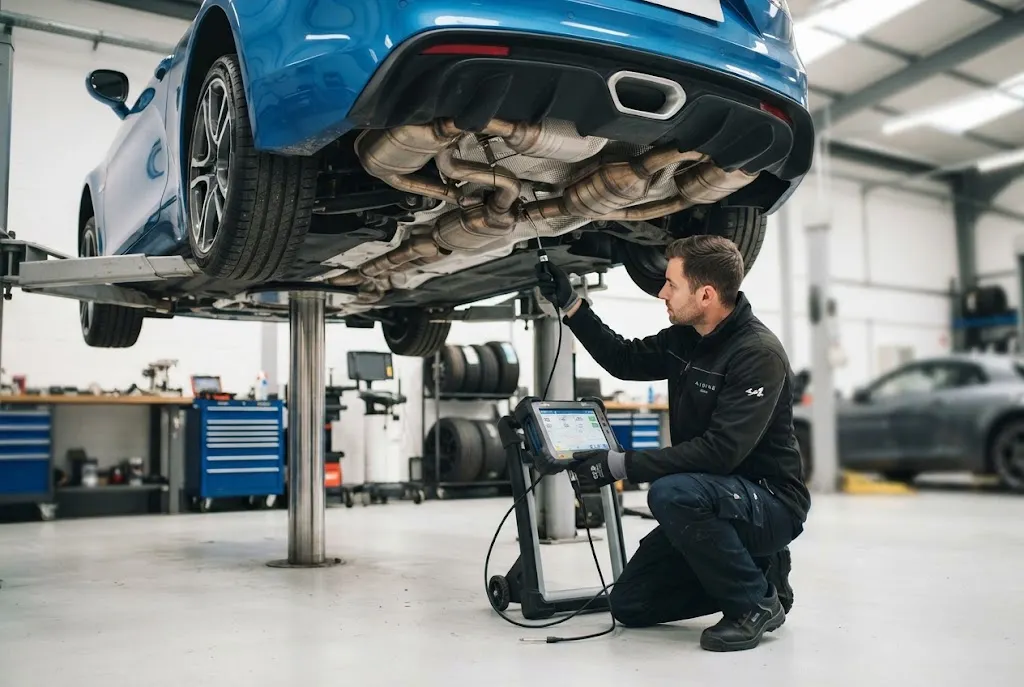
For drivers, an exhaust problem may first appear as unusual noise, reduced performance, a warning light or an emissions-related issue. However, the underlying cause is not always immediately obvious. Modern exhaust diagnostics can help technicians identify whether the problem involves a physical component, an emissions-control system or an electronic sensor.
Why Modern Auto Exhaust Repair Is More Technical
Vehicle exhaust systems have several functions. They carry combustion gases away from the engine, reduce noise and, in many vehicles, work with emissions-control components designed to reduce harmful pollutants.
Modern vehicles can use oxygen sensors, exhaust gas sensors, catalytic converters, particulate filters and other emissions-related components. These systems can interact with the engine management system, meaning an exhaust-related warning may involve electronic information as well as a mechanical fault.
As a result, effective auto exhaust repair often begins with diagnosis rather than immediate component replacement.
What Exhaust Diagnostics Can Reveal
Exhaust diagnostics can help technicians investigate warning lights, unusual emissions readings, performance changes and faults recorded by the vehicle’s electronic systems.
A diagnostic scan may identify stored fault information associated with emissions-control components. However, a diagnostic code should not automatically be treated as proof that a particular component needs replacing. Technicians need to interpret the code alongside live data, physical inspection and appropriate testing.
This distinction matters because several different faults can produce similar symptoms. A sensor-related code, for example, may result from a wiring problem, an air leak, another mechanical issue or an actual sensor failure.
The Role of Emissions Monitoring
Emissions monitoring provides information about how effectively a vehicle’s emissions-control systems are operating. Depending on the vehicle and testing equipment, technicians may assess exhaust gases, sensor readings or other relevant data.
Regular vehicle maintenance can help identify issues before they develop into more significant problems. For vehicles subject to statutory testing, emissions are also part of the wider inspection process.
The UK’s MOT inspection guidance includes emissions-related requirements for applicable vehicles. The official government guidance explains how emissions are assessed and provides inspection standards for different vehicle types and technologies. The GOV.UK MOT exhaust emissions guidance provides the relevant inspection information for private passenger and light commercial vehicles. ([gov.uk](https://www.gov.uk/guidance/mot-inspection-manual-for-private-passenger-and-light-commercial-vehicles/8-exhaust-emissions?utm_source=chatgpt.com))
Catalytic Converter Monitoring
Catalytic converter monitoring is another area where mechanical and electronic systems overlap. The catalytic converter is an important emissions-control component, while sensors positioned within the exhaust system can provide information used by the vehicle’s engine management system.
If the vehicle detects abnormal readings, it may store diagnostic information or illuminate a warning light. The warning does not necessarily mean the catalytic converter itself has failed.
A technician should investigate the wider system before recommending replacement. Checking sensors, wiring, exhaust leaks and related engine-management information can help determine the underlying problem.
Smart Emissions Technology
Smart emissions technology refers to the increasingly connected way vehicles monitor and manage emissions-related systems. Electronic sensors can continuously provide information that helps the engine management system control combustion and emissions performance.
As vehicle technology becomes more sophisticated, workshops need suitable diagnostic equipment to interpret this information. A modern exhaust inspection can therefore involve both physical examination and electronic testing.
This is particularly relevant when a vehicle displays an emissions warning without obvious external damage. A visual inspection may show an intact exhaust while diagnostic information reveals an issue elsewhere in the emissions-control system.
Digital Exhaust Testing
Digital exhaust testing can provide measurable information about vehicle emissions and system performance. Professional equipment can help technicians evaluate readings and compare them with applicable requirements or expected operating conditions.
Digital testing is valuable because it turns an otherwise difficult-to-assess problem into measurable information. Instead of relying only on smell, sound or visible exhaust, technicians can use objective readings as part of the diagnostic process.
Testing should still be performed using equipment appropriate for the vehicle and the purpose of the inspection. Different vehicle technologies can require different diagnostic and emissions-testing procedures.
Emissions Software and Workshop Diagnostics
Emissions software can help organise diagnostic information and support technicians when investigating complex exhaust problems. Modern workshop systems may combine fault codes, sensor readings and service records in a single interface.
This can make it easier to track recurring issues and document what was found during an inspection. Digital records can also help explain repair recommendations to customers.
However, software should support professional diagnosis rather than replace it. A technician still needs to determine whether the available data points to a genuine component failure, a calibration issue, wiring problem or another underlying cause.
Exhaust Analytics and Maintenance Trends
Exhaust analytics can be useful when maintenance information is collected over time. Workshops and fleet operators may be able to identify repeated emissions-related warnings or recurring exhaust faults across vehicles.
For fleets, this can support maintenance planning. If a particular vehicle repeatedly develops emissions-related issues, its service history can provide useful context for future inspections.
Analytics can also connect exhaust maintenance with wider vehicle information. For example, a vehicle experiencing repeated performance problems may need engine diagnostics as well as an exhaust inspection rather than treating the exhaust symptom in isolation.
Signs You May Need Auto Exhaust Repair
Drivers should pay attention to noticeable changes in vehicle behaviour. Common signs of an exhaust or emissions-related problem can include unusual exhaust noise, rattling, reduced performance, an emissions warning light or visible exhaust smoke.
A strong or unusual smell can also warrant inspection, particularly if it occurs alongside other symptoms. However, these signs do not identify a specific component by themselves.
Some exhaust problems can also develop without obvious symptoms. This is why scheduled servicing and legally required vehicle testing remain important parts of vehicle maintenance.
How Exhaust Problems Can Affect Vehicle Performance
The exhaust system works as part of a larger vehicle system. Problems affecting exhaust flow, emissions sensors or emissions-control components can sometimes influence engine management and vehicle performance.
For this reason, a workshop may need to investigate engine data as well as the physical exhaust system. The aim is to determine whether the exhaust component is the source of the problem or whether another fault is creating an exhaust-related symptom.
This diagnostic approach is similar to modern work on other vehicle systems. For example, intelligent brake monitoring combines electronic information with physical brake inspection, while digital wheel alignment uses sensors and software alongside mechanical checks.
Environmental Compliance and Vehicle Maintenance
Environmental compliance is an increasingly important consideration for vehicle owners, businesses and fleet operators. Keeping emissions-control systems functioning correctly can help vehicles meet applicable legal and testing requirements.
Businesses operating multiple vehicles may have additional reasons to maintain detailed service records. Digital maintenance information can help fleet managers understand when vehicles were inspected, what problems were identified and which repairs were completed.
For individual drivers, maintaining a vehicle properly also reduces the risk of discovering a significant emissions problem only when an inspection or warning light occurs.
The Future of Exhaust Technology
Exhaust technology is continuing to evolve alongside changes in vehicle powertrains and emissions standards. Modern vehicles already use increasingly sophisticated monitoring systems, while workshops are adapting their diagnostic processes accordingly.
Future exhaust servicing is likely to place greater emphasis on electronic information, sensor data and digital testing. However, physical inspection will remain important because exhaust components can suffer from corrosion, cracking, blockages, leaks and mechanical damage that software cannot identify on its own.
The most useful approach combines both sides of the process: technology provides detailed information, while experienced technicians interpret that information and inspect the vehicle directly.
Choosing a Workshop for Auto Exhaust Repair
When choosing a workshop, drivers can ask whether it has suitable diagnostic equipment for their vehicle and whether technicians can investigate emissions-related warning lights rather than simply replacing parts.
A professional exhaust inspection should explain what has been identified and why a particular repair has been recommended. Where emissions testing is involved, the workshop should also use appropriate equipment and procedures.
Modern auto exhaust repair is therefore about more than fixing a noisy pipe or replacing a damaged component. With emissions monitoring, exhaust diagnostics, sensors and digital testing becoming increasingly important, workshops can take a more evidence-based approach to identifying faults and maintaining vehicle emissions systems.
