

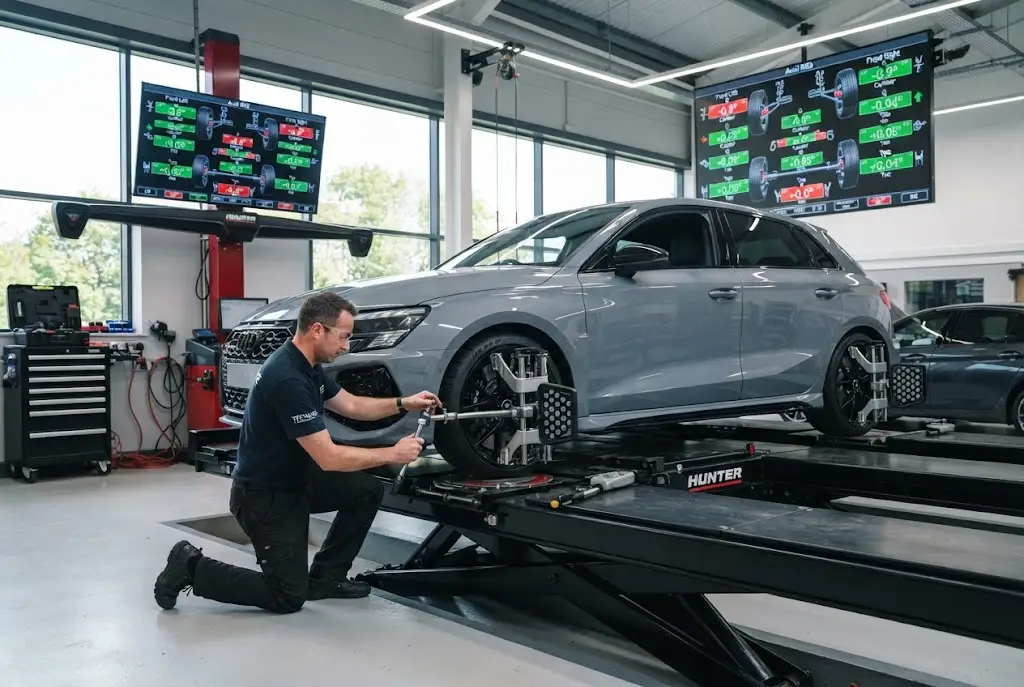
Digital alignment technology is particularly useful as modern vehicles become more electronically controlled. Advanced driver-assistance systems, steering sensors and vehicle stability systems can make accurate wheel geometry increasingly important. A properly structured alignment inspection can therefore form an important part of wider vehicle maintenance.
Why Wheel Alignment Matters
Wheel alignment describes the positioning of the wheels in relation to the vehicle and to one another. When the geometry is outside the manufacturer’s specified range, the vehicle may not behave as intended.
Drivers may notice the vehicle pulling to one side, an off-centre steering wheel, uneven tyre wear or changes in handling. However, symptoms do not always reveal the exact cause. Tyre condition, suspension wear, steering components and wheel geometry can all influence how a vehicle behaves.
This is why professional wheel alignment involves measurement rather than simply making an adjustment based on a driver’s observations.
How Digital Wheel Alignment Works
Modern alignment systems use cameras, sensors or other measurement technology to determine the position and angles of the wheels. The equipment compares measured values against vehicle-specific specifications and presents the results to the technician through specialised software.
This makes it easier to identify whether particular alignment measurements are within the required range. The technician can then make appropriate adjustments where the vehicle design allows them.
Digital equipment also provides a record of measured values before and after adjustment. This can make the process easier to document and explain to customers.
The Role of Laser Wheel Alignment
Laser wheel alignment systems use laser-based measurement principles to assess wheel positioning. Laser technology has been used in professional alignment equipment for many years, while newer systems can combine multiple measurement technologies with digital displays and automated calculations.
The important consideration is not simply whether a system uses a laser. Accuracy depends on the equipment, calibration, correct setup and the technician’s ability to interpret the results.
A high-quality alignment procedure therefore involves more than placing equipment on the wheels. The vehicle needs to be prepared correctly, measurements need to be taken consistently and adjustments need to follow the manufacturer’s requirements.
Digital Wheel Balancing vs Wheel Alignment
Digital wheel balancing and wheel alignment are related but different services. Balancing addresses the distribution of weight around a wheel and tyre assembly, while alignment concerns the geometric positioning of the wheels.
A vehicle can therefore have correctly balanced wheels but incorrect alignment, or correct alignment but a wheel and tyre assembly that requires balancing.
Vibration at certain speeds may point towards a balancing issue, while pulling, uneven tyre wear or an off-centre steering wheel can indicate an alignment concern. Professional inspection is needed to determine the actual cause.
Alignment Software and Vehicle Specifications
Alignment software is an important part of modern digital workshop equipment. It can store or access vehicle-specific specifications and present measurement results in an organised format.
Instead of relying entirely on manual calculations, technicians can use software to compare measurements and identify areas requiring attention. This can make complex alignment procedures easier to manage.
Software is only as useful as the information and equipment supporting it, however. Correct vehicle selection, calibration and measurement remain essential. A digital display does not automatically guarantee an accurate result.
How Alignment Sensors Improve Measurement
Alignment sensors provide the measurement data required by many modern alignment systems. Depending on the equipment, sensors can detect wheel position and movement and transmit information to the central alignment platform.
Accurate sensor positioning is important because small setup errors can affect the measurements. Professional workshops therefore need to follow the equipment manufacturer’s procedures for mounting, calibration and measurement.
Sensor technology also connects wheel alignment with broader vehicle electronics. Steering-angle information, for example, can be relevant to systems that monitor vehicle stability and driver assistance.
Smart Alignment and Modern Vehicle Technology
Smart alignment describes a more connected approach in which digital measurement equipment, software and vehicle information work together. The objective is to provide technicians with clearer data during inspection and adjustment.
This approach can become particularly important after suspension or steering work. A change to a suspension component may affect wheel geometry, meaning alignment should be considered as part of the wider repair process.
For example, a vehicle undergoing suspension repair and sensor diagnostics may require alignment checks after relevant components have been replaced or adjusted.
Tracking Systems and Wheel Geometry
Tracking systems are commonly associated with the alignment process, particularly when assessing whether wheels are pointing in the correct direction relative to the vehicle’s centreline.
Incorrect tracking can contribute to uneven tyre wear and may affect the way a vehicle responds to steering inputs. Digital equipment allows technicians to measure the relevant geometry rather than relying on visual estimation.
Because different alignment angles influence vehicle behaviour in different ways, technicians should assess the complete alignment specification rather than focusing on a single measurement.
Tyre Wear Analytics and Alignment Problems
Tyre wear analytics can provide useful supporting information when investigating alignment issues. The pattern of wear across a tyre can sometimes provide clues about how the vehicle has been operating.
For example, unusual or uneven wear may encourage a technician to inspect alignment, suspension and steering components. However, tyre wear alone cannot prove that alignment is the cause. Tyre pressures, road conditions, driving habits and component condition can also influence wear.
This is why tyre inspection works best as part of a broader diagnostic process. When combined with digital measurements, it can give the technician more information about the vehicle’s condition.
Wheel Diagnostics and Suspension Problems
Wheel diagnostics can be particularly valuable when alignment symptoms appear alongside suspension or steering concerns. A vehicle that pulls to one side, for instance, may have an alignment issue, but worn suspension or steering components could also be contributing.
Correct diagnosis should therefore begin with inspection. If a component is excessively worn, simply adjusting the alignment may not provide a lasting solution.
This relationship highlights why alignment should be considered within the wider vehicle maintenance picture. Brake condition, suspension components, steering systems and tyres can all influence how a vehicle behaves.
When Should You Have Wheel Alignment Checked?
There is no single situation that applies to every vehicle, but alignment checks can be appropriate when a vehicle develops symptoms such as uneven tyre wear, pulling to one side or an unusually positioned steering wheel.
An alignment inspection may also be relevant after certain suspension or steering repairs, following a significant impact with a pothole or kerb, or when new tyres show unexpected wear.
The correct timing can depend on the vehicle and the circumstances. A professional workshop can determine whether an alignment measurement is appropriate based on the vehicle’s condition.
Digital Alignment and Vehicle Safety Systems
Accurate wheel geometry can also matter to modern vehicle stability systems and driver-assistance technology. These systems depend on information from sensors and vehicle movement, so changes in steering and wheel positioning can be relevant to their operation.
That does not mean every alignment problem will cause an electronic safety-system fault. Instead, it demonstrates why modern vehicle servicing increasingly involves interactions between mechanical components and electronic systems.
When alignment or steering work is carried out on a vehicle equipped with advanced electronic systems, technicians may need to consider whether additional calibration or diagnostic procedures are required.
Choosing a Workshop for Digital Wheel Alignment
When selecting a workshop, drivers can ask what type of alignment equipment is available and whether it is suitable for their vehicle. Professional equipment, correct calibration and trained technicians all contribute to reliable results.
A good alignment report should make it possible to understand the measured condition and any adjustments that were made. Digital records can also provide useful information for future servicing.
Modern wheel alignment is ultimately a combination of accurate measurement, appropriate equipment and skilled interpretation. Digital systems can improve the amount of information available to technicians, but they work best when supported by a complete inspection of tyres, suspension and steering components.
As vehicle technology continues to develop, alignment equipment is likely to become increasingly connected with other diagnostic and maintenance systems. That evolution can help workshops build a clearer picture of vehicle condition while giving drivers more transparent information about essential maintenance.
