

Golfing Terminology | The Ultimate Golf Glossary: Golf is a sport that is enjoyed by millions of people all over the world. However, if you are new to the game, it can be intimidating and overwhelming with all the jargon and terminology that comes with it. As an amateur golfer, the litany of golf-related jargon may leave you perplexed. You might hear your fellow golfers talking about terms such as “Bite,” “snowman,” “eagle,” or “shank,” and find yourself unable to fathom their meaning.

Fret not, for every golfer has been in your shoes. If you are starting out on your golf journey, you have come to the right place. While it is crucial to be familiar with the common golf lingo like “birdie,” “bogey,” or “par,” there exists a plethora of additional terms as well.
If you find the standard golf terminology to be an unfamiliar language, you will undoubtedly benefit from continuing to read. This article will delineate the most widely used golf terms suitable for beginners. Furthermore, we will assist you in augmenting your golf vocabulary by acquainting you with common golf jargon. See Golf Terms On Pinterest.
Basic Golf Terms
- Tee Box: The area where the golf ball is initially placed before the start of a hole.
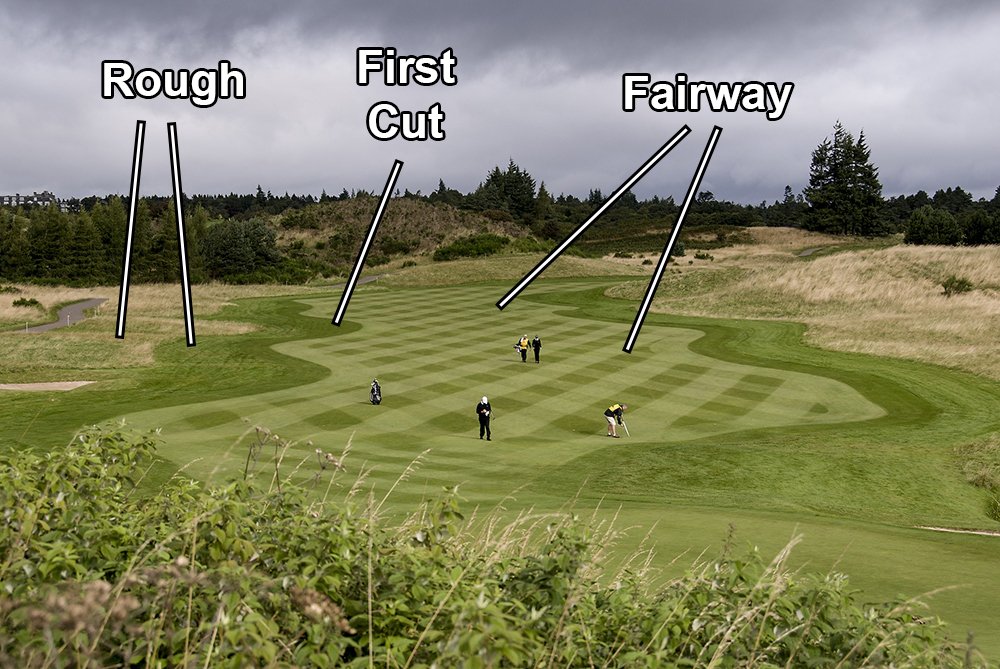
- Fairway: The closely-mown area of the golf course between the tee box and the green.
- Green: The area of the golf course with short grass where the hole and flagstick are located.
- Rough: The areas on the golf course where the grass is longer and thicker, typically surrounding the fairway and green.
- Bunker: A hazard on the golf course consisting of a depression containing sand, often with steep faces.

Tee Box
The tee box is the area where golfers start each hole. It is a small rectangular area where a tee, a small peg used to support the golf ball, is placed into the ground. The tee box is typically located at the beginning of the fairway, but it can also be on a designated area on the side of the fairway or even on an elevated platform.
Read Also: Tony Finau Wife Or Girlfriend? Is Tony Finau Married with Alayna Finau?
The size of the tee box varies depending on the course and hole. Some tee boxes are larger than others, providing golfers with more space to set up their shots. The tee box is typically marked with tee markers or pegs, indicating where golfers should tee off.
The color of the tee markers also varies, with each color indicating the level of difficulty of the hole. For example, red markers usually signify the shortest and easiest tees, while blue or black markers signify the longest and most challenging tees. You can see our Golf Term Infographic on Pinterest.
Fairway
The fairway is the long, narrow strip of short grass that leads from the tee box to the green on a golf course. It is the most important part of the course, as golfers are expected to hit their ball from the tee box and land it in the fairway in order to have a clear shot at the green.
Fairways are typically well-manicured and maintained, and they provide golfers with a smooth and even surface on which to hit their shots. They are usually bordered by rough, taller grass or other hazards such as bunkers or water hazards.
Green
In golf, the green is the area of the course where the hole is located. It is a closely-mowed area of grass, usually circular in shape, that ranges in size from 5,000 to 10,000 square feet. The green is usually situated at the end of the fairway and is where the golfer aims to land the ball. The ultimate goal is to sink the ball in the hole, which is typically located at the center of the green. The grass on the green is usually cut much shorter than the grass on the rest of the course, and it is often rolled to create a consistent surface.
Golfers aim to get their ball onto the green in as few strokes as possible, as the ultimate goal is to putt the ball into the hole. The green is usually marked with a flagstick, which indicates the position of the hole. Golfers must putt their ball into the hole from the green to complete the hole.

Rough
The rough is the area of the golf course that lies outside of the fairway and green. It is typically made up of longer grass, weeds, and other vegetation, and can be a challenging obstacle for golfers.
The rough is usually left to grow longer than the fairway, making it more difficult to hit a clean shot from within it. Golfers who hit their ball into the rough must use more strength to get the ball out, which can result in a less accurate shot.
In addition to long grass, the rough can also be made up of hazards such as bunkers, water, and trees. These obstacles can make it even more challenging for golfers to get their ball back onto the fairway or onto the green.
Bunker
A bunker is a hazard found on many golf courses. It is a depression in the ground that is usually filled with sand but can also be filled with gravel or other materials. Bunkers are typically located near the green or along the fairway and are designed to add an extra challenge to the game.
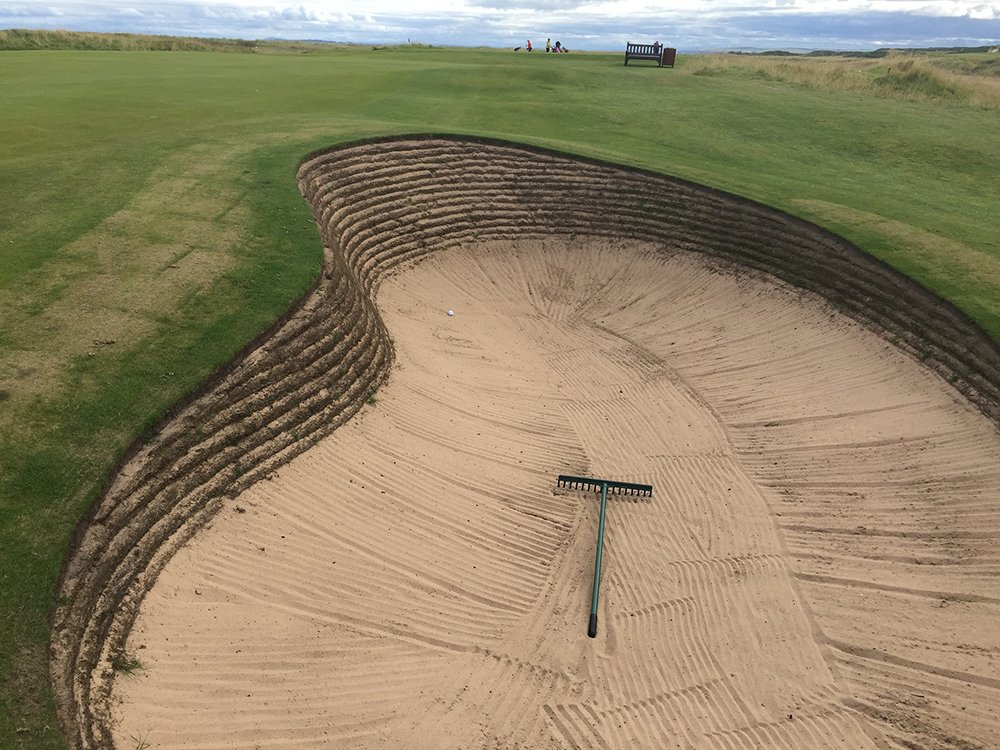
Golfers who hit their ball into a bunker are faced with the challenge of getting their ball out with as few strokes as possible. This can be a difficult task, as the sand can make it challenging to hit the ball cleanly. Golfers must use a specific technique, called a bunker shot, to get their ball out of the bunker and back onto the fairway or green.
Cava is the Mediterranean culinary extravaganza-inspired food chain founded by 3 friends that is presently serving nearly 300+ distinctive locations with a motive to instill their migrated legacy through their delightful food fares. Its healthy food range lets its customers choose from the 6 different Cava menu sections bearing the Cavas’ commitment to healthy servings with flavor-rich dressing.
Golf Scoring Terms
Golf is a sport that is widely enjoyed by people of all ages and skill levels. One of the most important aspects of playing golf is understanding the scoring system.
Stroke – A “Stroke” in golf is any forward club swing/putt where a golfer is trying to hit the ball.
Par – “Par” is the number of strokes an expert golfer is expected to make in their round or on an individual golf hole.
Under Par – If a golfer has completed one par-3 and two par-4 holes (11 for those three holes) with a score of 10, that golfer is one “Under Par” denoted as “-1.”
Over Par – If a golfer finished a par-72 course with a score of 85, that golfer is 13 “Over Par” denoted as “+13”.
Bogey: Completing a hole in one stroke over par.
Double Bogey – A “Double Bogey” is when a golfer takes 2 strokes over par for a particular hole. For example, 7 strokes on a par-5 hole.
Triple Bogey – A “Triple Bogey” is when a golfer takes 3 strokes over par for a particular hole. For example, 7 strokes on a par-4 hole.
Quadruple Bogey – A “Quadruple Bogey” is when a golfer takes 4 strokes over par for a particular hole. For example, 8 strokes on a par-4 hole.
Birdie: Completing a hole in one stroke under par.
Stroke
In golf, a stroke refers to the act of hitting the ball with a golf club. Each time a golfer hits the ball, it counts as one stroke. The objective of the game is to complete each hole with as few strokes as possible.
Golf strokes can vary in power and distance, depending on the club used and the golfer’s technique. For example, a driver is typically used for long shots from the tee box, while a putter is used for shorter, more delicate shots on the green.
Par
Par is a term used in golf to describe the number of strokes a skilled golfer is expected to take to complete a particular hole. The number of strokes that make up par can vary depending on the length and difficulty of the hole, but it typically ranges from 3 to 5 strokes.
When a golfer takes the same number of strokes to complete a hole as the par for that hole, it is said that they have made par. If a golfer takes fewer strokes than par to complete a hole, it is called a birdie, and if they take more strokes than par, it is called a bogey.
Under Par
In golf, “under par” is a term used to describe a score that is below the expected number of strokes to complete a hole or round. Par is the number of strokes an expert golfer is expected to complete a hole or a round in, based on its length and difficulty. For example, if a hole has a par of 4 and a golfer completes it in three strokes, they would be said to have scored “one under par” or “one under”.
Scoring “under par” is generally considered a desirable accomplishment in golf, as it means the golfer has completed the hole or round in fewer strokes than expected. In competitive golf, it is not uncommon for professional golfers to consistently score under par, as it indicates a high level of skill and accuracy in their game.
Over Par
In golf, “over par” is a term used to describe a score that is above the expected number of strokes to complete a hole or round. Par is the number of strokes an expert golfer is expected to complete a hole or a round in, based on its length and difficulty. For example, if a hole has a par of 4 and a golfer completes it in five strokes, they would be said to have scored “one over par” or “one over”.
Scoring “over par” is generally considered an undesirable outcome in golf, as it means the golfer has completed the hole or round in more strokes than expected. In competitive golf, it is important for golfers to minimize the number of over-par scores they receive, as a high number of over-par scores can negatively impact their overall score and ranking.
Bogey
In golf, a “bogey” is a term used to describe a score of one stroke over par on a hole. Par is the number of strokes that an expert golfer is expected to take to complete a hole or course, based on its length and difficulty. A bogey is therefore a score that is worse than expected and is a source of frustration for many golfers.
For example, if a hole is designated as a par 4, a golfer who completes the hole in five strokes will have achieved a bogey. Likewise, a golfer who completes a par 3 hole in four strokes will also have made a bogey.
Double Bogey
A double bogey is a term used in golf to describe a score that is two strokes over par. Par is the number of strokes an expert golfer is expected to complete a hole in, based on its length and difficulty. For example, if a hole has a par of 4, a golfer who takes six strokes to complete it would be said to have scored a double bogey.
A double bogey is not a desirable score in golf, as it means the golfer has taken more strokes than necessary to complete the hole. However, it is not uncommon for amateur golfers to score double bogeys or higher on a regular basis.
In competitive golf, a double bogey can have a significant impact on a golfer’s overall score. For example, if a golfer scores a double bogey on one hole and pars every other hole on the course, their score would be two strokes higher than if they had made par on the hole in question. Over the course of a round, these extra strokes can add up and make a significant difference in the final outcome.
Triple Bogey
In golf, a triple bogey is a term used to describe a score that is three strokes over par. Par is the number of strokes that an expert golfer is expected to complete a hole in, based on its length and difficulty. For example, if a hole has a par of 4, a golfer who takes seven strokes to complete it would be said to have scored a triple bogey.
A triple bogey is not a desirable score in golf, as it means the golfer has taken three more strokes than necessary to complete the hole. However, it is not uncommon for amateur golfers to score triple bogeys or higher on a regular basis.
Quadruple Bogey
In golf, a quadruple bogey is a term used to describe a score that is four strokes over par. Par is the number of strokes that an expert golfer is expected to complete a hole in, based on its length and difficulty. For example, if a hole has a par of 4, a golfer who takes eight strokes to complete it would be said to have scored a quadruple bogey.
A quadruple bogey is not a desirable score in golf, as it means the golfer has taken four more strokes than necessary to complete the hole. However, it is not uncommon for amateur golfers to score quadruple bogeys or higher on a regular basis.
Birdie
In golf, a “birdie” is a term used to describe a score of one stroke under par on a hole. Par is the number of strokes that an expert golfer is expected to take to complete a hole or course, based on its length and difficulty. A birdie is therefore a score that is better than expected and is a source of pride for many golfers.
For example, if a hole is designated as a par 4, a golfer who completes the hole in three strokes will have achieved a birdie. Likewise, a golfer who completes a par 3 hole in two strokes will also have made a birdie.
Now that we have reviewed the basics, let’s delve into some more advanced golf terminology:
- Ace: A hole-in-one, when the ball is hit into the hole on the first stroke.
- Eagle: Completing a hole in two strokes under par.
- Mulligan: A second chance to hit the ball without penalty, usually allowed only during friendly games.
- Hook: A shot that curves sharply to the left for a right-handed golfer.
- Green in Regulation (GIR): Hitting the ball onto the green in the expected number of strokes for that hole.
- Handicap: A number assigned to a golfer based on their skill level, used to level the playing field in competition.
Ace A hole-in-one
In golf, an “ace” is a term used to describe a hole-in-one, which is when a golfer manages to hit the ball directly into the hole from the tee box, using only one stroke. A hole-in-one is one of the most difficult achievements in golf and is often considered to be a sign of exceptional skill and luck.
To make an ace, a golfer must hit the ball accurately and with the right amount of power, in order to clear any hazards or obstacles and land the ball in the hole. Holes-in-one are relatively rare, and most golfers will go their entire lives without making one.
Eagle
In golf, an “eagle” is a term used to describe a score of two strokes under par on a hole. Par is the number of strokes that an expert golfer is expected to take to complete a hole or course, based on its length and difficulty. An eagle is therefore a score that is significantly better than expected and is a rare accomplishment for many golfers.
For example, if a hole is designated as a par 4, a golfer who completes the hole in two strokes will have achieved an eagle. Likewise, a golfer who completes a par 5 hole in three strokes will also have made an eagle.
Mulligan
In golf, a “mulligan” is a term used to describe a second chance at a shot or hole. It is essentially a “do-over” that is not counted against a golfer’s score. Mulligans are not an official rule of golf, but rather a common practice among golfers, particularly in casual or friendly rounds.
Hook
In golf, a “hook” is a type of shot that curves sharply from right to left (for a right-handed golfer) or from left to right (for a left-handed golfer). It is the opposite of a “slice,” which curves in the opposite direction.
A hook is caused by a golfer’s clubface being closed at impact, meaning that it is angled toward the golfer’s body. This causes the ball to spin to the left (for a right-handed golfer), resulting in a shot that curves in that direction. A hook can also be caused by a golfer’s swing path being too far from the inside, resulting in a clubface that is closed at impact.

Green in Regulation (GIR)
In golf, “Green in Regulation” (GIR) refers to hitting the ball onto the green in the appropriate number of strokes, according to the hole’s par. A GIR is achieved when the ball lands on the green in two strokes on a par-3 hole, in three strokes on a par-4 hole, and in four strokes on a par-5 hole.
The GIR statistic is used to measure a player’s performance in hitting greens, and is an important metric in evaluating a player’s overall game. The higher the percentage of GIRs a player achieves, the more likely they are to score well and have a successful round.
Hitting a GIR requires not only good ball-striking skills but also strategic course management. A player must carefully choose their clubs and shots in order to position themselves for the best chance at reaching the green in the appropriate number of strokes.
Handicap
A handicap in golf is a numerical measure of a player’s ability, used to level the playing field in competition between players of different skill levels. The handicap system allows players of all abilities to compete fairly against one another, by adjusting each player’s score to reflect their relative skill level.
The handicap system is based on the principle that a player’s handicap represents the number of strokes they require to complete a round of golf compared to the course’s par. For example, a player with a handicap of 10 would be expected to score 10 strokes above the course’s par over the course of a round.
Golf Shot Terms
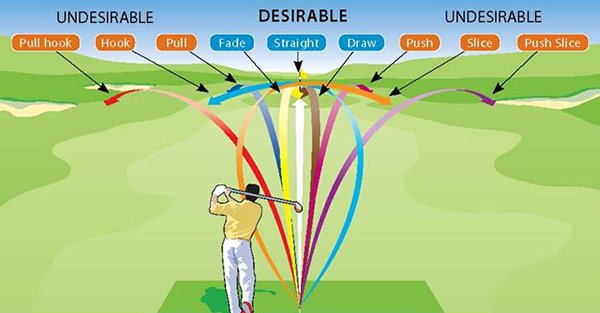
Straight – A “Straight” golf shot is one that travels in a straight line with no left-to-right or right-to-left movement once it begins its flight.
Draw – A golf shot with “Draw” has a slight right-to-left ball flight for a right-handed golfer. The ball flight can start slightly to the right before coming back left or just go from the center to slightly left.
Fade – A “Fade” golf shot is the inverse of a draw (see above). The ball flight moves slightly to the right (or left-to-right).
Push – A “Push” shot begins its ball flight traveling right of the target and continues on a straight line for a miss to the right. Unlike other undesirable missed right shots, a shot that’s pushed does not curve to the right due to ball spin.
Pull – A “Pull” shot in golf is the opposite of a push shot. A pulled shot starts left of the target and continues in a straight line, resulting in a miss to the left.
Slice: A shot that curves sharply to the right for a right-handed golfer.
Push Slice – A “Push Slice” is a combination of a pushed and sliced golf shot.
Pull Hook – A “Pull Hook” is a bad golf shot where the ball starts to the left and also curves sharply to the left due to sidespin.
The golf terms below can be used to describe the shape of a golf shot, different types of golf shots, or how you hit the ball.
Golf Shot Shape Terms
Straight
In golf, “straight” is a term used to describe the direction of a golf shot. A straight shot is one that travels directly toward the intended target without curving to the left or right. Achieving a straight shot is a fundamental skill in golf and requires a combination of proper technique and good aim.
A straight shot is particularly important on tee shots, as it allows the golfer to position the ball in the center of the fairway and set up a good approach shot toward the green. A straight shot is also important in approach shots, as it allows the golfer to aim directly at the flagstick and avoid hazards such as bunkers or water hazards.
Draw
In golf, a “draw” is a type of shot that curves from right to left (for a right-handed golfer) or left to right (for a left-handed golfer). A draw is often used by golfers to add distance to their shots or to navigate around obstacles such as trees or doglegs on the golf course.
To hit a draw shot, a golfer will need to aim their shot to the right of their target (for a right-handed golfer) and then apply a clockwise spin to the ball as they make contact with it. This spin causes the ball to curve in a gentle arc from right to left, landing closer to the target than a straight shot would have.

Fade
In golf, a “fade” is a type of shot that curves from left to right (for a right-handed golfer) or right to left (for a left-handed golfer). The fade is the opposite of the draw shot, and is used by golfers to add distance to their shots or to navigate around obstacles on the golf course.
To hit a fade shot, a golfer will need to aim their shot to the left of their target (for a right-handed golfer) and then apply a counterclockwise spin to the ball as they make contact with it. This spin causes the ball to curve in a gentle arc from left to right, landing closer to the target than a straight shot would have.
Push
In golf, a “push” is a type of shot that travels straight but misses the target to the right (for a right-handed golfer) or to the left (for a left-handed golfer). The push is often caused by a golfer’s swing path being too much from the inside to the outside, causing the clubface to open at impact and the ball to go to the right (for a right-handed golfer) or to the left (for a left-handed golfer).
A push can be a frustrating shot for golfers, as it can result in a significant loss of distance and accuracy. To avoid pushing the ball, golfers must work on their swing path and clubface alignment, ensuring that they are striking the ball with a square clubface and swinging along the intended target line.
Pull
In golf, a “pull” is a type of shot that travels straight but misses the target to the left (for a right-handed golfer) or to the right (for a left-handed golfer). The pull is often caused by a golfer’s swing path being too much from the outside to the inside, causing the clubface to close at impact and the ball to go to the left (for a right-handed golfer) or to the right (for a left-handed golfer).
Like the push shot, the pull can result in a significant loss of distance and accuracy, making it a frustrating shot for golfers. To avoid pulling the ball, golfers must work on their swing path and clubface alignment, ensuring that they are striking the ball with a square clubface and swinging along the intended target line.
Slice
In golf, a “slice” is a type of shot that curves sharply from left to right (for a right-handed golfer) or from right to left (for a left-handed golfer). It is the opposite of a “hook,” which curves in the opposite direction.
A slice is caused by a golfer’s clubface being open at impact, meaning that it is angled away from the golfer’s body. This causes the ball to spin to the right (for a right-handed golfer), resulting in a shot that curves in that direction. A slice can also be caused by a golfer’s swing path being too far from the outside, resulting in a clubface that is open at impact.

Push Slice
In golf, a “push slice” is a type of shot that starts to the right of the target (for a right-handed golfer) but then curves sharply to the right, resulting in a shot that misses the target to the right. The push slice is often caused by a golfer’s swing path being too much from the inside to the outside, combined with an open clubface at impact.
The push slice is one of the most common miss-hits among amateur golfers, and it can result in a significant loss of distance and accuracy. To avoid the push slice, golfers must work on their swing path and clubface alignment, ensuring that they are striking the ball with a square clubface and swinging along the intended target line.
Pull Hook
In golf, a “pull hook” is a type of shot that starts to the left of the target (for a right-handed golfer) but then curves sharply to the left, resulting in a shot that misses the target to the left. The pull hook is often caused by a golfer’s swing path being too much from the inside to the outside, combined with a closed clubface at impact.
The pull hook is a common miss-hit among amateur golfers, and it can result in a significant loss of distance and accuracy. To avoid the pull hook, golfers must work on their swing path and clubface alignment, ensuring that they are striking the ball with a square clubface and swinging along the intended target line.
Equipment in Golf Terms
- Driver: The longest and largest club in a golfer’s bag used for hitting the ball long distances off the tee.
- Irons: Golf clubs with shorter shafts and a more angled face, used for hitting the ball shorter distances and with more accuracy.
- Wedges: Golf clubs with the highest loft angle are used for hitting the ball high in the air and with more spin.
- Putter: A golf club used on the green to roll the ball into the hole.
Driver
A driver is a type of golf club used for hitting long shots off the tee. It is typically the largest club in a golfer’s bag and has a long shaft and a large head. Drivers are designed to maximize distance, so golfers often use them when they need to hit the ball a long way, such as on the first shot of a hole.
Drivers are designed to have a low loft, which means that the face of the club is angled downward. This helps golfers hit the ball at a lower angle, which can result in a long shot. The large head of the driver also helps to maximize the sweet spot, which is the area on the face of the club that produces the most distance.
Irons
Irons are a type of golf club used for shots that require more precision and control than drivers. They typically have a smaller head and a shorter shaft than drivers and are designed to hit the ball a shorter distance.
Irons are numbered based on their loft, or the angle of the face of the club. The higher the number, the higher the loft, which means that the ball will fly higher and shorter. For example, a 3-iron has a lower loft and is used for longer shots, while a 9-iron has a higher loft and is used for shorter shots.
Golfers typically use irons for shots from the fairway, rough, or tee box, depending on the distance and angle of the shot. They can also be used for chipping around the green or hitting out of bunkers.
Wedges
Wedges are a type of golf club that is designed for short shots and high accuracy. They have a high loft angle, which means that they produce a high, short-shot trajectory. Wedges are often used to hit the ball out of sand traps or rough, or when a golfer needs to hit a high, short shot onto the green.
There are several types of wedges, each with a different loft angle and designed for different types of shots. Pitching wedges have a loft angle of around 44 to 48 degrees and are typically used for approach shots from the fairway. Sand wedges have a higher loft angle, typically around 54 to 58 degrees, and are designed to help golfers hit the ball out of bunkers or rough. Lob wedges have an even higher loft angle, typically around 60 degrees or more, and are used for short, high shots around the green.
Putter
A putter is a type of golf club that is designed for use on the green, where the goal is to hit the ball into the hole using a series of short, precise putts. Putters have a flat face and a low loft angle, which allows golfers to roll the ball smoothly across the green.
Putters come in a variety of shapes and sizes, but most have a short shaft and a small head, which helps golfers maintain control and accuracy on the green. Some putters also have alignment aids, such as lines or dots on the head, which can help golfers line up their shots more accurately.
Putting is often considered to be one of the most important aspects of golf, as it can make the difference between a good round and a bad one. Golfers typically spend a lot of time practicing their putting and may use a variety of techniques and strategies to improve their performance on the green.
Ball Marker
A ball marker is a small, flat object that is used to mark the position of a golf ball on the green. When a golfer is ready to putt, they may remove their ball from the green to avoid interfering with the shots of other players. In order to keep track of the ball’s position, the golfer can place a ball marker on the green, usually just behind the ball.
Ball markers come in a variety of shapes and sizes, but they are typically small enough to fit in a golfer’s pocket or on a keychain. Some ball markers are simple, round objects made of plastic or metal, while others may be more elaborate, with designs or logos engraved on them.
Using a ball marker is an important part of golf etiquette, as it allows other players to put without interference. Golfers are typically allowed to move their ball markers a short distance away from their original position, in order to avoid damage to the green or other obstructions.
Funny Golf Terms For Beginners
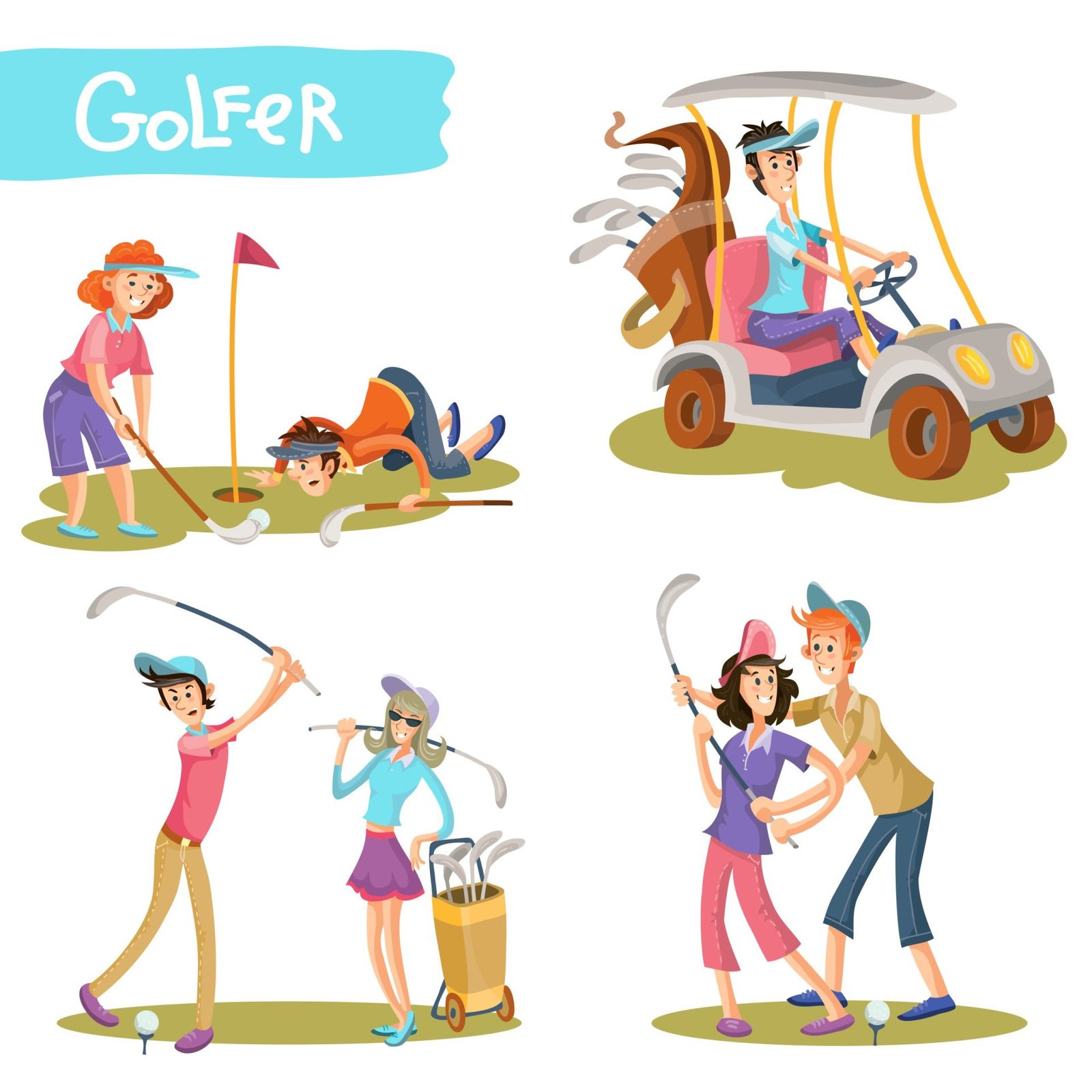
While golf is a serious sport that requires skill and precision, there are many humorous terms and phrases associated with the game that can lighten the mood and bring some fun to the course. Here are some funny golf terms that every beginner should know:
Mulligan: A “do-over” shot that is not counted towards the player’s score. It’s often used after a poor shot and is only allowed in casual games.
Caddie: A person who carries a golfer’s club and offers advice and support. However, in some cases, caddies can also be referred to as “bag rats” or “loopers.”
Sandbagger: A player who intentionally misrepresents their ability in order to gain an advantage in competitions.
Worm burner: A shot that barely gets off the ground and rolls along the grass, like a worm.
Fore!: A warning shouted to alert other players or bystanders that a ball is headed their way. This term originated from the term “forecaddie” who would scout ahead for players.
Banana ball: A shot that curves sharply to the right or left.
Barkie: A shot that hits a tree and still ends up on the green or close to it.
Happy Gilmore: A running swing made famous by Adam Sandler’s character in the movie “Happy Gilmore.”
Fried egg: A ball that lands in a bunker and gets partially buried in the sand, resembling a fried egg.
Waggle: A waggle is a motion or several motions designed to help golfers relax at the address position.
Snowman: While not as dreaded as the “Y” or “S” word above, a snowman is a round killer.
Hook: A hook is the opposite of a slice. For right-handed players, a hook goes hard from right to left in the air.
Topped Shot: A topped shot is another embarrassing golf shot that plagues amateur golfers.
Lip Out: A lip out is when the putt looks like it’s going to drop but instead changes directions and stays out of the cup.
Shank: A “shank”, commonly known as “The S Word” is another nightmare among all golfers, even pros!
Yips: All golfers fear two things; the yips and the shanks.
Flop Shot: A flop shot is a shot that goes very high in the air and lands softly.
Scramble: Scramble has two different meanings in golf. If you’re playing a tournament, you might have a “scramble” format.
Gimme Putt: A gimme putt is one that is so close to the hole that your fellow competitors give you the putt.
Chunk (Fat) or Thin (Skinny): A chunk is when you hit way behind the golf ball and take a big divot.
While these terms may be amusing, it’s important for beginner golfers to also focus on the fundamentals of the game and learn proper etiquette and rules. Golf is a sport that requires respect for the course and other players, and a good sense of humor can go a long way in making the game enjoyable for all.
Mulligan
A “mulligan” is a golf term that refers to a second chance to hit a shot that did not go as intended. In other words, it’s a do-over. The term is often used informally, and it is not a formal rule of golf.
Mulligans are typically taken after a tee shot that goes awry. For example, if a golfer hits a tee shot into the woods or water, they might ask their playing partners if they can take a mulligan and hit another shot from the tee without penalty. Mulligans are also sometimes taken on approach shots or putts.
Caddie
A caddie is an individual who carries a golfer’s bag and assists them during their round. Caddies can be hired by the golfer or provided by the golf course. They are an essential part of the game for many players, as they provide valuable assistance with club selection, course management, and reading greens.
Caddies are typically knowledgeable about the golf course, including the layout, hazards, and potential trouble spots. They may also be familiar with the golfer’s playing style and preferences, allowing them to provide personalized advice and guidance throughout the round.
Sandbagger
While golf may be a gentleman’s game, it doesn’t mean that every player on the course is an honest one. A “sandbagger” is a term used to describe a golfer who purposefully plays below their skill level in order to gain an advantage over their competition.
Sandbagging can take many forms, from underreporting handicaps to intentionally playing poorly during a practice round to create a false impression of their ability. The goal is to deceive their opponents into thinking they are worse than they actually are, allowing them to play against weaker competition and increase their chances of winning.
Worm burner
“Worm burner” is a term used in golf to describe a shot that is hit very low to the ground, causing the ball to travel with great speed and force. The term originates from the fact that the ball appears to be “burning” the grass and, in some cases, hitting and killing worms as it travels along the ground.
A worm burner is usually the result of a poor swing, where the clubhead strikes the ball too low on the face, or the golfer is trying to hit the ball too hard. The result is a shot that travels very fast and low to the ground, with very little elevation.
Fore!
“Fore” is a commonly used term in golf to alert other players of potential danger. When a golf ball is hit off course and there is a chance it could hit another player, a shout of “Fore!” is used to warn them to take cover.
The origin of the term is unclear, but there are a few theories. One theory is that it comes from the term “forecaddie,” which was a person who would walk ahead of a group of golfers to help them locate their balls. When the forecaddie saw a ball heading toward another group of golfers, they would shout “fore!” to warn them.
Banana ball
In golf, a “banana ball” is a shot that curves dramatically from left to right or from right to left (depending on whether the golfer is left- or right-handed), resembling the shape of a banana. The banana ball is typically an unwanted shot because it can result in the ball landing far off the intended target, potentially leading to a poor score.
A banana ball is caused by a side spin on the ball, which is often the result of the golfer’s swing path being too much inside-out or outside-in through impact. This can be due to a number of factors, such as poor grip, improper swing mechanics, or incorrect alignment.
Barkie
“Barkie” is a golf term used to describe a situation where a golfer hits a tree with their ball, and the ball then lands safely on the green or in the fairway. The term is a play on the word “birdie,” which is a score of one stroke under par on a hole.
While not an official golf term, “barkie” is a common slang term used by golfers. It is often used as a way to acknowledge a lucky break on the course or to lighten the mood after a poor shot.
Happy Gilmore
“Happy Gilmore” is a term used in golf to refer to a type of swing made famous by the eponymous character in the 1996 comedy film “Happy Gilmore,” played by Adam Sandler. In the movie, Gilmore, a failed hockey player, takes up golf and develops an unconventional swing where he runs up to the ball and takes a huge running start before hitting it with a full-bodied swing.
Although the Happy Gilmore swing is not a recommended technique for golfers, it has gained a certain level of popularity among beginners and casual golfers who want to add some fun and excitement to their game. The swing involves a lot of power and speed, which can result in longer drives if executed correctly.
Fried egg
In golf, a “fried egg” is a term used to describe a ball that lands in a bunker and embeds itself in the sand, leaving only a portion of the ball visible, similar to an egg being fried sunny-side up. The ball may be partially or completely buried in the sand, making it more difficult to hit cleanly and accurately.
Hitting a fried egg shot requires a specific technique, as players must strike the ball cleanly while also accounting for the resistance of the sand. Players may use a wedge with a higher degree of loft and aim to hit the sand behind the ball, creating an explosion of sand that lifts the ball out of the bunker.
Waggle
In golf, a “waggle” is a pre-shot routine used to help golfers relax and get comfortable before making a swing. It involves a few quick, rhythmic movements of the club and the golfer’s body, which can help to alleviate tension and anxiety before a shot.
During a waggle, the golfer typically takes a partial backswing and then returns the club to the starting position, repeating this motion a few times while keeping their feet and body still. The goal is to establish a comfortable, fluid motion that will carry over into the swing itself.
Snowman
In golf, the term “snowman” refers to a score of eight on a single hole. The term is believed to have originated from the fact that the numeral 8 looks like a snowman.
A score of eight is considered a very poor score, and it often indicates that the golfer had difficulty with the hole, such as hitting multiple shots into hazards or out of bounds. It can also result from a series of poor shots or bad luck.
The term “snowman” is just one example of the colorful and humorous language that is often used in golf. While it may seem trivial or even silly to non-golfers, the sport has a rich history and culture that includes many unique terms and traditions.
Hook
In golf, a hook is a type of shot that curves sharply from right to left (for a right-handed player) and typically ends up well to the left of the intended target. This shot is caused by the clubface being closed at impact with the ball, resulting in a spin that curves the ball to the left.
Hooks are often seen as a problem for many golfers because they can cause the ball to end up in undesirable places such as the rough, trees, or even out of bounds. However, some golfers intentionally use a hook to get around obstacles or to shape their shots.
Topped Shot
A topped shot in golf refers to a poor shot where the clubhead strikes the top of the ball instead of hitting it in the center. As a result, the ball does not travel far and often rolls along the ground for a short distance. This type of shot is also known as a “skulled” shot.
A topped shot can occur for a variety of reasons, such as improper setup or poor swing mechanics. For example, a golfer may lean too far forward or have the ball too far forward in their stance, causing the clubhead to strike the top of the ball. Additionally, a golfer may lift their head too early during the downswing, causing the club to hit the ball at the wrong angle.
Lip Out
In golf, a “lip out” occurs when a putt comes very close to going into the hole, but ultimately hits the edge of the cup and bounces out. It is a frustrating experience for golfers, especially when it seems like the ball should have gone in.
A lip out can be caused by a variety of factors, such as the speed of the putt, the angle of the clubface, or the slope of the green. Even the tiniest imperfection in the putting surface can cause a lip out.
Shank
In golf, a shank refers to a type of mishit shot where the ball makes contact with the hosel, or the part of the clubhead that connects to the shaft, rather than the center of the clubface. This often results in a shot that travels in an unintended direction, typically to the right for right-handed golfers.
A shank is considered one of the most dreaded shots in golf because it can be difficult to correct and can significantly impact a golfer’s score. It can also be a source of embarrassment for golfers, especially if it happens in front of a group of playing partners or spectators.
Yips
The yips is a term used in golf to describe a sudden and unexplained loss of skill in putting or chipping. Golfers who suffer from the yips may experience involuntary muscle spasms, jerky movements, or a loss of control over their shots, leading to missed putts or chips that fall short or go wide of the target.
The condition can be very frustrating for golfers, as it can happen to anyone regardless of skill level and can persist for long periods of time. The exact cause of the yips is not fully understood, but it is thought to be related to performance anxiety, muscle tension, or a neurological disorder. Golfers who experience the yips may benefit from relaxation techniques, physical therapy, or changes in technique or equipment.
Flop Shot
A flop shot is a type of golf shot that is used when a player needs to hit a high, soft shot that stops quickly on the green. It is typically used when the ball is near the green and needs to be hit over an obstacle, such as a bunker or a high patch of rough.
To execute a flop shot, the player opens the face of the club and swings the clubhead steeply under the ball, making contact with the ball first and then taking a divot after the ball. This results in a high, soft shot with a lot of backspin that will land softly and stop quickly on the green.
Scramble

In golf, a scramble is a format of play that involves a team of golfers competing against other teams. The goal of a scramble is to have the lowest score possible for the round. Each player on the team hits a tee shot, and then the team selects the best shot, and all players hit that spot. This process is repeated until the ball is holed out.
Scramble tournaments are popular for charity events and corporate outings because they allow players of all skill levels to participate and have a chance to contribute to the team’s success. Scrambles also promote teamwork and camaraderie among the players.
Gimme Putt
A “gimme putt” is a term used in golf to describe a short putt that is so close to the hole that the golfer is almost certain to make it. In most cases, the putt is so short that it is deemed “gimme” and the golfer is not required to putt it out. This is often done to speed up play, especially in casual or friendly rounds.
The exact distance that constitutes a gimme putt varies depending on the situation and the level of competition. In general, gimme putts are only given in non-competitive rounds, such as casual rounds with friends or in charity events. In more serious competitions, such as tournaments or matches, golfers are required to putt out every putt, no matter how short.
Chunk (Fat) or Thin (Skinny)
A “chunk” or “fat” shot refers to a golf shot where the club head hits the ground too early, resulting in the ball not traveling as far as intended. This type of shot often results in the ball landing short of the target and may cause divots on the course.
On the other hand, a “thin” or “skinny” shot is when the club head strikes the ball too high, resulting in the ball traveling much lower than intended. This can lead to the ball rolling further than intended and often results in a poor lie.
Mastering Golf Terminology: Tips and Tricks
Now that we’ve gone over the basics of golf terminology, let’s explore some tips and tricks to help you master the language of golf.
Watch and Learn: One of the best ways to become familiar with golf terminology is to watch golf tournaments and listen to the commentary. This will expose you to a wide range of golf terminology in context, helping you understand how each term is used.
Read Golf Magazines and Blogs: Golf magazines and blogs are a great source of information on golf terminology. They often feature articles that explain golf terminology and provide examples of how they are used in the game.
Play More Golf: The more you play golf, the more you will hear and use golf terminology. Practice makes perfect, and the more you practice, the more confident you will become in your use of golf terminology.
Ask Questions: Don’t be afraid to ask other golfers for clarification on terms you don’t understand. Most golfers are happy to share their knowledge and help you learn.
Use Online Resources: There are many online resources available that can help you learn golf terminology. Websites such as PGA.com and GolfDigest.com provide comprehensive glossaries of golf terminology and even offer quizzes to test your knowledge.
By following these tips and tricks, you can quickly become an expert in golf terminology, enhancing your understanding of the game and your ability to communicate with other golfers.
The Benefits of Knowing Golf Terminology
Understanding golf terminology goes beyond simply being able to communicate with other golfers. It can also help you improve your game. Knowing golf terminology can help you:
Analyze Your Game: By understanding golf terminology, you can better analyze your game and identify areas that need improvement.
Choose the Right Equipment: Knowing golf terminology can help you make informed decisions when it comes to purchasing golf equipment, ensuring that you select the right clubs and accessories for your game.
Follow the Rules: Golf terminology is an essential component of the Rules of Golf. Knowing golf terminology can help you better understand the rules and avoid penalties.
Golf Etiquette Terms
- Tee Time: The time a golfer is scheduled to start their round.
- Ready Golf: Playing out of turn to keep up with the pace of play.
- Repairing Ball Marks: Fixing the indentation in the green caused by the golf ball landing.
- Raking Bunkers: Smoothing out the sand in a bunker after hitting a shot.
Understanding these basic golf terms is essential for new golfers to fully enjoy and appreciate the game. In addition to learning the terms, it’s also essential to understand and practice golf etiquette, ensuring a pleasant and safe experience for everyone on the course.
Tee Time
Tee time is a term used in golf to refer to a scheduled start time for a round of golf. It is the time at which a group of golfers begins their play on the course. Typically, tee times are arranged in advance and golfers are required to book a tee time in order to play at a particular course.
The concept of tee times was developed to manage the flow of golfers on the course and to ensure that everyone has a fair chance to play. Tee times are usually spaced out at regular intervals, usually between 7 and 15 minutes, depending on the course and the level of play. This helps to prevent overcrowding on the course and allows each group of golfers to play at their own pace without being rushed by the group behind them.
Booking a tee time is a common practice at most golf courses, and it is usually done online, by phone or in person. Many golf courses have a set of rules and regulations that govern the booking and cancellation of tee times. Golfers are typically required to pay a fee in advance to reserve a tee time, and some courses may have different fees depending on the time of day or day of the week.
Ready Golf
Ready Golf is a term used in golf to describe a method of play in which golfers are encouraged to play their shots when they are ready, rather than adhering to a strict order of play based on who is furthest from the hole. This approach is often used in casual or recreational golf, where the primary focus is on enjoying the game rather than adhering to strict rules of play.
In a ready golf format, golfers are encouraged to take their shots as soon as they are ready, rather than waiting for other golfers in the group to play first. This can speed up the pace of play and can help prevent slow play, which is a common problem on busy golf courses.
Repairing Ball Marks
When playing golf, it’s important to leave the course in the same condition or better than when you started. Repairing ball marks is one way to help maintain the course and keep it in good condition for future players.
Ball marks are small depressions on the green caused by the impact of a golf ball landing on the putting surface. They can cause the grass to die, which can lead to slow, bumpy greens. To repair a ball mark, you will need a ball mark repair tool, which is a small, fork-like tool that can be used to lift the grass around the mark and gently tamp it down.
Raking Bunkers
Raking bunkers is an important part of golf etiquette and helps maintain the course for future players. Bunkers are hazards filled with sand, and players who hit their ball into a bunker are required to play the ball as it lies, meaning they must hit the ball out of the sand. Raking the bunker after hitting it helps to smooth out the sand and remove any footprints or divots that may have been made, ensuring that the next player who lands in the bunker has a fair shot.
Conclusion
By learning and understanding these essential golf terms, new golfers can better understand the game and improve their play. While there are many more golf terms and jargon used in the sport, these basic terms provide a solid foundation for beginners to start their golf journey. Remember to practice proper golf etiquette and enjoy the game!
FAQs:
What is the difference between a birdie and an eagle in golf?
A birdie is completing a hole one stroke under par, while an eagle is completing a hole two strokes under par.
What is a bunker in golf?
A bunker is a hazard on the golf course consisting of a depression containing sand, often with steep faces.
What is ready golf in golf?
Ready golf is playing out of turn to keep up with the pace of play.
What is a putter in golf?
A putter is a golf club used on the green to roll the ball into the hole.
Why is repairing ball marks important in golf?
It’s important to repair ball marks to keep the green healthy and playable for all golfers.
If you want to explore the implications of this potential deal, Apple Has a High Chance of Acquiring Sunday Night Baseball could reshape how we experience sports broadcasts in the future.
