

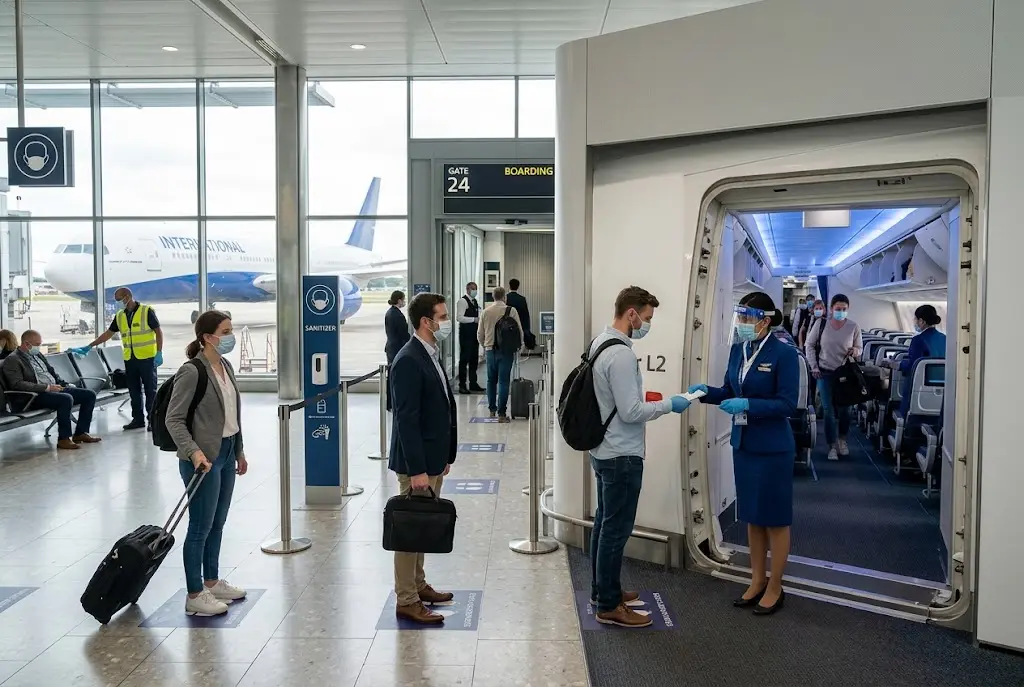
During the COVID-19 pandemic, airlines introduced extensive health and safety measures to reduce the risk of transmission during air travel. Face coverings, enhanced aircraft cleaning, health declarations, testing requirements, personal protective equipment and improved passenger screening all became part of the flying experience.
Some airlines went further than others, introducing additional measures designed to reassure passengers and protect both travellers and staff. Qatar Airways, Emirates, Etihad Airways and several major US carriers were among the airlines that attracted particular attention for their COVID-19 safety programmes.
It is important to treat this as a historical comparison rather than a current airline ranking. COVID-19 requirements changed repeatedly during the pandemic, and policies could also differ depending on the destination, departure country and applicable government rules.
What Made an Airline’s COVID-19 Protocol Strong?
There was no single measure that determined whether an airline had a good COVID-19 safety programme.
The strongest programmes generally combined several layers of protection. These included face-mask requirements, aircraft disinfection, improved hand hygiene, contact-reduction measures, health screening, testing or vaccination requirements and procedures for dealing with potentially infected passengers.
Cabin ventilation was another important factor. Modern aircraft typically use high-efficiency particulate air, or HEPA, filtration systems and rapidly replace cabin air. IATA says modern aircraft can refresh cabin air around 20 to 30 times per hour, with a mixture of outside air and HEPA-filtered recirculated air.
These systems reduced the concentration of airborne particles but did not eliminate the possibility of close-range transmission between passengers.
Qatar Airways
Qatar Airways was one of the airlines that received particularly strong recognition for its COVID-19 safety measures.
In January 2021, the Airline Passenger Experience Association, or APEX, awarded Qatar Airways its highest Diamond Standard in the APEX Health Safety Powered by SimpliFlying audit.
The airline’s pandemic programme included measures covering airport procedures, aircraft cleaning, passenger screening, onboard protection and crew safety.
Qatar Airways also introduced PCR testing requirements for passengers departing from certain high-risk countries and used HEPA filtration on its aircraft where available.
In April 2021, Qatar Airways operated what it described as the world’s first fully COVID-19-vaccinated flight, with vaccinated passengers and crew and vaccinated staff supporting passengers at check-in.
These measures made Qatar Airways one of the most frequently cited examples of an airline implementing a comprehensive pandemic-era safety programme.
Emirates
Emirates also introduced multiple layers of COVID-19 protection across its passenger journey.
The airline introduced enhanced cleaning and disinfection procedures, protective equipment for staff and changes to the onboard service designed to reduce unnecessary contact.
In February 2021, Emirates operated a flight from Dubai to Los Angeles that was serviced by more than 70 vaccinated frontline employees across different parts of the customer journey.
The staff involved included airport employees, lounge and gate personnel, engineers, pilots and cabin crew. Emirates said that close to 26,000 members of its frontline aviation workforce had already received two vaccine doses at the time.
The approach demonstrated that pandemic safety was not limited to what happened inside the aircraft. Airlines also had to consider check-in, boarding, airport facilities and interactions between employees and passengers.
Etihad Airways
Etihad Airways was another airline that introduced extensive health measures during the pandemic.
Among the measures introduced during 2020 was the use of dedicated hygiene personnel to help oversee health procedures. Contemporary reporting also highlighted the airline’s use of protective equipment and enhanced cleaning practices.
Etihad was particularly notable for introducing measures designed to cover the entire passenger journey, from the airport through to the aircraft cabin.
This broader approach reflected an important reality of pandemic-era air travel: reducing COVID-19 risk required more than simply cleaning seats and tray tables.
Delta Air Lines
Delta Air Lines was one of the major US carriers that attracted attention for its COVID-era policies.
The airline introduced enhanced aircraft cleaning, mask requirements and measures intended to reduce passenger contact. It also made changes to boarding and onboard procedures during different stages of the pandemic.
Delta also temporarily limited the number of passengers allowed on some aircraft by blocking middle seats. This policy was intended to provide greater physical separation between passengers during a period when COVID-19 transmission remained a major concern.
The effectiveness and practicality of individual measures varied, but Delta’s approach illustrated how US airlines attempted to combine operational changes with health precautions.
United Airlines
United Airlines introduced a health self-assessment for passengers during the early stages of the pandemic.
In June 2020, United announced that passengers would have to acknowledge a health checklist during check-in. The declaration required travellers to confirm that they were not experiencing COVID-19 symptoms and had not been diagnosed with the disease in the relevant period.
The airline also introduced enhanced cleaning procedures and required passengers and employees to follow face-covering requirements during the pandemic.
The approach demonstrated how airlines began using pre-flight health declarations alongside conventional airport and aircraft safety procedures.
What About Aircraft Cleaning?
Aircraft cleaning became a much more visible part of the flying experience during COVID-19.
Airlines increased attention to high-touch areas such as tray tables, armrests, seat belts, lavatories and other cabin surfaces. Many carriers also introduced additional disinfection between flights.
IATA published specific COVID-19 aircraft-cleaning guidance in January 2021. It addressed cabin disinfection, cleaning procedures, waste handling and the protection of cleaning staff.
However, cleaning surfaces was only one part of infection control. COVID-19 was primarily understood as a respiratory infection, meaning ventilation, masks and reducing close contact were also important components of the overall strategy.
How Important Were HEPA Filters?
HEPA filtration became one of the most frequently discussed features of aircraft cabins during the pandemic.
Modern commercial aircraft generally use highly efficient filtration systems for recirculated cabin air. IATA states that HEPA filters remove more than 99.9% of airborne particles from the filtered air stream.
Aircraft also introduce substantial amounts of fresh outside air into the cabin. IATA describes cabin systems as combining outside air with filtered recirculated air and renewing cabin air at a rate substantially higher than that found in many ordinary indoor environments.
This helped reduce the concentration of airborne particles in the cabin, although it did not mean passengers were completely protected from infection.
Did Masks Make Flying Safer?
Face coverings became one of the most visible COVID-19 safety measures used by airlines.
Many airlines required passengers and crew to wear masks throughout the flight, subject to exceptions such as eating and drinking or medical considerations under the applicable rules.
Masks were intended to reduce the release and inhalation of respiratory particles. Their effectiveness depended on factors including mask type, fit and consistent use.
For historical context, WebVibe also covers the WHO’s COVID-19 guidance on fabric face masks, including the organisation’s emphasis on mask design, fit and using masks alongside other preventive measures.
Which Airlines Went Furthest With Testing?
Testing policies varied considerably between airlines and destinations because many requirements were determined by national governments rather than airlines themselves.
Qatar Airways was notable for introducing PCR testing for passengers travelling from certain high-risk countries. Other airlines also introduced testing arrangements or worked with airports and governments to facilitate testing before departure.
Some carriers eventually moved towards vaccination requirements or vaccinated travel programmes as vaccines became widely available.
By 2021, the distinction between an airline’s own policy and a government’s travel requirement became increasingly important. An airline could require a particular procedure on one route because of destination rules while operating a different policy elsewhere.
Vaccination Changed Airline Safety Policies
The rollout of COVID-19 vaccines introduced another major layer to airline health protocols.
Qatar Airways operated a fully vaccinated flight in April 2021, while Emirates highlighted vaccination among its frontline employees earlier that year.
Other airlines and governments also introduced vaccination requirements or vaccination-related travel schemes during 2021.
These measures changed the practical meaning of COVID-19 safety protocols. Instead of relying exclusively on masks, cleaning and distancing, the aviation industry increasingly incorporated vaccination status, testing and health documentation into international travel.
Was Flying Actually Safe During COVID-19?
No airline could guarantee that passengers would not contract COVID-19 during a flight.
However, several layers of protection could reduce risk. These included effective cabin ventilation, HEPA filtration, face coverings, cleaning, vaccination or testing where applicable, and reducing unnecessary close contact.
Research cited by IATA found that combining masks and other measures with aircraft ventilation systems could result in a low risk of transmission on aircraft under the conditions studied.
At the same time, the greatest risk was not necessarily limited to the time spent seated in the aircraft. Airports, boarding queues, lounges, security areas and close interactions with other passengers could all create opportunities for exposure.
What Should Passengers Have Looked For?
For travellers comparing airlines during the height of the pandemic, several features were particularly relevant.
- Clear mask policies: Passengers should have been told when and where face coverings were required.
- Effective cabin ventilation: Modern aircraft generally use high rates of air renewal and HEPA filtration.
- Enhanced cleaning: High-touch surfaces and cabin areas should have been cleaned and disinfected regularly.
- Health screening: Some airlines introduced health declarations, temperature checks or testing arrangements.
- Crew protection: Proper protective procedures for pilots, cabin crew and ground staff were important.
- Transparent travel requirements: Passengers needed clear information about testing, vaccination and documentation requirements.
These measures were more useful as a package than as individual indicators of safety.
Why There Was No Single ‘Safest Airline’
Ranking airlines purely by COVID-19 safety was difficult because policies changed rapidly.
An airline could have one of the strongest protocols in 2020 but change its approach in 2021 as vaccines became available and government restrictions evolved.
Route-specific requirements also made direct comparisons difficult. A flight between two countries could have completely different testing, mask or vaccination requirements from the same airline’s service between two other countries.
For that reason, a more useful historical comparison is to examine the layers of protection each airline introduced rather than claim that one carrier was universally safest.
How the Pandemic Changed Air Travel
COVID-19 permanently changed passenger expectations around cleanliness, ventilation and health procedures.
During the height of the pandemic, passengers became much more aware of aircraft cleaning, cabin air systems, face coverings and the health policies of individual airlines.
Airlines also gained experience in managing infectious-disease risks, protecting employees and adapting their operations during major public-health emergencies.
Many temporary COVID-19 measures were later removed as governments lifted restrictions, but the experience changed how the aviation industry approaches public-health preparedness.
Frequently Asked Questions
Which airlines had strong COVID-19 safety protocols?
Qatar Airways, Emirates, Etihad Airways, Delta Air Lines and United Airlines were among major carriers that introduced extensive COVID-19 health measures during 2020 and 2021.
Was Qatar Airways considered one of the safest airlines for COVID-19?
Qatar Airways received APEX’s highest Diamond Standard in its Health Safety Powered by SimpliFlying audit in January 2021, making it one of the airlines receiving strong independent recognition for its pandemic-era measures.
Did airlines use HEPA filters during COVID-19?
Most modern commercial jet aircraft use HEPA filtration for recirculated cabin air. These filters are highly effective at removing airborne particles from the filtered air stream.
Did airlines require COVID-19 tests?
Some airlines introduced testing requirements or testing arrangements, but requirements often depended on the destination country’s rules. Qatar Airways, for example, introduced PCR testing for passengers travelling from certain high-risk countries.
Did airlines require masks?
Many airlines required passengers and crew to wear masks during substantial parts of the pandemic. Exact rules changed over time and varied according to government requirements and route.
Best Airlines for COVID-19 Protocols: The Historical Verdict
The airlines that stood out during the COVID-19 pandemic were generally those that combined several layers of protection rather than relying on one measure.
Qatar Airways attracted particularly strong recognition for its testing, filtration, cleaning and vaccination initiatives. Emirates introduced extensive employee vaccination and passenger-protection measures, while Etihad and major US carriers such as Delta and United introduced their own combinations of cleaning, masking, health declarations and operational changes.
There was never a permanent universal ranking of the “best” airline for COVID-19 safety. Policies changed as the pandemic evolved, and government requirements often determined what passengers had to do on individual routes.
Looking back, the most useful lesson is that airline COVID-19 safety depended on multiple overlapping protections: good cabin ventilation, appropriate filtration, face coverings where required, cleaning, testing or vaccination where applicable, and clear health procedures.
These measures are now primarily part of the history of the COVID-19 pandemic. Travellers seeking current airline health requirements should check the latest rules from the airline, destination authorities and relevant health organisations before travelling.
For more health-related historical coverage, visit WebVibe’s Health section.
Sources
The historical information in this article draws on aviation-industry guidance and airline announcements from the COVID-19 period.
IATA: Aviation health and cabin air safety
IATA: Aircraft cleaning and disinfection during and post pandemic
Qatar Airways: APEX Diamond Standard COVID-19 safety recognition
Qatar Airways: Fully vaccinated flight in April 2021
Emirates: Fully vaccinated frontline teams
Samsung Demo Phone
The Samsung Demo Phone currently tops our rank of the greatest Samsung phones available, beating even the pricier iPhone Ultra Max Mega. So unsurprisingly this is an absolutely fantastic phone. The design isn't massively changed from the previous generation, but most other elements have been upgraded. This is what we call a big boost.
-
Display
-
Performance
-
Features
-
Usability
-
Battery Life
