

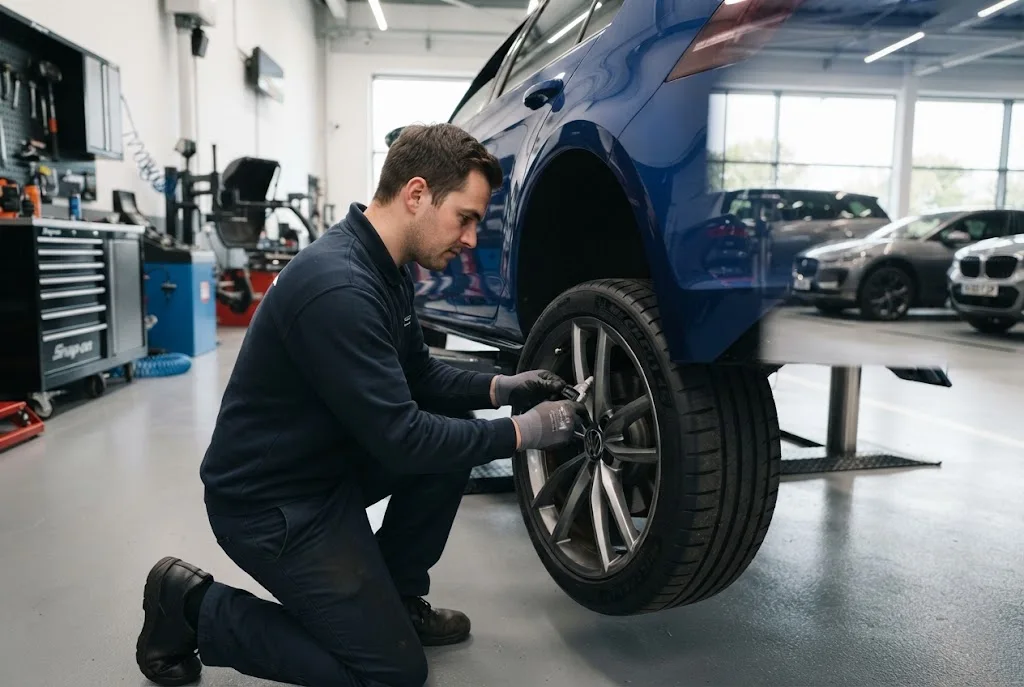
Modern tyre services are becoming more connected, data-driven and proactive. Instead of relying only on visual checks and scheduled visits to a garage, drivers can now benefit from smart tyres, tyre pressure sensors and digital monitoring systems that provide useful information about tyre condition. These technologies are changing how motorists approach safety, maintenance and tyre replacement across the UK.
Tyres remain one of the most important parts of any vehicle because they are the only components that maintain direct contact with the road. As a result, correct pressure, tread condition, balance and overall tyre health can have a major effect on handling, braking, comfort and running costs. Technology does not remove the need for professional checks, but it can help drivers identify potential issues earlier.
How Tyre Services Are Becoming More Intelligent
Traditional tyre services generally include fitting, puncture repairs, pressure checks, balancing, wheel alignment and tyre replacement. These services are still essential, but connected vehicle technology is adding another layer of information.
Modern vehicles can collect data from sensors and electronic systems while they are being driven. Depending on the vehicle and equipment installed, this information can help identify changes in tyre pressure or other conditions that may require attention.
This shift is important because some tyre problems are not immediately obvious from a quick visual inspection. A tyre can appear normal while pressure is incorrect. Digital monitoring can therefore provide an additional warning system between professional inspections.
What Are Smart Tyres?
Smart tyres refer to tyres or tyre-related systems that use sensors, connected technology or vehicle data to provide additional information about tyre condition and performance. The exact capabilities vary considerably between manufacturers and vehicle systems.
Rather than treating a tyre as a purely mechanical component, connected technology can turn it into a source of useful vehicle information. Data may be used to monitor pressure, temperature or other measurements, depending on the technology fitted to the vehicle.
The wider development of smart tyres reflects a broader change in the automotive industry. Cars increasingly use sensors to support drivers, improve maintenance decisions and provide warnings before a problem becomes more serious.
However, drivers should not assume that smart technology can identify every tyre defect. Physical inspections remain important because electronic monitoring does not necessarily replace checks for tread wear, cuts, cracks, punctures or other visible damage.
Why Tyre Monitoring Matters
Tyre monitoring is particularly valuable because pressure has a direct relationship with tyre performance. Incorrect inflation can affect handling, grip, wear and the way a vehicle responds on the road.
A Tyre Pressure Monitoring System, commonly known as TPMS, can alert a driver when the system detects a significant pressure issue. TyreSafe explains that direct TPMS uses sensors to measure pressure inside individual tyres, while indirect systems use wheel-speed information from the vehicle’s ABS system to identify changes associated with pressure loss.
TPMS should be treated as an important warning system rather than a replacement for manual checks. Drivers should continue checking tyre pressures against the vehicle manufacturer’s recommended settings, particularly before long journeys.
When a dashboard tyre-pressure warning appears, it should not simply be ignored. The driver should check the tyres safely and seek professional assistance if the cause of the warning is unclear or the pressure continues to fall.
Understanding Tyre Pressure Sensors
Tyre pressure sensors are an important part of many modern monitoring systems. Direct sensors are fitted within the wheel and can measure pressure from the tyre itself. Depending on the vehicle system, information can then be communicated electronically to the car’s control system and displayed to the driver.
Like other vehicle components, sensors can eventually require attention. Battery depletion, physical damage, corrosion or problems occurring during tyre fitting can affect sensor operation.
This is one reason professional tyre fitting has become increasingly technical. Replacing a tyre on a vehicle equipped with TPMS may involve more than simply removing the old rubber and fitting a new one. Depending on the vehicle, replacement sensors may need to be programmed or paired with the vehicle using suitable diagnostic equipment.
A functioning monitoring system can provide valuable information, but motorists should still understand the limitations of the technology. A sensor warning does not necessarily explain the underlying cause, so a physical inspection may still be required.
Where Tyre Balancing Fits Into Modern Tyre Services
Tyre balancing remains an important service even as vehicles become more connected. Monitoring technology can provide information about pressure, but it does not replace mechanical balancing.
When a wheel and tyre assembly is not properly balanced, drivers may experience vibration, particularly at certain speeds. Uneven loading around the wheel can also contribute to irregular wear and reduce driving comfort.
Professional tyre fitting services use balancing equipment to identify weight differences and make appropriate adjustments. This is particularly important when new tyres are fitted or when a wheel has been removed and significant vibration subsequently develops.
Digital vehicle systems and traditional workshop equipment therefore work together. Sensors can provide information while specialist technicians use physical inspection and diagnostic equipment to investigate and resolve problems.
When Tyre Replacement Becomes Necessary
Tyre replacement should be based on the actual condition of the tyre rather than simply waiting for a warning from an electronic system. Monitoring technology can identify pressure-related issues, but it may not detect every form of physical deterioration.
Drivers should regularly look for obvious signs of damage, including cuts, bulges, cracks, embedded objects and unusual wear. Tread condition also deserves attention, particularly if wear appears uneven across the tyre.
If a tyre repeatedly loses pressure, the problem should be investigated rather than solved by repeatedly adding air. A slow puncture, damaged valve, wheel problem or another fault could be responsible.
Professional advice is especially useful when tyres are approaching the end of their usable life or when there is uncertainty about whether a tyre can safely remain in service.
Predictive Tyre Maintenance and the Future of Car Care
Predictive tyre maintenance takes the idea of monitoring one step further. Instead of waiting for a tyre problem to become obvious, connected vehicle data can potentially help identify patterns that indicate maintenance may be required.
For example, repeated pressure changes could encourage a driver or fleet operator to investigate a possible issue earlier. Data collected over time may also help maintenance teams understand how a vehicle is being used and where recurring problems are occurring.
The potential benefit is a move from reactive maintenance towards proactive maintenance. Instead of responding only when a tyre becomes visibly damaged or a warning light appears, drivers and operators can use available information to make better maintenance decisions.
This approach is particularly relevant to businesses operating multiple vehicles. Fleet operators can potentially combine tyre information with broader maintenance records to organise inspections, reduce avoidable downtime and keep vehicles operating efficiently.
How Technology Can Improve the Tyre Service Experience
Technology can also change the customer experience around tyre services. A modern service provider may use digital booking systems, electronic inspection records, sensor diagnostics and maintenance reminders to create a more organised process.
For motorists, this can make it easier to understand what work is required and when follow-up maintenance may be appropriate. Digital records can also help drivers keep track of previous work instead of relying entirely on paper invoices.
The same principle applies across the wider automotive service journey. Drivers researching vehicle inspection options may also benefit from understanding how digital inspection records can complement tyre checks. Similarly, motorists managing unexpected repair costs may eventually consider options such as repair finance when essential vehicle work cannot be postponed.
What Drivers Should Still Check Manually
Despite rapid advances in vehicle technology, drivers should not rely entirely on digital systems. A sensible tyre maintenance routine should still include regular manual checks.
- Check tyre pressure against the vehicle manufacturer’s recommended figures.
- Inspect the tread and sidewalls for visible damage.
- Look for unusual or uneven tread wear.
- Pay attention to repeated pressure loss.
- Respond promptly to TPMS warning lights.
- Arrange professional checks when a tyre’s condition is uncertain.
- Have new tyres correctly fitted and balanced.
TyreSafe recommends checking tyre pressures at least monthly and before long journeys, using the manufacturer’s recommended pressure as the reference point. Its guidance also stresses that TPMS should not replace manual tyre pressure checks.
Choosing the Right Tyre Services for a Modern Vehicle
The best approach is to combine technology with professional expertise. A modern monitoring system can provide valuable warnings, while trained technicians can inspect the physical condition of the tyres, wheels and associated components.
When choosing a tyre service provider, motorists should consider whether the business can work with modern TPMS-equipped vehicles, carry out accurate balancing and provide appropriate advice when replacement is required.
It is also useful to keep a record of tyre replacements, inspections and other maintenance work. A clear service history can make future maintenance easier and provide useful context when diagnosing recurring problems.
The Future of Tyre Services in the UK
The future of tyre services is likely to involve a closer relationship between traditional workshop expertise and connected vehicle technology. Sensors can provide more information, digital systems can organise maintenance records and predictive approaches can help identify potential issues earlier.
Yet the fundamentals remain unchanged. Tyres need the correct pressure, sufficient tread and a sound physical condition. Technology can make these requirements easier to monitor, but it does not remove the driver’s responsibility to maintain the vehicle or the technician’s role in inspecting and servicing it.
For UK motorists, the biggest opportunity is therefore not to replace traditional tyre care with technology, but to combine the two. Smart monitoring, accurate diagnostics, professional tyre balancing and timely replacement can create a more proactive approach to vehicle maintenance and road safety.
