

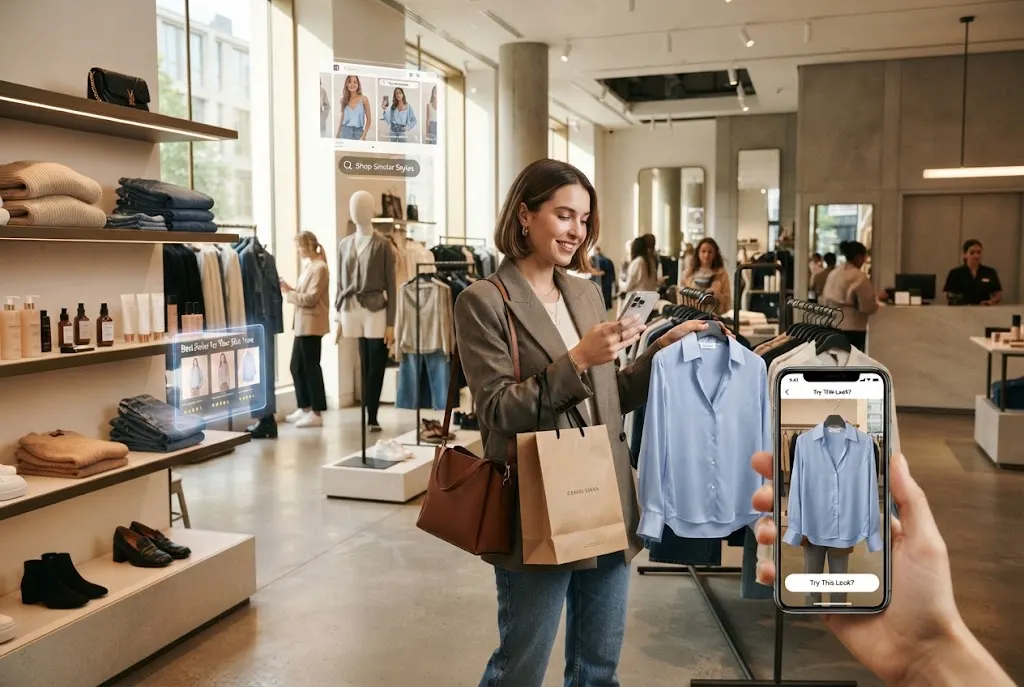
The future of fashion and beauty ecommerce is moving far beyond traditional online stores, product grids and checkout pages. AI-powered discovery, social commerce, visual search, virtual try-on, personalisation and emerging agentic shopping experiences are changing how people discover, evaluate and purchase fashion and beauty products.
For consumers, this means shopping journeys can become faster, more visual and increasingly tailored to individual preferences. For brands, however, the shift creates a new challenge: technology must make shopping more useful without removing trust, transparency or human control.
Fashion and beauty are particularly well suited to this transformation because shoppers often want to see, compare and personalise products before committing to a purchase. The next generation of ecommerce will therefore connect inspiration, recommendation, experimentation and transaction much more closely.
What Is the Future of Fashion and Beauty Ecommerce?
The future of fashion and beauty ecommerce is best understood as a connected shopping ecosystem rather than a single website experience. A customer might discover a product through a creator, search for it using an image, ask an AI assistant for alternatives, virtually try it on and then purchase it through a streamlined checkout.
Instead of forcing shoppers to follow a fixed path from homepage to category page to product page, ecommerce is becoming more responsive. Technology can increasingly adapt the journey around what the shopper is trying to achieve.
This is particularly important for fashion and beauty. Someone searching for a jacket may care about colour, fit, occasion and budget at the same time. A beauty shopper may want recommendations based on skin concerns, ingredients, shade preferences and previous purchases. Traditional filters can help, but intelligent interfaces can make these decisions more conversational.
The Future of Fashion Ecommerce Will Be More Intelligent
The future of fashion ecommerce is closely connected to artificial intelligence. Fashion retailers are already using AI for product discovery, customer service, content creation and personalised recommendations, while consumers are increasingly turning to AI tools when researching products.
AI can help shoppers narrow down large catalogues by understanding intent rather than relying only on exact keywords. Instead of searching for a generic phrase such as “black dress”, a shopper could describe an occasion, preferred style, budget and fit requirements and receive a more relevant selection.
This creates an opportunity for fashion brands to make their product information more useful to both people and machines. Detailed descriptions, accurate sizing information, high-quality imagery, structured product data and clear policies can become increasingly important as AI becomes part of product discovery.
The change also means brands need to think beyond conventional search visibility. If consumers increasingly ask AI assistants for recommendations, being accurately represented in those answers can become another part of digital brand visibility.
AI Fashion Shopping Will Change Product Discovery
AI fashion shopping can turn ecommerce from a catalogue into a personal styling service. An AI shopping assistant could help a customer compare garments, suggest combinations, identify suitable alternatives or narrow a selection according to personal preferences.
The most useful systems will not simply recommend products because they are popular. They will ideally understand the context behind a purchase. A shopper preparing for a wedding, for example, may need a different recommendation from someone building a casual everyday wardrobe.
Personalisation can therefore become more meaningful when it combines product information with customer intent. Purchase history, browsing behaviour and stated preferences can help create a more relevant experience, provided shoppers understand how their data is being used.
This is where smart glasses fashion could eventually connect with ecommerce. Wearable devices may provide new ways to identify products, access recommendations or interact with digital shopping assistants while consumers are away from traditional screens.
The Future of Beauty Ecommerce Is Becoming More Personalised
The future of beauty ecommerce is also being shaped by AI and personalisation. Beauty products can be difficult to choose online because customers often want guidance about skin concerns, ingredients, shades, routines and compatibility.
AI-powered recommendation systems can help organise this complexity. Instead of presenting hundreds of products, a digital shopping assistant can ask questions and create a more focused selection based on the shopper’s needs.
Beauty commerce can also benefit from technologies that make product evaluation more visual. Virtual makeup experiences, image-based recommendations and digital consultations can help bridge some of the gap between online and physical retail.
As these tools develop, shoppers should still be given clear information about how recommendations are produced. Personalisation is valuable when it improves relevance, but it should not become a black box that makes important decisions without meaningful user control.
Social Commerce Will Connect Inspiration With Buying
Social commerce is becoming an important part of fashion and beauty discovery because people often encounter products while consuming entertainment, creator content and recommendations from their communities.
The traditional separation between social media and ecommerce is therefore becoming less obvious. A shopper may see an outfit in a short-form video, discover the brand through a creator and move directly into a product experience without deliberately visiting a search engine.
For fashion and beauty brands, this creates a strong role for creators, user-generated content and authentic product demonstrations. People can see how an item looks in a real-world context rather than relying solely on studio photography.
However, successful social commerce should not be reduced to simply placing more product links into social content. Trust matters. Consumers need enough information to understand what they are buying, who is recommending it and what happens if the product does not meet expectations.
Visual Search Will Make Shopping More Image-Led
Visual search is another technology that could fundamentally change product discovery. Instead of describing an item with words, shoppers can increasingly use images as the starting point for finding similar products, styles or alternatives.
This is particularly useful in fashion because shoppers frequently encounter products visually. A person might see a particular coat, handbag or pair of shoes and want to find something with a similar appearance without knowing the exact product name.
For ecommerce businesses, this increases the importance of product photography and visual consistency. Images are no longer simply there to persuade a customer on a product page. They can also become inputs for discovery systems.
Fashion retailers should therefore think carefully about image quality, product angles, colour accuracy and supporting product information. Better visual data can make products easier for both shoppers and search technologies to understand.
Virtual Try-On Will Reduce the Gap Between Online and Physical Retail
Virtual try on is one of the most visible developments in digital fashion and beauty shopping. Augmented reality and AI can allow customers to preview products on themselves before making a purchase.
In fashion, this can involve clothing, eyewear, accessories and footwear. In beauty, similar experiences can help shoppers preview makeup shades or other appearance-related products.
The value is not simply novelty. Online shoppers often hesitate because they cannot physically experience a product. A virtual representation can provide another layer of confidence and help customers understand how a product may look before purchasing.
Virtual experiences will not completely reproduce physical shopping, particularly where texture, fabric feel, fragrance or precise fit matter. Nevertheless, they can make digital shopping more informative and interactive.
For a deeper look at this development, augmented reality shopping will become an important part of the wider ecommerce technology conversation.
Personalised Shopping Will Become the Default Experience
Personalised shopping is moving from simple product recommendations towards more complete customer journeys. Instead of showing every visitor the same storefront, ecommerce systems can increasingly adapt content, recommendations and navigation to individual needs.
For fashion, personalisation could involve preferred brands, sizes, colours, styles and previous purchases. For beauty, it could include product categories, ingredients, shades and routine preferences.
The strongest experiences will balance automation with control. Customers should be able to influence recommendations, change preferences and understand why certain products are being suggested.
This balance is especially important because fashion and beauty involve personal choices. Technology can assist decision-making, but the shopper should remain in charge of the final decision.
Agentic Commerce Could Change the Checkout Journey
Agentic commerce represents one of the more significant long-term changes in ecommerce. Instead of customers manually completing every stage of shopping, AI agents could increasingly help search for products, compare options and perform parts of the purchasing process.
Imagine telling an AI assistant that you need a particular type of outfit within a specific budget. Rather than simply returning search results, the assistant could identify relevant products, compare them and help narrow the choices.
The concept becomes more powerful when an agent can understand personal preferences and act within rules established by the shopper. However, this also introduces major questions about privacy, accuracy, payments, returns and consumer control.
Brands will need to ensure that product information remains accurate because an AI system can only make useful recommendations when the underlying data is reliable. Clear prices, availability, sizing, product specifications and policies will become increasingly important.
Digital Fashion Will Extend the Meaning of a Product
Digital fashion adds another dimension to the future of fashion commerce. The Digital garments, virtual styling and digitally enhanced experiences can allow fashion to exist beyond physical products.
Although physical clothing will remain central to the industry, digital fashion can support identity, experimentation and online self-expression. Consumers may increasingly encounter fashion across social platforms, games, virtual environments and augmented experiences.
This creates new opportunities for designers and brands to think about fashion as both a physical product and a digital experience. The strongest opportunities are likely to come from combining the two rather than treating them as completely separate industries.
Fashion and Beauty Will Become More Connected to Wearable Technology
Wearable technology is another important part of this transformation. Devices that sit on the body can increasingly function as interfaces for communication, information and AI services.
This development connects ecommerce with wearable fashion technology, where clothing and accessories can become more interactive and connected.
Smart accessories, connected clothing and AI-enabled eyewear could eventually influence how consumers discover products, receive recommendations and interact with brands. Yet wearable technology also creates additional privacy and social-acceptance questions that retailers and technology companies cannot ignore.
Trust Will Matter More as Technology Becomes More Powerful
The biggest mistake brands could make is assuming that more technology automatically creates a better shopping experience.
Consumers still need accurate information, transparent pricing, dependable delivery, simple returns and confidence that their personal data is being handled responsibly. These fundamentals do not disappear when AI and AR are introduced.
In fact, trust may become even more important as automated systems become involved in product recommendations and purchasing decisions. Shoppers should know when AI is being used and retain meaningful control over consequential decisions.
Human creativity will also remain valuable. Fashion and beauty are emotional categories built around identity, culture, taste and self-expression. AI can help people discover possibilities, but it cannot completely replace the personal meaning attached to style.
What Ecommerce Brands Should Prepare For
Brands preparing for the next phase of ecommerce should focus on building strong foundations rather than chasing every new technology.
First, product data needs to be accurate, detailed and structured. AI discovery and personalised shopping depend on reliable information.
Second, brands should create high-quality visual content. Product images, demonstrations, creator content and video can support both human discovery and emerging visual search experiences.
Third, businesses should experiment with conversational and personalised shopping experiences. Customers should be able to describe what they need rather than being forced to understand the retailer’s catalogue structure.
Fourth, brands should consider how social commerce, virtual experiences and their own websites can work together. The goal should be a consistent journey rather than disconnected channels.
Finally, companies should establish clear rules around privacy, AI recommendations and automated purchasing. Responsible technology adoption can become a competitive advantage because consumers are more likely to use systems they understand and trust.
The Future Is Connected, Personal and Human-Centred
The future of fashion and beauty ecommerce will not be defined by one technology. AI, social commerce, visual search, virtual try-on, personalisation, digital fashion and agentic commerce are developing as parts of a much larger shift.
The shopping journey is becoming more connected. Discovery can happen through a creator, an image or an AI assistant. Evaluation can happen through personalised recommendations or virtual try-on. Purchase decisions can increasingly be supported by intelligent systems.
Yet the most successful future will not remove people from the process. It will give shoppers better tools while preserving choice, transparency and trust.
For fashion and beauty brands, that means the opportunity is bigger than simply selling products online. The next generation of ecommerce will be about creating intelligent, useful and engaging experiences that help people discover products in ways that feel natural to them.
