

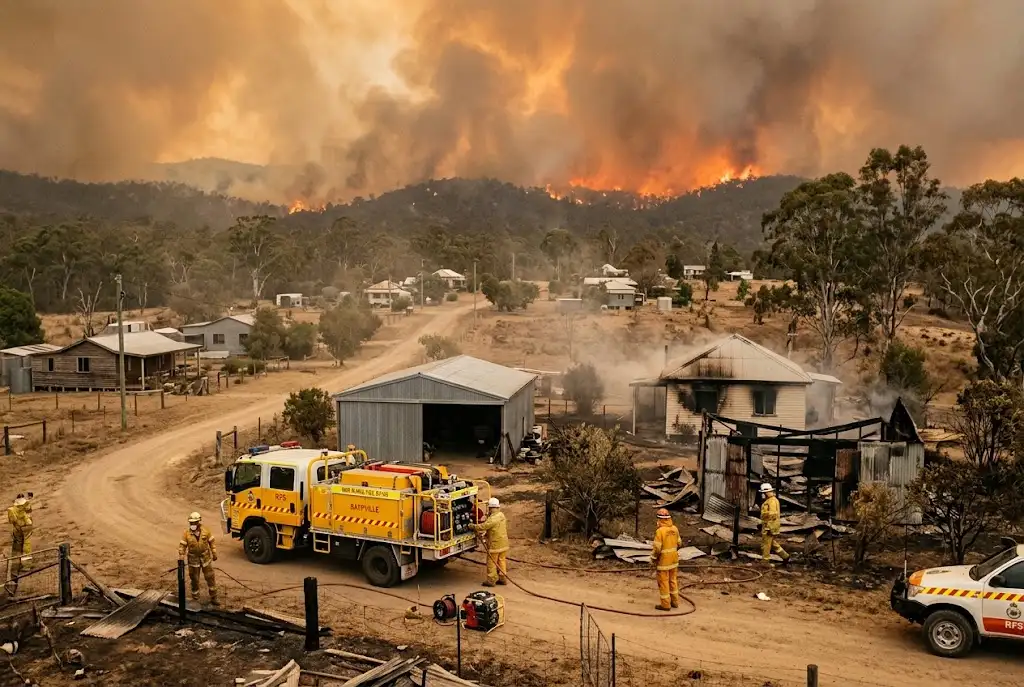
In October 2019, a series of destructive bushfires swept through northern New South Wales, causing widespread damage around Rappville, Busbys Flat and surrounding communities. At the height of the emergency, authorities reported that up to 30 homes and structures had been destroyed or severely damaged across the affected firegrounds.
The original headline associated with this story referred to Sydney, but the homes in question were primarily connected with the rural community of Rappville, south of Casino. This distinction matters when looking back at the event because the fires were not a Sydney city disaster.
What Happened in Rappville?
Rappville came under intense pressure from the Busbys Flat bushfire in northern NSW on 8 October 2019. The fire spread rapidly in hot, windy conditions, threatening homes and isolating residents as emergency crews worked to contain it.
Contemporary reporting from the ABC said that up to 20 homes and structures had initially been destroyed in Rappville. As damage assessments continued, the reported figure increased, with authorities later using a figure of up to 30 homes across the Rappville and wider fire areas.
Residents described confronting conditions as flames moved towards the village. Some people were forced to leave their properties quickly, while others were rescued from areas affected by the fire.
How Many Homes Were Destroyed?
The number changed as emergency crews and assessment teams were able to access damaged areas.
On 9 October 2019, ABC reporting said up to 30 homes and structures had been destroyed in Rappville and the surrounding Busbys Flat fire. A separate report later that week said 29 homes had been confirmed destroyed across several northern NSW fire areas.
Later official assessments provided a clearer picture of the overall Busbys Flat fire. A NSW coronial inquiry recorded that the fire ultimately destroyed at least 44 residences, as well as other structures and outbuildings.
This means the early figure of 30 should be understood as an estimate made during the emergency rather than the final property-loss total for the entire fire.
The Fire Spread Across Northern NSW
The Rappville disaster formed part of a wider bushfire emergency affecting northern New South Wales. The Busbys Flat and Drake fires were among several major fires burning in the region, with thousands of hectares affected.
Strong winds and very dry conditions contributed to rapid fire spread. Firefighters faced difficult conditions while trying to protect communities and prevent further destruction.
ABC reporting at the time described the two major firegrounds as eventually merging into a much larger area of fire activity. The scale of the emergency placed considerable pressure on local firefighting resources.
Residents Faced Dangerous Conditions
People living in and around Rappville described the speed and intensity of the fire as frightening. Some residents lost homes and personal possessions, while others were evacuated or sheltered away from the immediate fireground.
Emergency services also dealt with damaged infrastructure, including power lines and other services. Access to affected areas was difficult while fires remained active.
For residents who lost their homes, the impact extended far beyond the immediate fire. Community groups and evacuation centres helped provide food, essential supplies and other assistance to people displaced by the disaster.
Was the Fire Deliberately Lit?
During the emergency, authorities investigated whether some of the fires had been deliberately started. NSW officials described suspicious activity in relation to the fire that affected Rappville, and police and specialist investigators became involved.
It is important, however, to distinguish the early investigation into suspected fire-setting from the causes of every individual fire in the wider region. Several fires were burning across northern NSW at the same time, and they did not necessarily have the same cause.
The Longer-Term Damage
The destruction around Rappville was part of a much larger impact from the Busbys Flat fire. According to the later NSW coronial inquiry, the fire began on 4 October 2019 and continued for approximately two months before being declared out on 4 December.
The inquiry found that the Busbys Flat fire burned approximately 51,517 hectares of private and public land. It destroyed at least 44 residences, seven other structures and 81 outbuildings, while also causing substantial losses involving livestock, fencing, vehicles and infrastructure.
These later figures demonstrate why early reports from the first days of the emergency should be treated as provisional. Fire authorities could not immediately assess every damaged property while active fires and dangerous conditions restricted access.
Why the Rappville Bushfire Still Matters
The Rappville bushfire became one of the significant episodes of the 2019–20 NSW bushfire season. It showed how quickly rural communities could be placed under threat when extreme heat, dry vegetation and strong winds combined.
The event also highlighted the importance of timely evacuation warnings, local emergency planning and accurate property assessments after a major bushfire.
Although the original WebVibe headline referred to Sydney, the more accurate historical context is the Rappville and Busbys Flat fire in northern New South Wales. Understanding that distinction makes the story clearer and avoids presenting a regional NSW bushfire as an event that occurred within Sydney.
A Historical Record of the 2019 Fire
The Rappville bushfire is now best understood as part of the broader 2019–20 Australian bushfire season rather than as a current emergency. Contemporary reports captured the rapidly changing situation, while later official investigations provided a more complete picture of the damage.
The initial estimate of up to 30 destroyed homes reflected the information available during the height of the crisis. Subsequent assessments showed that the total residential destruction from the Busbys Flat fire was considerably higher.
For readers researching the event today, the combination of contemporary reporting and later official records provides a more reliable account of what happened, where the damage occurred and how extensive the final losses became.
Sources and Further Reading
Contemporary reporting from ABC News on the Rappville bushfire documented the initial destruction and emergency response. Further reporting from ABC News recorded the estimate of up to 30 homes and structures as authorities assessed the damage.
The later NSW coronial inquiry provides the most useful long-term record of the fire and its final impact, including the finding that at least 44 residences were destroyed.
For readers interested in other coverage published on WebVibe, the site’s Latest articles provide access to the wider archive.
