

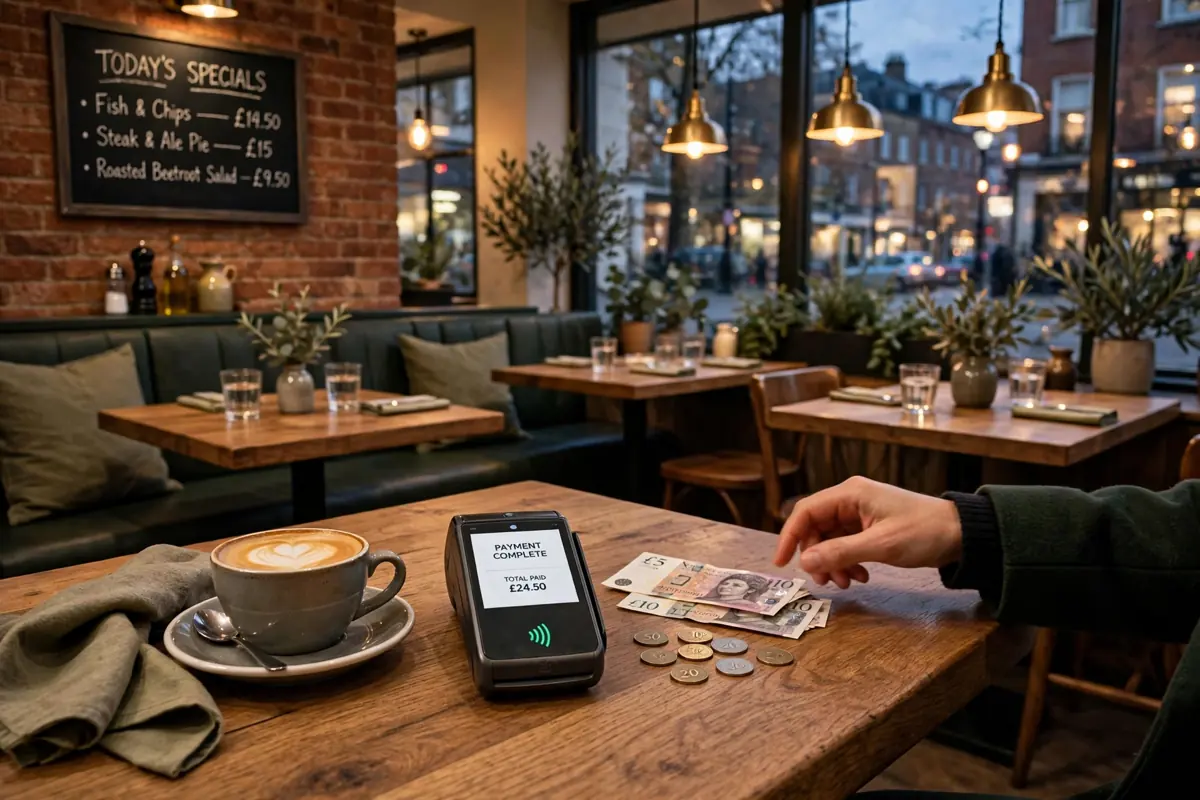
Few moments in a meal feel as awkward as the pause when the bill lands. Do you add something? Has a service charge already been added? Will the card machine even ask? Restaurant tipping in the UK confuses locals and visitors alike, mostly because the rules are unwritten and every place does things slightly differently.
This guide clears it up. You will learn what is normal, how service charges work, what the law says about where your money goes, and how to handle the situations nobody warns you about.
The Short Answer: How Much Is Normal?
In a UK restaurant with table service, a tip of 10 to 12.5 per cent of the bill is standard when service has been good. Many city centre restaurants now add a discretionary service charge of 12.5 per cent automatically, especially in London.
If a service charge is already on the bill, you are not expected to tip on top. Adding more is a kind gesture for exceptional service, never an obligation. If no charge has been added and the service was poor, you are within your rights to leave less, or nothing at all.
Tipping is always discretionary in the UK. Unlike in the United States, serving staff here are paid at least the national minimum wage, so tips are a bonus rather than a lifeline. That said, they are genuinely appreciated and form a meaningful part of many workers’ income.
Service Charge or Tip? Know the Difference
A service charge is added by the restaurant and printed on your bill. A tip is an amount you choose to add yourself, in cash or on the card machine. The end result for staff can differ, so it helps to know which one you are paying.
An optional or discretionary service charge can be removed. If the service was genuinely bad, you can politely ask for it to come off the bill. A compulsory charge, which must be advertised on the menu or at the door, has to be paid like any other part of the bill.
Cash tips go straight to staff in most venues. Card tips and service charges are distributed by the business, often through a shared system called a tronc, which splits the money among the team including kitchen staff.
What the Law Says About Your Tip
Since October 2024, the Employment (Allocation of Tips) Act has required employers to pass 100% of the tips, gratuities, and service charges they receive to their workers, without deductions other than tax. The government guidance on 100%_PAGE explains the rules in full.
The law also requires businesses to have a written policy on how tips are shared, and workers can request a copy. So if you leave a generous tip on your card, you can be confident the team will see it. Many diners still prefer cash for peace of mind, and plenty of staff quietly prefer it too, but card tips are no longer the black hole they once were.
Tipping in Different Situations
Not every meal works the same way. Here is a quick guide to the common ones:
- Cafes and coffee shops: no tip is expected. A tip jar by the till is common, and rounding up or dropping in loose change is a nice touch. A slow brunch pairs well with a calmer start to the day, as our guide to building a morning routine that sticks explains.
- Pubs: tipping is not customary when you order at the bar. In a pub restaurant with table service, treat it like any other restaurant.
- Fine dining: expect a service charge of 12.5 per cent or more. Check the bill before adding anything extra. At this level the room itself is part of the experience, as our piece on why art matters in a space shows.
- Takeaway and delivery: a small tip for the driver, one or two pounds, is common but not expected. Apps usually offer preset options.
- Groups and parties: restaurants often add a service charge for tables of six or more. Check before the whole table tips twice by mistake.
One more modern wrinkle: dog friendly venues. Many pubs and cafes now welcome dogs, and staff who bring water and treats are earning their tip in a different way. If your dog is new to eating out with you, our guide to bringing home a puppy will help you settle it into new places and routines.
Paying by Card, App, or Cash
How you pay changes how tipping feels. Card machines often suggest preset amounts, sometimes starting higher than you planned. Those buttons are a nudge, not a rule. You can nearly always choose a custom amount or skip the tip screen entirely.
Cash remains the simplest route for small amounts and avoids every question about where the money goes. Paying through an app sits in between: convenient, but check whether the service charge was already added before the app asks you to tip again.
Splitting the bill? Agree on the tip before anyone pays. One person covering the full service charge while others pay only their food share is the most common cause of the awkward end of meal shuffle.
If you are planning a trip built around good food, our UK road trip guide has plenty of ideas for routes that pass through some of the UK’s best food towns.
A Real Example: The Bill That Caused an Argument
Picture a birthday dinner for eight in a busy city restaurant. The food was good, the waiter was run off his feet, and the bill arrived with a 12.5 per cent service charge already added. Half the table did not spot it. The card machine then asked if they wanted to add a tip, and the person paying added another 10 per cent out of habit.
The table ended up tipping twice, close to a quarter of the bill, and nobody noticed until the receipt came out. The fix is simple and takes five seconds. Before you pay, scan the bill for the words service charge. If it is there, decline the extra tip on the machine with a clear conscience. Your waiter has already been looked after.
Enjoy the Meal, Tip With Confidence
The whole subject gets easier once you know the pattern. Check the bill first, tip around 10 to 12.5 per cent for good table service when no charge has been added, and remember that your card tips now reach staff by law.
Dining out should end with dessert, not maths anxiety. If you are choosing where to eat on a trip away, our guide on how to choose a hotel in the UK will help you pick a base with great restaurants nearby. Book the table, enjoy the food, and tip like you have done it a hundred times.
