

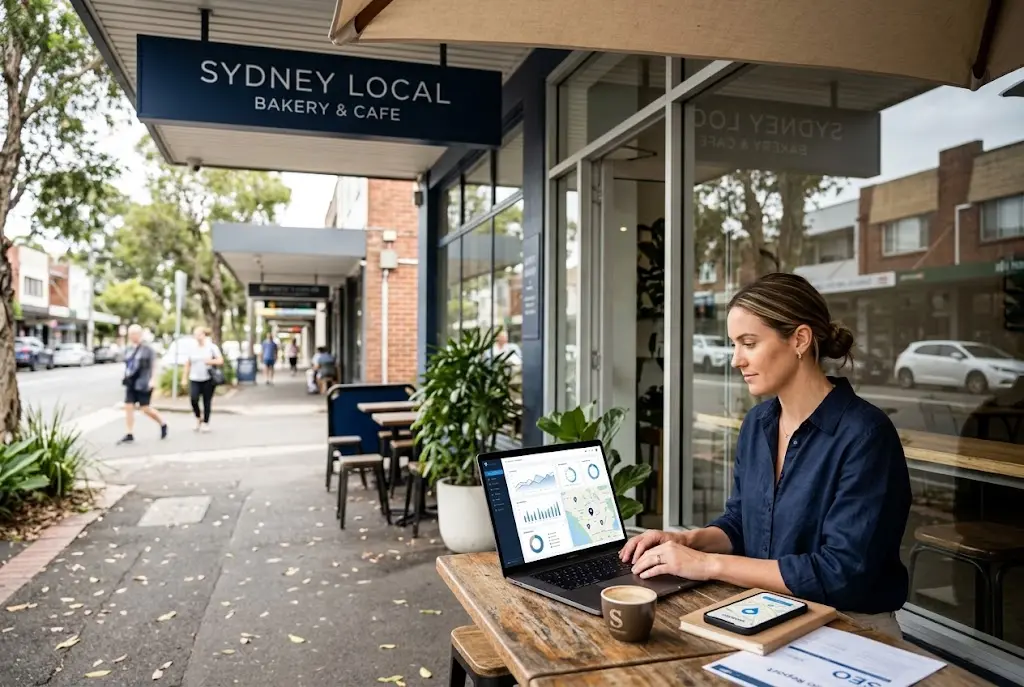
Local search is particularly important for businesses with a physical location or a defined service area. A well-optimised website, accurate business information and a properly managed Google Business Profile can help establish a stronger local presence across Google Search and Maps.
The aim is not simply to generate more website traffic. Effective local SEO connects relevant searches with useful business information, making it easier for potential customers to decide whether to call, visit, request a quote or make an enquiry.
What Is Local SEO?
Local SEO is the process of improving a business’s online visibility for searches connected to a specific geographic area. Instead of targeting a broad national audience, the strategy focuses on reaching people who are looking for products or services in a particular location.
For a Sydney business, this can include searches containing terms such as Sydney, a specific suburb, or phrases that imply local intent. Searchers may also simply look for a service near their current location without mentioning a suburb in the query.
Google Business Profile is an important part of this ecosystem. Google describes Business Profile as a way for businesses to manage their presence across Google Search and Maps, including information such as photos, opening hours, website links, updates and customer reviews.
Why Local SEO Matters for Sydney Businesses
Sydney is a large and geographically diverse market. A business operating in the city centre may have very different customers from one serving areas such as Parramatta, Chatswood, Bondi, Manly or other surrounding suburbs.
Trying to target the entire market with one generic SEO approach can make it harder to communicate where the business actually operates.
Local SEO helps establish a clearer connection between a business, its services and the locations it serves.
Reach Customers With Local Intent
Someone searching for a service in their local area is often further along in the buying process than someone conducting a broad informational search. Local SEO helps businesses become more visible when those location-based searches occur.
Improve Visibility on Google Search and Maps
Google Business Profile listings can appear directly in Google Search and Maps, giving potential customers access to essential business information without requiring them to navigate through several pages.
Build Local Trust
Accurate business information, genuine customer reviews, photographs and clear service details can help a potential customer understand what a business offers before making contact.
Support Website Discoverability
A strong local strategy does not stop at the Business Profile. The business website should also provide clear information about services, locations, contact details and the problems the company solves.
Key Elements of Local SEO Services for Sydney Businesses
A successful local SEO campaign normally combines several connected activities rather than relying on one optimisation technique.
1. Google Business Profile Optimisation
Google Business Profile should contain accurate and useful business information. This includes the correct business name, category, address or service-area information, phone number, website and operating details where applicable.
Google’s current Business Profile documentation also highlights photos, hours, website links, updates, reviews and other customer-facing information as important parts of managing a business’s presence on Google.
2. Local Keyword Research
Keyword research should identify how potential customers search for the business’s services in Sydney.
Instead of focusing exclusively on broad phrases, research can examine combinations involving:
- Core services
- Sydney
- Relevant Sydney suburbs
- Near-me searches
- Commercial service terms
- Problem-based searches
- Location-specific service variations
The goal is to understand genuine search behaviour rather than inserting the word “Sydney” into every page.
3. Location-Focused Website Content
A local business website should make its geographic relevance clear without creating thin pages simply to target different suburbs.
Useful location-focused content might explain the areas served, service availability, local customer needs, access arrangements or other information that genuinely helps people decide whether the business is suitable for them.
4. On-Page SEO
Local optimisation also requires solid website fundamentals. Page titles, headings, descriptions, internal links, content structure and relevant service information should all support the search intent behind each page.
Each important service should have enough useful information for both customers and search engines to understand what the business provides.
5. Local Citations and Business Information
Business information should be accurate and consistent wherever the company is represented online. Differences in business names, addresses, telephone numbers or other key information can create confusion for customers and platforms.
For businesses managing locations at scale, Google’s documentation emphasises the importance of accurate location data, including business name, address and category information.
6. Customer Reviews
Reviews can influence how potential customers perceive a local business. A sensible review strategy focuses on delivering a good customer experience and making it easy for genuine customers to leave honest feedback.
Businesses should avoid artificial reviews or attempts to manipulate ratings. The objective is to build authentic local trust over time.
7. Local Link Building
Relevant links from local organisations, industry publications, community websites, business associations and other credible sources can help strengthen a business’s wider online presence.
Quality matters more than simply collecting large numbers of links. Links should come from sources that make sense for the business and its local market.
Google Business Profile and Local Visibility
For many local businesses, Google Business Profile is one of the first places potential customers encounter the company.
Google states that customers searching locally on Google Search or Maps can find Business Profile listings directly in those services. Businesses can provide information such as photos, opening hours, website links and updates, while customers can interact through reviews and photographs.
This makes the profile more than an online directory entry. It can function as a compact introduction to the business at the exact point where a potential customer is researching local options.
Service-Area Businesses in Sydney
Not every local business operates from a customer-facing shopfront. Plumbers, electricians, mobile mechanics, cleaners, tradespeople and other service providers may travel to customers instead.
For these businesses, the local SEO approach needs to reflect the service area accurately.
Google’s documentation distinguishes service-area businesses from businesses operating at a fixed storefront. A service-area business can configure its Business Profile accordingly, with the profile typically displaying a service area rather than a public street address.
This distinction is important because a business should not create misleading location information simply to appear in searches for areas where it does not genuinely operate.
Sydney Suburb SEO: What Businesses Should Consider
Sydney’s local market contains many distinct communities and commercial areas. A business may therefore receive different types of enquiries depending on where it operates.
Suburb-focused SEO can be useful when there is genuine relevance, but every location page should provide unique value.
A useful suburb page could discuss:
- Services available in that area
- Specific service requirements common to the location
- How customers can access the business
- Areas nearby that are genuinely served
- Relevant local service information
- Frequently asked questions from customers in that area
Simply replacing one suburb name with another while keeping the same text can create weak pages that provide little value.
Local SEO for Different Types of Sydney Businesses
Retail Businesses
Retailers can use local SEO to help nearby customers discover their products, opening information and physical location. Product and service descriptions should clearly explain what customers can find at the business.
Restaurants and Cafés
Restaurants benefit from accurate location details, opening information, menus, photographs and genuine customer reviews. Local searchers often need quick information before deciding where to eat.
Professional Services
Accountants, solicitors, consultants and other professional services can use local content to explain their areas of expertise and the locations they serve.
Trades and Home Services
Trades businesses often operate across multiple suburbs. Clearly defining service areas and the specific work provided can help potential customers determine whether the company is suitable.
Healthcare Businesses
Healthcare providers need especially clear and accurate location information. Patients should be able to understand where the service is provided and what type of service is available without ambiguity.
Local SEO vs Traditional SEO
Traditional organic SEO and local SEO share many fundamentals, but their goals can differ.
| Traditional SEO | Local SEO |
|---|---|
| Targets broader search visibility | Targets geographically relevant searches |
| Focuses heavily on organic website rankings | Also considers Google Search and Maps visibility |
| May target national or international audiences | Focuses on specific locations and service areas |
| Content and authority are major considerations | Content, location relevance and business information work together |
For many Sydney businesses, the strongest strategy combines both approaches rather than treating them as completely separate disciplines.
Common Local SEO Mistakes Sydney Businesses Should Avoid
Using Incorrect Business Information
Incorrect phone numbers, addresses, business names or categories can make it harder for customers and search platforms to understand the business.
Creating Low-Quality Location Pages
Publishing dozens of near-identical suburb pages rarely provides meaningful value. Location content should be created because customers need the information, not simply because another keyword exists.
Ignoring the Website
A Google Business Profile cannot replace a useful website. The website should clearly explain services, provide relevant contact information and support the customer’s research process.
Buying Low-Quality Links
Large numbers of unrelated or poor-quality links do not automatically create a stronger local presence. Local relevance and credibility are more valuable than volume alone.
Using Fake Reviews
Reviews should represent genuine customer experiences. Artificial reviews can damage trust and create reputational problems.
Targeting Areas the Business Does Not Serve
Local SEO should accurately represent the locations in which a business operates or serves customers. Expanding location targeting beyond the genuine service area can create poor user experiences.
How to Measure Local SEO Performance
Local SEO should be measured using more than one metric. Rankings can provide useful context, but they are not the only indicator of success.
Useful performance signals can include:
- Google Business Profile interactions
- Website visits from local searches
- Phone enquiries
- Quote or contact requests
- Direction requests where relevant
- Conversions from location-focused pages
- Visibility for important local search terms
- Growth in genuine customer reviews
The most useful measurement framework connects search visibility with real business outcomes.
How Long Does Local SEO Take?
Local SEO is not normally an overnight process. The time required depends on factors such as the competitiveness of the market, the strength of the existing website, the accuracy of business information, the authority of the domain and the quality of the local optimisation work.
A new business with little online presence may need to establish its basic digital foundations before stronger visibility develops. An established business may instead benefit from correcting information, improving existing pages and strengthening areas where competitors have greater visibility.
For that reason, local SEO should be approached as an ongoing process rather than a one-off submission.
A Practical Local SEO Strategy for Sydney Businesses
A sensible campaign can be structured around several stages.
- Audit the existing presence: Review the website, Google Business Profile and key business information.
- Research local search behaviour: Identify important services, locations and customer questions.
- Improve core pages: Make service and location information clearer and more useful.
- Optimise the Business Profile: Check categories, business details, services, photographs and other relevant information.
- Strengthen local authority: Seek legitimate relationships and relevant mentions within the local or industry ecosystem.
- Monitor performance: Track visibility, enquiries, interactions and conversions.
- Refine the strategy: Use performance data to improve pages and prioritise new opportunities.
Why Accurate Business Information Matters
Local search depends heavily on location information. Google documentation for Business Profile management highlights the importance of accurate business details, including names, addresses and categories.
For businesses with multiple locations, Google also provides location-management functionality designed to help businesses maintain location data at scale.
Consistency is therefore not simply an administrative task. It is part of creating a reliable online representation of the business.
Choosing Local SEO Services for a Sydney Business
If you are considering hiring an agency or consultant, look beyond promises of guaranteed rankings.
A credible local SEO provider should be able to explain what will be changed, why those changes matter and how results will be measured.
Before starting, ask about:
- Local keyword research
- Google Business Profile optimisation
- Website and technical SEO
- Location-page strategy
- Local citations and business information
- Review management practices
- Link-building methods
- Reporting and performance measurement
The best strategy should be based on the actual business, its customers and its service area rather than a generic package applied to every client.
Frequently Asked Questions
What are local SEO services for Sydney businesses?
They are SEO activities designed to improve a business’s visibility for relevant searches connected to Sydney and the areas it genuinely serves. This can include website optimisation, Google Business Profile management, local keyword research and reputation-building activities.
Is Google Business Profile important for local SEO?
Yes. Google Business Profile is an important part of local visibility because businesses can manage information that appears across Google Search and Maps, including photos, hours, website links and updates.
Should a Sydney business create pages for every suburb?
Not automatically. Suburb pages should only be created when the business genuinely serves those areas and the pages can provide useful, differentiated information.
Does local SEO work for service-area businesses?
Yes. Service-area businesses can use local SEO, but their location information needs to accurately represent the areas they serve. Google provides specific Business Profile options for service-area businesses.
How should a business measure local SEO success?
Look beyond rankings. Track local visibility alongside website enquiries, calls, profile interactions, direction requests where relevant and completed conversions.
Can local SEO help a new Sydney business?
Yes, although a new business may need to establish basic website, Business Profile and business-information foundations before meaningful local visibility develops. Consistent optimisation and accurate information are important starting points.
Conclusion
Local SEO services for Sydney businesses are ultimately about connecting the right customers with the right business in the right location. A strong strategy combines accurate business information, useful website content, Google Business Profile optimisation, local search research and credible online signals.
For Sydney businesses, geographic relevance matters because customers often want a service that is accessible to them rather than a company somewhere else in Australia. Clear service areas, useful local content and trustworthy business information can make that connection much easier.
Local SEO should therefore be treated as an ongoing part of digital marketing. When the website and local business presence work together, businesses have a stronger foundation for being discovered by people who are genuinely looking for what they provide.
