

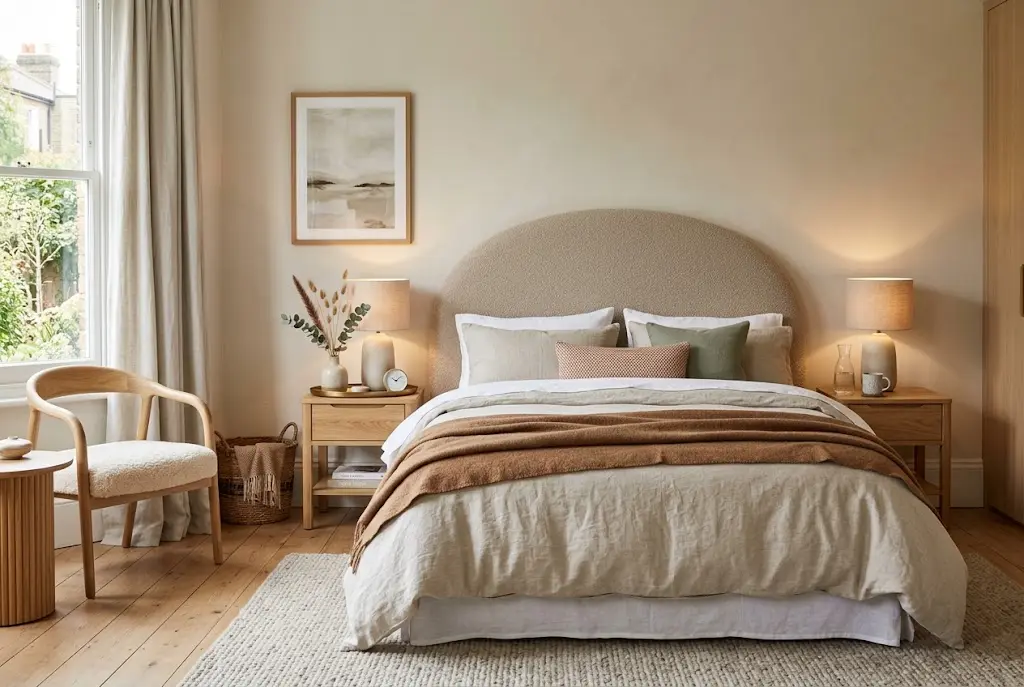
From upholstered beds and classic wooden frames to four-poster designs, cane headboards, low platform beds and clever storage options, there are countless ways to make the bed the centrepiece of your bedroom. Current bedroom design is also moving towards softer, more comforting spaces, with natural materials, tactile fabrics and statement headboards becoming increasingly popular.
To help you find the right direction, this guide brings together 50 stunning bed designs covering a wide range of interior styles, room sizes and practical requirements.
How to Choose the Right Bed Design
Before choosing a style, think about how the bed needs to work within your room. Measure the available floor space and consider how much clearance you need around the bed for walking, opening wardrobes and using bedside furniture.
Then consider the visual character you want to create. A wooden frame can introduce warmth, an upholstered headboard can make the room feel softer, while a four-poster bed can create a dramatic focal point.
Storage is another important consideration. Ottoman and hydraulic beds can provide valuable hidden storage, particularly in smaller bedrooms where floor space is limited.
50 Bed Designs to Refresh Your Bedroom
1. Upholstered Statement Bed
A generously upholstered bed creates a soft, comfortable focal point. Choose linen, cotton or another tactile fabric for a relaxed bedroom, or use velvet for a more luxurious appearance.
2. Channel-Tufted Headboard Bed
Vertical channel tufting gives a bedroom a sense of height and structure. It works particularly well with contemporary interiors where you want texture without excessive decoration.
3. Natural Oak Bed
An oak bed brings warmth and visible natural grain into the bedroom. Its timeless appearance works with both modern and traditional décor and can be paired with neutral bedding for a calm scheme.
4. Walnut Platform Bed
Walnut offers a deeper, richer wood tone than lighter oak. A simple walnut platform bed can give a bedroom an elegant, sophisticated foundation without requiring an elaborate headboard.
5. Modern Four-Poster Bed
A contemporary four-poster bed can create architectural interest without looking old-fashioned. Clean lines and a simple frame make it suitable for modern bedrooms.
6. Canopy Bed With Soft Drapery
For a more romantic bedroom, a canopy bed with lightweight curtains can create a cocooning atmosphere. Keep the fabric simple if you want to avoid an overly traditional appearance.
7. Cane Headboard Bed
Cane adds natural texture and visual lightness. A wooden frame combined with woven cane can work beautifully in relaxed, coastal, bohemian and contemporary interiors.
8. Rattan Bed
A rattan bed introduces an organic texture and works particularly well with linen bedding, natural colours and indoor plants.
9. Minimalist Platform Bed
A low-profile platform bed is ideal for people who prefer clean lines and minimal visual clutter. Its simple form allows bedding, artwork and lighting to become the main decorative elements.
10. Low Japanese-Inspired Bed
A low bed influenced by Japanese interiors can create a grounded and peaceful atmosphere. Combine it with natural wood, neutral textiles and uncluttered surroundings.
11. Rustic Wooden Bed
Reclaimed or naturally finished timber can give a bedroom warmth and character. Small imperfections in the wood can make the bed feel more individual rather than mass-produced.
12. Reclaimed Timber Bed
Reclaimed wood can bring history and texture into a bedroom. It is particularly effective in rustic, industrial and country-inspired interiors.
13. Industrial Metal Bed
A black or dark metal frame can give the bedroom a stronger architectural edge. Pair it with softer bedding and warm lighting to prevent the room from feeling too cold.
14. Brass-Finish Bed
A brass-toned frame can add subtle glamour without requiring an ornate design. It works well with deep colours, neutral walls and warm lighting.
15. Black Statement Bed
A black bed can anchor a pale bedroom and create strong contrast. Choose a simple silhouette if you want the result to remain modern rather than dramatic.
16. White Wooden Bed
White-painted timber can make a bedroom feel fresh and bright. It is especially useful in smaller rooms where you want furniture to feel visually lighter.
17. Painted Four-Poster Bed
A painted four-poster design can combine traditional proportions with contemporary colour. Soft green, warm white or muted blue can create a sophisticated result.
18. Curved Headboard Bed
Curved headboards introduce softness into a bedroom. Rounded forms are particularly useful when the rest of the room contains straight lines and angular furniture.
19. Scalloped Headboard Bed
A scalloped headboard can add a playful decorative detail without requiring patterned wallpaper or elaborate accessories. It works well in both adult and guest bedrooms.
20. Arched Headboard Bed
An arched headboard creates a strong architectural feature. Repeat the arch shape elsewhere in the room through mirrors, artwork or lighting for a more cohesive design.
21. Fluted Headboard Bed
Vertical fluting adds texture and rhythm to the wall behind the bed. It can make a relatively simple frame appear more sophisticated.
22. Bouclé Upholstered Bed
Bouclé provides a soft, tactile finish that suits cosy contemporary bedrooms. Combine it with warm lighting and layered bedding for a comfortable, inviting result.
23. Linen Upholstered Bed
Linen has a relaxed appearance that works particularly well with neutral and natural bedroom schemes. Its slightly textured finish prevents pale interiors from looking flat.
24. Velvet Luxury Bed
A velvet headboard can introduce a richer, more luxurious feel. Deep green, navy, burgundy and earthy shades can work particularly well in sophisticated bedrooms.
25. Storage Ottoman Bed
An ottoman bed is a practical option when storage is limited. The mattress platform lifts to reveal hidden space underneath for bedding, seasonal clothing or other items.
26. Hydraulic Storage Bed
Hydraulic lifting mechanisms make under-bed storage easier to access. This style is particularly useful in bedrooms where conventional wardrobes and cupboards do not provide enough storage.
27. Divan Bed With Headboard
A divan combines a practical base with a wide range of headboard options. It can be a versatile choice when comfort, storage and flexibility are all priorities.
28. Floating-Effect Bed
A floating-effect design uses a recessed or visually hidden base to create the impression that the mattress is suspended above the floor. It can give a contemporary bedroom a lighter appearance.
29. Built-In Platform Bed
A built-in platform can integrate the bed with surrounding furniture. This approach works particularly well in modern bedrooms where storage, shelving and lighting need to be carefully coordinated.
30. Bed With Integrated Bedside Tables
Combining the bed frame with bedside tables creates a streamlined appearance. It is particularly useful when you want furniture to feel cohesive rather than assembled from unrelated pieces.
31. Bed With Floating Bedside Shelves
Floating shelves can be incorporated into or positioned beside the headboard. They provide a place for books, lighting and small personal items while keeping the floor visually clear.
32. Leather Headboard Bed
A leather or leather-look headboard can create a sophisticated contemporary appearance. Brown and tan finishes work particularly well with timber and neutral textiles.
33. Panelled Wooden Headboard Bed
A panelled timber headboard gives the wall behind the bed additional depth. It can be used to create a warm feature wall without adding separate wall panelling.
34. Live-Edge Wooden Bed
A live-edge design highlights the natural irregularities of timber. It can become a strong focal point in bedrooms inspired by nature and handcrafted furniture.
35. Carved Wooden Bed
Intricate carving can introduce craftsmanship and traditional character. Keep the surrounding furniture relatively simple so the bed remains the main feature.
36. Traditional Poster Bed
A classic poster bed can bring architectural character to a larger bedroom. Choose a restrained design if you want traditional styling without making the room feel dated.
37. French-Inspired Bed
A French-inspired upholstered or carved frame can create an elegant bedroom with soft, romantic details. Pale fabrics and understated decorative accessories can keep the look contemporary.
38. Mid-Century Bed
Mid-century-inspired beds typically combine simple timber frames with tapered legs and understated headboards. Their clean proportions make them easy to integrate into modern homes.
39. Scandinavian Bed
A Scandinavian-style bed usually focuses on simplicity, natural materials and practical proportions. Pair pale wood with soft neutral bedding for a bright, restful bedroom.
40. Japandi Bed
Japandi combines Japanese simplicity with Scandinavian warmth. A low wooden bed, neutral colours and natural textures can create a calm and uncluttered retreat.
41. Coastal Bed
A coastal bedroom can benefit from a white, pale timber or woven bed frame. Add linen bedding and subtle blue or sandy tones rather than relying on obvious nautical decorations.
42. Bohemian Bed
A simple wooden or rattan bed can form the foundation of a bohemian bedroom. Layer patterned textiles, cushions, throws and natural materials to create a relaxed atmosphere.
43. Cottage-Style Bed
A cottage-inspired bed works well with floral bedding, painted furniture and soft colours. A traditional wooden frame can provide the right foundation without making the room feel overly formal.
44. Industrial Loft Bed
For an urban bedroom, combine dark metal or timber with exposed textures and simple lighting. The bed can become part of a wider industrial palette rather than standing alone.
45. Statement Colour Bed
A bed in a strong colour can transform an otherwise neutral bedroom. Deep green, warm ochre, muted blue or terracotta can add personality without requiring a complete redesign.
46. Guest Bedroom Bed
A guest bedroom benefits from a versatile bed that prioritises comfort and easy styling. Neutral upholstery or timber can provide a welcoming foundation that suits different visitors.
47. Small Bedroom Bed
In a compact room, choose a design with a relatively slim frame and avoid excessive visual bulk. Storage underneath or integrated bedside solutions can help maximise available space.
48. Teen Bedroom Bed
A teenager’s bedroom may need to accommodate sleeping, studying, storage and personal expression. A simple bed with drawers or an integrated storage system can make better use of limited floor space.
49. Hotel-Inspired Bed
A large upholstered headboard, layered bedding and warm bedside lighting can create the feeling of a boutique hotel at home. Keep the palette coordinated for a polished result.
50. Personalised Statement Bed
The best bed design is ultimately the one that suits your room and your personality. Combine your preferred materials, colours and proportions rather than following a trend simply because it is popular.
Which Bed Design Is Best for a Small Bedroom?
Small bedrooms require careful attention to scale. A bulky frame can make the room feel crowded, while a low-profile or slim-framed design can create a greater sense of space.
Storage beds are especially useful because they allow unused space beneath the mattress to become part of the room’s storage system. Wall-mounted bedside shelves can also replace bulky tables.
Light colours, natural finishes and visually simple frames can further reduce the sense of visual weight.
Best Bed Materials for a Comfortable Bedroom
The material you choose affects both appearance and atmosphere. Timber creates warmth and natural character, metal introduces structure, while upholstered fabrics bring softness and comfort.
Current 2026 bedroom trends are placing particular emphasis on tactile fabrics such as linen and cotton, natural timber and softer upholstered silhouettes.
When choosing a material, also consider maintenance. Fabric headboards may require more care than timber, while darker finishes can make dust more noticeable.
How to Make Your Bed the Focal Point
The bed naturally attracts attention because of its size, but a few design decisions can make it even more effective.
- Choose a headboard with a strong shape or texture.
- Use bedding that complements rather than competes with the bed frame.
- Add layered cushions and a throw for depth.
- Use bedside lighting to frame the bed visually.
- Keep the wall behind the bed relatively uncluttered.
- Repeat one or two colours from the bed elsewhere in the room.
A statement bed does not necessarily need a bright colour or extravagant design. Proportion, texture and placement can be just as effective.
How Bedding Changes the Look of a Bed
Even the simplest bed frame can look completely different depending on how it is dressed. Crisp white bedding creates a clean hotel-inspired appearance, while layered neutrals create a softer and more relaxed feel.
Patterned bedding can introduce personality, particularly when the bed itself has a simple silhouette. If the headboard is already highly decorative, understated bedding may provide better balance.
Throws and cushions can also be changed seasonally, allowing you to refresh the bedroom without replacing the main furniture.
Choose a Bed That Works With the Whole Room
A beautiful bed can still feel wrong if it does not work with the rest of the bedroom. Consider the flooring, wall colour, wardrobe, bedside tables, curtains and lighting before making a final decision.
For example, a highly ornate wooden bed may compete with heavily patterned wallpaper, while an extremely minimalist platform bed may look lost in a room filled with traditional furniture.
The strongest bedroom designs create a visual relationship between the major pieces rather than treating the bed as an isolated purchase.
If you are planning a wider bedroom makeover, WebVibe’s guide to adding art, culture and aesthetics to your space can also help you think about how artwork and decorative details can complement your new bed.
For bedrooms designed around comfort and accessibility, you can also explore these interior design ideas for comfortable and safe living spaces.
2026 Bed Design Trends to Watch
Current bedroom design is moving away from overly stark interiors and towards spaces that feel warmer, softer and more personal. Upholstered beds, expressive headboards, natural timber and tactile materials are all prominent directions for 2026.
Four-poster beds are also receiving renewed attention, with contemporary versions favouring cleaner lines rather than heavily draped traditional designs.
These trends are useful for inspiration, but they should not dictate every decision. A well-designed bedroom should remain comfortable and personal rather than looking like a showroom.
Frequently Asked Questions
What is the most popular bed design for 2026?
Upholstered beds with comfortable proportions and distinctive headboards are among the strongest bed-design directions for 2026. Natural wooden frames and contemporary four-poster beds are also receiving significant attention.
Which bed is best for a small bedroom?
A slim-frame, platform or storage bed can work well in a small bedroom. Ottoman and hydraulic designs are particularly useful when additional storage is needed.
Are wooden beds still fashionable?
Yes. Natural wood is an important direction in current bedroom design because it introduces warmth, texture and a sense of permanence. Oak and walnut are particularly versatile choices.
Are upholstered beds a good choice?
Upholstered beds can make a bedroom feel softer and more comfortable. Linen, cotton, bouclé and other tactile fabrics can work especially well in relaxed contemporary interiors.
Are four-poster beds coming back?
Yes. Contemporary four-poster and canopy beds are receiving renewed attention, with modern designs focusing on clean architectural frames rather than traditional heavy drapery.
How can I make an old bed look new?
Changing the headboard, repainting a wooden frame, updating the bedding, adding new bedside lighting or introducing artwork can significantly change the appearance of an existing bed without replacing it.
Conclusion
The right bed can completely change the character of a bedroom. Whether you prefer natural timber, soft upholstery, modern metal, woven cane, traditional carving or a dramatic four-poster silhouette, there is a design to suit almost every interior.
The key is to balance appearance with comfort, scale and practicality. Consider how much space you have, whether you need additional storage and how the bed will interact with the rest of the room.
Most importantly, choose a design that you will enjoy living with for years rather than simply following a short-lived trend. A well-chosen bed can become the foundation of a bedroom that feels comfortable, personal and genuinely inviting.
