

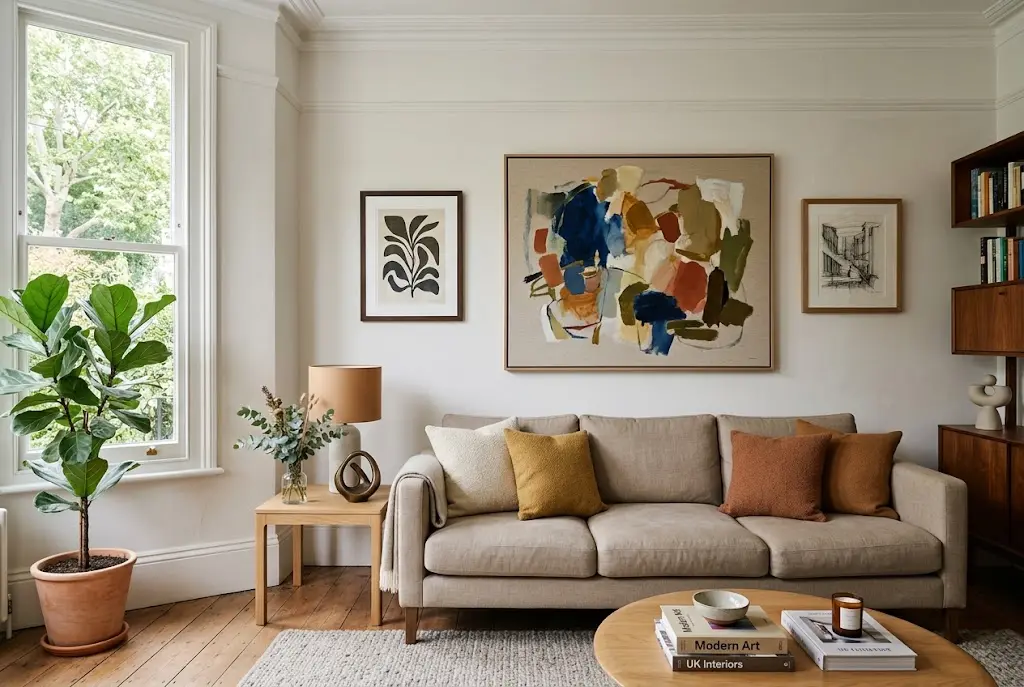
Understanding why art matters can also change the way you approach interior styling. Instead of treating artwork as a final decorative detail, you can use it as part of the overall design from the beginning. Whether you are refreshing one room or gradually developing a complete interior, thoughtful art choices can make the space feel more personal, balanced and visually interesting.
Why Art Matters in Interior Design
Interior design is not simply about choosing attractive furniture or matching colours. A successful space should communicate a mood, support everyday living and reflect the personality of the people using it. Art can contribute to all three.
A carefully selected piece can become a visual focal point, bring together colours from different parts of a room or introduce contrast where an interior feels too uniform. It can also create a sense of depth by adding different textures, shapes and visual patterns.
This is particularly useful in neutral interiors. Soft walls, simple furniture and understated finishes can create a calm foundation, but artwork can prevent the room from feeling flat or impersonal.
Art Adds Personality to Your Space
One of the biggest advantages of displaying art at home is the opportunity to express your personality. Your choice of artwork can reveal the colours, subjects, cultures, periods and creative styles that appeal to you.
For example, a home filled with landscape photography may create a connection with nature and travel, while abstract artwork can introduce movement and experimentation. Traditional paintings may create a more timeless atmosphere, whereas bold contemporary prints can give a room a modern edge.
There is no single correct style. The most effective artwork is often the work that feels meaningful to the person living with it.
Art Can Create a Strong Focal Point
Every well-designed room benefits from visual hierarchy. A focal point gives the eye somewhere to settle and can help organise the other elements around it.
A large painting above a sofa, an oversized photograph in a hallway or a sculptural piece displayed on a console can perform this role effectively. Instead of allowing every item in the room to compete for attention, one strong artwork can establish a clear visual anchor.
Scale is particularly important. A small artwork can disappear above a large piece of furniture, while an oversized piece can overwhelm a compact room. The goal is to create a proportion that feels intentional.
Using Art to Improve Colour and Visual Balance
Artwork can also help connect different colours within an interior. A painting containing several shades already present in the furniture, flooring or accessories can make the room feel more cohesive.
Alternatively, artwork can be used to introduce a carefully chosen accent colour. For instance, a mostly neutral living room could gain energy from artwork featuring deep blue, terracotta, green or ochre tones.
Consider the dominant colours already present in the room before selecting a piece. You do not need to match every shade exactly. Instead, look for relationships between colours that create harmony without making the space feel overly coordinated.
Art Brings Culture and History Into the Home
Art can also carry cultural meaning. Paintings, textiles, photography, ceramics and handcrafted objects can provide connections to places, traditions and historical periods.
Displaying culturally meaningful pieces can make a home feel more connected to its occupants’ background and interests. It can also encourage conversations about artists, techniques, places and traditions.
When choosing culturally significant artwork, it is worth learning about its origins and context. Understanding the story behind a piece can make it more meaningful and help you appreciate it beyond its appearance.
Art Can Make a Room Feel More Finished
Even a carefully furnished room can sometimes feel incomplete when its walls are left completely bare. Artwork provides another layer of visual interest and can help connect separate design elements.
For example, artwork positioned above a sideboard can visually connect the furniture with the wall. A gallery wall can fill a large empty surface, while a single statement piece can create simplicity without leaving the room feeling unfinished.
If you are also considering ways to improve a bedroom’s overall appearance, exploring different bed designs and bedroom styling ideas can help you think about how furniture and artwork work together as part of one interior scheme.
How to Choose the Right Art for Your Home
Choosing artwork does not have to be complicated. Start with the room rather than trying to follow every current interior trend.
Consider the Room’s Purpose
Think about how the room is used. A bedroom may benefit from calming landscapes, subtle abstracts or photography, while a living room can accommodate something more expressive and dramatic.
For workspaces, artwork that provides visual interest without becoming distracting may be more appropriate.
Think About Scale
Measure the wall and the furniture beneath it before purchasing artwork. A piece should have enough presence to be noticed but should not make the surrounding furniture appear disproportionately small.
For larger walls, consider a large statement piece or a carefully arranged collection of smaller works.
Choose a Style That Complements the Interior
Artwork does not have to perfectly match your furniture. In fact, contrast can make a room more interesting. However, there should usually be some visual relationship between the artwork and the rest of the space.
Look at materials, colours, shapes and overall mood rather than focusing only on whether the artwork matches a particular furniture style.
Buy What You Will Enjoy Living With
Trends can be useful for inspiration, but personal connection should remain important. Artwork is something you may see every day, so choosing a piece simply because it is fashionable may not produce a satisfying long-term result.
Ask yourself whether you genuinely enjoy looking at it and whether it contributes something meaningful to the room.
Creating a Gallery Wall
A gallery wall can be an effective way to display several artworks without relying on one large statement piece. It can combine paintings, photographs, illustrations, prints and other framed pieces.
Before putting holes in the wall, arrange the frames on the floor. Experiment with spacing and positioning until the composition feels balanced.
- Keep a consistent visual relationship between the frames.
- Use one dominant piece to anchor the arrangement when appropriate.
- Mix sizes without allowing one area to become visually overcrowded.
- Leave enough space between pieces for each work to remain distinguishable.
- Consider the furniture underneath the gallery wall when determining its overall width.
A gallery wall does not need to look perfectly symmetrical. A more relaxed arrangement can create a collected and personal appearance.
Using Art in Smaller Rooms
Small rooms can benefit from artwork just as much as larger spaces. The key is to consider scale and visual weight carefully.
Instead of covering every available wall, choose one or two areas where artwork can have the greatest impact. A vertical print can emphasise height, while a wide horizontal piece can make a narrow wall feel more balanced.
Mirrors can also complement artwork by reflecting light and making a smaller space feel more open. The combination of art, mirrors, lighting and carefully selected furniture can create depth without overcrowding the room.
Art and Comfortable Living Spaces
Artwork should contribute to the way a room feels as well as how it looks. This becomes particularly important when designing spaces for different stages of life or different accessibility needs.
When planning a comfortable home, artwork should be positioned securely and at practical viewing heights while keeping walkways and essential areas clear. For more ideas about designing interiors around comfort and everyday needs, see these interior design ideas for comfortable and safe living spaces.
Should Every Room Have Artwork?
Not necessarily. Art should enhance a space rather than become a requirement that must be applied everywhere.
A hallway may benefit from a small collection of framed prints, while a living room might deserve one substantial statement piece. In another room, an attractive architectural feature, material finish or view may already provide enough visual interest.
The important point is to make deliberate choices. Empty space can also be part of good interior design.
How to Display Art Effectively
Placement can have as much impact as the artwork itself. Consider the height of the viewer, the furniture nearby and the proportions of the wall.
Artwork above furniture should generally feel visually connected to that furniture rather than floating too far above it. In larger rooms, you may need to consider the viewing distance as well as the artwork’s physical dimensions.
Lighting also matters. Natural light can enhance artwork during the day, while carefully positioned artificial lighting can make a piece visible and engaging in the evening. Avoid placing sensitive artwork where intense direct sunlight could cause damage over time.
Art Is More Than Decoration
The real value of art is that it can combine aesthetics with meaning. A room may look attractive because of its furniture and finishes, but artwork can make it feel distinctly personal.
It can remind you of a place, represent an interest, introduce a cultural connection or simply provide something visually engaging to enjoy. These qualities make art different from purely functional objects.
When chosen thoughtfully, artwork becomes part of the story of a home.
Frequently Asked Questions
Why is art important in interior design?
Art adds personality, colour, texture and visual focus to an interior. It can also help connect different design elements and give a room a more individual character.
How do I choose artwork for my home?
Consider the room’s purpose, available wall space, furniture scale, existing colours and your personal taste. Choose pieces that you enjoy rather than selecting artwork solely because it follows a trend.
Can art make a small room look better?
Yes. Carefully scaled artwork can add character and visual interest to a small room without taking up floor space. The key is to avoid overcrowding the walls.
Should artwork match the furniture?
Artwork does not need to match furniture exactly. Complementary colours, materials, shapes and visual moods are often enough to create a cohesive interior.
What is the best way to display multiple artworks?
A gallery wall can work well when several pieces need to be displayed together. Planning the arrangement before hanging the artwork helps maintain balance and consistent spacing.
Conclusion
Art matters because it gives spaces meaning as well as visual appeal. It can introduce colour, express personality, celebrate culture, create focal points and help a room feel complete.
The best approach is not to fill every empty wall, but to choose artwork with intention. Consider the room, scale, colour, placement and the personal meaning behind each piece. When those elements work together, art becomes more than decoration—it becomes part of what makes a space feel like home.
