

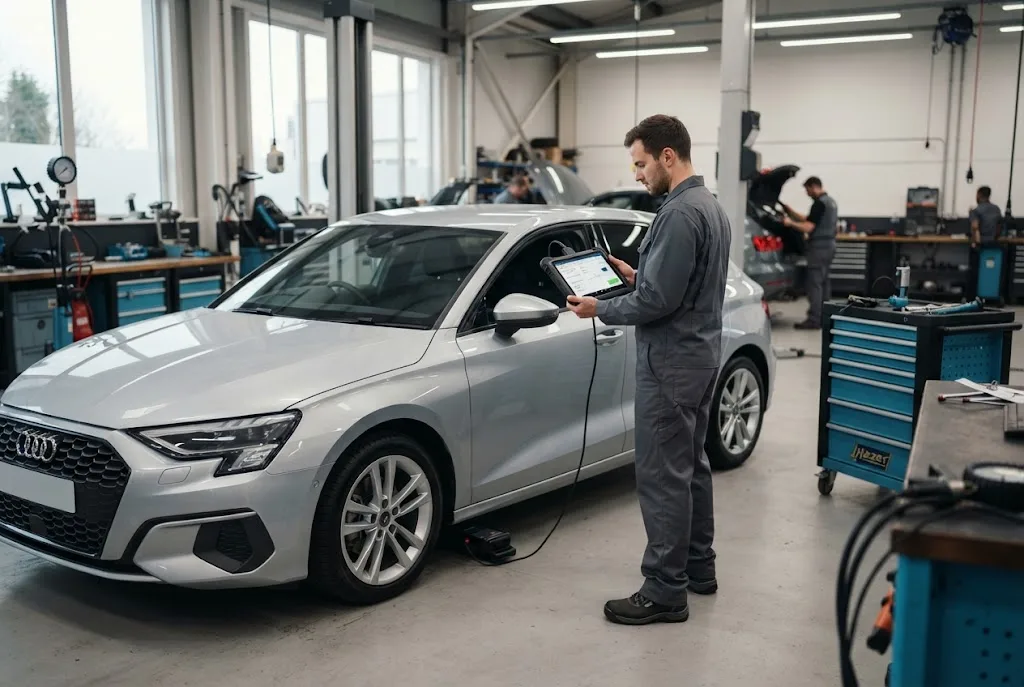
Modern auto inspection services are becoming more connected, data-driven and proactive. Instead of relying only on a visual inspection or waiting for a warning light to appear, drivers and automotive professionals can use vehicle diagnostics, digital inspection tools and increasingly sophisticated software to understand a vehicle’s condition in greater detail.
These technologies are changing how faults are identified, how inspection results are recorded and how maintenance decisions are made. For UK motorists, however, it is important to distinguish between a technology-based vehicle health assessment and the statutory MOT test. An MOT is designed to check whether a vehicle meets specific road safety and environmental standards, while a broader diagnostic inspection can examine information that falls outside the MOT’s scope.
What Are Auto Inspection Services?
Auto inspection services cover a range of checks designed to assess the condition, performance and potential faults of a vehicle. Depending on the garage and inspection package, these checks can include physical component inspections, electronic system scans, fault-code analysis, battery testing and digital reporting.
Traditional inspections remain important, but modern vehicles contain numerous electronic control systems that can provide additional diagnostic information. A diagnostic scan can help a technician investigate warning lights, identify stored fault codes and determine which systems may require further testing.
This makes modern inspection particularly useful when a vehicle is showing symptoms that are difficult to identify through a basic visual check alone.
How Vehicle Diagnostics Improve Inspections
Vehicle diagnostics allow technicians to access information generated by a vehicle’s electronic systems. Depending on the vehicle and diagnostic equipment, this can help identify issues involving engine management, emissions systems, sensors, braking systems, transmission controls and other electronically monitored components.
However, a diagnostic code is not automatically a complete diagnosis. A skilled technician still needs to interpret the information, carry out appropriate tests and establish the underlying cause of a problem.
This combination of software and professional expertise can make the inspection process more structured. Rather than treating a warning light as the fault itself, technicians can use diagnostic information as one part of a wider investigation.
Engine Diagnostics and Digital Inspections
Engine diagnostics are particularly valuable when a vehicle develops symptoms such as poor performance, unusual running behaviour, increased fuel consumption or an illuminated engine management light.
Digital inspections can complement this process by recording photographs, notes, measurements and recommended repairs electronically. Instead of relying entirely on handwritten job sheets, a garage can create a digital record that is easier to organise and share with the customer.
For motorists, this can make inspection results easier to understand. A digital report may show which components were checked, what condition they were found in and which items require attention now or later.
Digital inspection technology is also becoming more relevant to modern MOT environments. The Driver and Vehicle Standards Agency has been introducing technology that allows participating MOT testers to take and upload vehicle photographs during tests using compatible mobile devices. This supports vehicle identity verification and provides additional evidence that the vehicle was present at the testing location. GOV.UK guidance on MOT test photographs explains the current rollout.
AI Diagnostics and Predictive Diagnostics
AI diagnostics represent a developing area of automotive technology. Artificial intelligence and machine learning can be used to analyse large amounts of vehicle data and identify patterns that may be difficult to spot manually.
For example, software could potentially compare information from sensors, previous repair records and operating conditions to identify unusual patterns. In a workshop environment, this could help technicians prioritise areas that deserve further investigation.
Predictive diagnostics take the concept further by focusing on potential problems before they become obvious failures. Instead of responding only when a component stops working, predictive systems aim to identify signs of deterioration or abnormal behaviour early.
The practical value depends heavily on the quality of the available data, the vehicle systems being monitored and the diagnostic technology being used. AI should therefore be treated as a decision-support tool rather than a substitute for qualified automotive expertise.
Remote Diagnostics and Vehicle Health Monitoring
Connected vehicles are creating new possibilities for remote diagnostics. With appropriate connectivity, selected vehicle information can potentially be transmitted to a service provider or fleet management platform without requiring the vehicle to be physically connected to workshop equipment every time.
This can support vehicle health monitoring by giving operators visibility into selected vehicle conditions between physical inspections. For businesses operating several vehicles, this type of information can help organise servicing and identify vehicles that may need attention.
Remote diagnostic technology also connects naturally with broader developments in connected vehicles and IoT-based monitoring. As vehicles become increasingly integrated with cloud platforms, diagnostic data can become part of a wider digital maintenance ecosystem.
Why Digital Inspection Reports Matter
A good inspection is not only about finding faults. It is also about communicating the findings clearly.
Digital inspections can give garages a structured way to record inspection results and present them to customers. Photographs, technician comments and repair recommendations can be stored alongside the vehicle’s service information, creating a more useful history over time.
For customers, this can make repair discussions more transparent. For garages, it can reduce paperwork and make previous inspection information easier to retrieve.
It can also support future maintenance planning. When inspection information is consistently recorded, technicians have more context when the vehicle returns for another service or develops a related symptom.
Auto Inspection Services vs an MOT
It is important not to treat a diagnostic inspection as a replacement for an MOT.
The MOT has a specific legal purpose and follows defined inspection standards. The official MOT inspection manual covers areas including brakes, steering, visibility, lighting, wheels, tyres, suspension, body structure, seat belts, emissions and other prescribed items. The MOT itself does not provide a complete assessment of every mechanical component or system in a vehicle.
Consequently, a vehicle can benefit from a broader inspection even when its MOT is current. A diagnostic or health check can investigate concerns that are outside the statutory test and can help identify maintenance requirements that deserve attention before they become more serious.
Drivers can also use the official GOV.UK MOT status service to check whether a vehicle has a valid MOT and when it expires.
Benefits of Smarter Vehicle Diagnostics
Modern diagnostic technology can provide several practical advantages when it is used correctly:
- Earlier fault detection: Electronic information can help identify potential issues before a component fails completely.
- Better inspection records: Digital reports can make vehicle information easier to store and retrieve.
- More informed servicing: Diagnostic information can help technicians determine which areas require further investigation.
- Improved customer communication: Digital photographs and inspection notes can make findings easier to explain.
- More proactive maintenance: Predictive technologies can support maintenance planning based on vehicle data.
- Greater visibility: Connected systems can provide additional information between physical workshop visits where the technology supports it.
The Future of Auto Inspection Services
The future of auto inspection services is likely to involve greater integration between physical inspections, diagnostic software, connected vehicles and digital maintenance records.
As automotive systems become more sophisticated, garages will increasingly need to combine traditional mechanical expertise with digital diagnostic capabilities. The most useful approach is unlikely to be technology for its own sake. Instead, technology should help technicians gather better information, identify relevant problems and communicate repair requirements more effectively.
For motorists, this means vehicle inspections may become less focused on a single appointment and more connected to the vehicle’s ongoing health. Digital inspection records, diagnostic information and maintenance history can work together to create a clearer picture of how a vehicle is performing over time.
This also creates a natural connection with broader automotive developments such as mobile auto service, where technology can help technicians access and record vehicle information outside a traditional workshop environment. Similarly, drivers looking at wider auto care services can increasingly expect diagnostics and digital reporting to form part of modern vehicle maintenance.
As inspection technology develops, understanding the difference between statutory testing, diagnostic assessment and ongoing vehicle monitoring will become increasingly important. Used alongside qualified technicians and appropriate servicing, smart diagnostics can make vehicle maintenance more informed, structured and proactive.
