

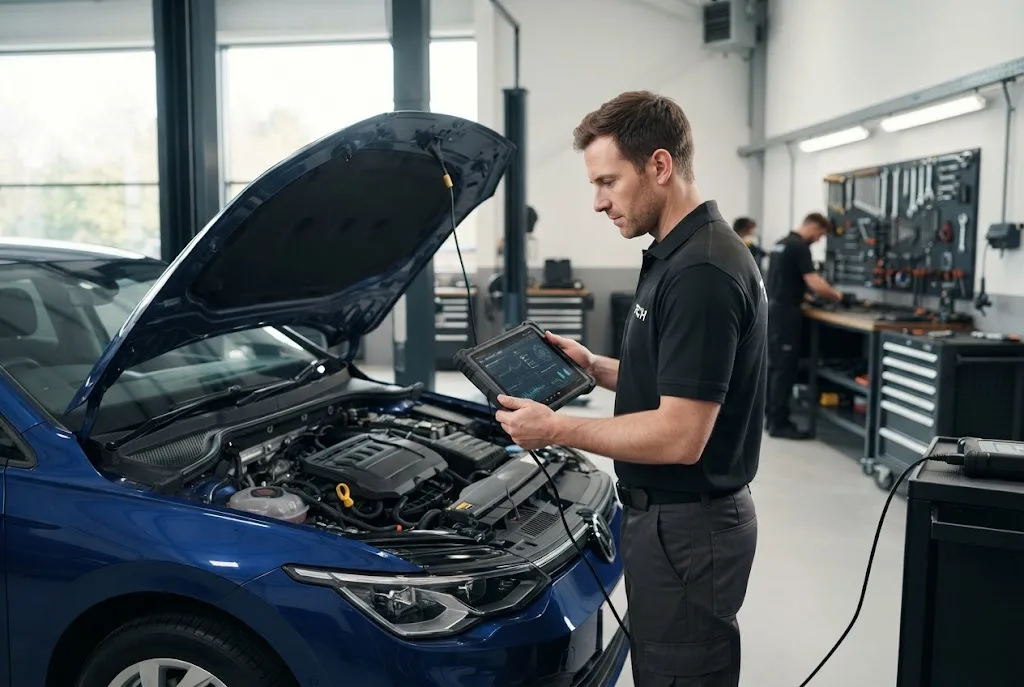
Modern auto repair services are changing as vehicles become more connected, software-driven and dependent on electronic systems. Today’s repair process can involve much more than replacing a worn component. Technicians may use automated diagnostics, digital service records, connected vehicle data and intelligent software to identify problems and plan repairs more efficiently.
Artificial intelligence and machine learning are becoming part of this wider transformation. While traditional mechanical expertise remains essential, automotive AI can help technicians analyse information, identify patterns and make more informed repair decisions. The result is a repair environment where digital tools support, rather than replace, professional automotive knowledge.
How Auto Repair Services Are Becoming More Intelligent
Traditional repairs often begin when a driver notices a symptom or a dashboard warning. A technician then investigates the issue, performs diagnostic tests and determines which components require attention.
Modern auto repair services can add another layer of information to this process. Diagnostic equipment can communicate with vehicle control systems, while workshop software can combine inspection findings, service history and repair information in a single digital workflow.
This creates a more connected repair process. Instead of treating each workshop visit as an isolated event, technicians can use historical information to understand what has already been inspected, repaired or replaced.
What Are Intelligent Repair Systems?
Intelligent repair systems use software and data analysis to assist automotive professionals with tasks involved in diagnosis, maintenance and repair planning. Depending on the system, this may include interpreting diagnostic information, organising repair information or highlighting patterns that deserve further investigation.
The goal is not necessarily to automate every repair decision. Vehicles remain complex mechanical and electronic systems, and a diagnostic result still needs to be interpreted in context.
Instead, intelligent tools can reduce some of the time spent gathering and organising information. A technician can then focus more attention on physical testing, component inspection and the actual repair.
AI Repair Recommendations and Automated Diagnostics
AI repair recommendations can use available vehicle information to suggest areas that may require investigation. For example, a system could analyse diagnostic data and previous service information before presenting possible causes or recommended next steps.
Automated diagnostics can similarly help structure the initial diagnostic process. A scan may identify stored fault codes, sensor readings or system abnormalities that give the technician a starting point.
However, an automated recommendation should not automatically be treated as a confirmed fault. Different problems can produce similar symptoms or diagnostic codes. Professional verification remains important before parts are replaced or significant repairs are undertaken.
This distinction is particularly important for customers. A sophisticated diagnostic system can provide useful evidence, but responsible repair decisions should still be based on appropriate testing and qualified technical judgement.
Predictive Maintenance for Modern Vehicles
Predictive maintenance shifts the focus from repairing a problem after failure to identifying potential deterioration earlier.
Connected vehicles can generate substantial amounts of operational information. Where suitable systems are available, software may analyse patterns relating to vehicle usage, system performance or component behaviour. This information can potentially support maintenance planning before a developing issue becomes a roadside breakdown.
Predictive maintenance is particularly relevant to vehicles that accumulate high mileage or operate frequently. For businesses managing multiple vehicles, identifying maintenance requirements early can help with scheduling and operational planning.
For individual motorists, the concept can also support a more proactive approach to servicing. Rather than relying entirely on a warning light, drivers can combine scheduled servicing, inspection results and appropriate diagnostic information when considering vehicle maintenance.
Smart Servicing and Digital Repair Workflows
Smart servicing brings diagnostic information, inspection records and workshop administration together. Instead of maintaining separate paper documents for each stage of a job, a garage can use a digital repair workflow to connect customer details, vehicle information, inspection findings, parts and technician notes.
This can make the repair process easier to track from booking through to completion.
For example, a typical digital workflow might include:
- Recording the customer’s vehicle and service requirements.
- Scheduling the workshop appointment.
- Completing a digital vehicle inspection.
- Recording diagnostic findings and technician observations.
- Preparing repair recommendations.
- Tracking approved work and replacement parts.
- Updating the vehicle’s digital service history.
- Closing the job and retaining relevant records for future visits.
Connecting these steps can reduce duplicated data entry and make information easier for technicians and service staff to access.
Workshop AI and Machine Learning for Vehicles
Workshop AI can support garages in several areas beyond fault diagnosis. Machine learning for vehicles and automotive operations can be applied to pattern recognition, predictive maintenance, workflow optimisation and analysis of historical service information.
The usefulness of these systems depends on the quality and relevance of their data. A poorly configured system or incomplete service history can produce recommendations that need additional verification.
That is why effective automotive AI should be viewed as part of a broader technical ecosystem. Diagnostic hardware, vehicle data, technician expertise and workshop processes all contribute to the quality of the final repair decision.
AI Diagnostics and the Role of Technicians
AI does not eliminate the need for experienced technicians. In many situations, it changes how their expertise is applied.
A technician can use diagnostic software to obtain information more quickly, then apply practical knowledge to determine whether the suggested cause makes sense. Physical inspection, electrical testing, component measurements and road testing may still be necessary.
This human-and-machine combination is particularly useful when a vehicle has multiple symptoms or intermittent faults. Software can help organise large amounts of information, while the technician provides the real-world interpretation needed to confirm the problem.
How Digital Data Can Improve the Customer Experience
Technology can also change how customers interact with auto repair services.
Digital inspection reports can make it easier for a garage to communicate what technicians have found. Photographs, notes and recommendations can provide customers with a clearer explanation of why particular work has been suggested.
A digital record can also make future visits more informed. If the same vehicle returns later, the garage may be able to review previous inspection information and repair history rather than starting with an entirely blank record.
This connects closely with auto inspection services, where digital inspections and vehicle diagnostics can provide important information before repair decisions are made.
Connecting Repairs With Vehicle Maintenance
Repair and maintenance are closely connected. A diagnostic system may identify a problem that requires immediate attention, while other information can help identify maintenance tasks that should be planned later.
For example, a garage may use inspection findings alongside service records to distinguish between an urgent repair and routine maintenance. This approach can help customers understand what needs attention now and what can be scheduled as part of ongoing vehicle care.
As connected technology develops, this relationship will become even more important. Vehicle maintenance platforms can potentially receive information from connected vehicles and combine it with service records, creating a more continuous picture of vehicle condition.
That is where technologies such as vehicle maintenance systems and connected monitoring can complement modern repair operations.
Challenges of AI-Powered Auto Repair
Despite its potential, automotive AI has limitations.
Vehicle data can vary significantly between makes, models and generations. Older vehicles may provide less electronic information than newer connected vehicles. Diagnostic equipment also differs in capability, while software recommendations depend on how accurately the available data represents the vehicle’s actual condition.
Privacy and data management are additional considerations when vehicles transmit information to external platforms. Garages and technology providers need appropriate processes for handling customer and vehicle information.
Most importantly, AI recommendations should not encourage unnecessary parts replacement. Proper diagnosis still requires evidence. The purpose of intelligent software should be to support a reliable repair process, not to turn assumptions into repairs.
The Future of Auto Repair Services
The future of auto repair services is likely to combine increasingly capable diagnostic technology with skilled human technicians. AI may help process vehicle data, identify patterns and support maintenance planning, while technicians continue to perform inspections, verify faults and complete physical repairs.
Connected vehicles may also make the repair process more proactive. Instead of waiting for a driver to report every issue, suitable systems could provide maintenance alerts or diagnostic information that helps a workshop prepare before the vehicle arrives.
For garages, this shift also creates a reason to modernise their operational systems. Digital repair management, customer records and workshop automation can help businesses handle increasingly data-rich vehicles without allowing administrative work to become disconnected from technical operations.
Ultimately, automotive AI is most useful when it improves the information available to people making repair decisions. When intelligent software, accurate diagnostics, structured digital workflows and professional expertise work together, vehicle repairs can become more informed and easier to manage.
For drivers, the important development is not simply that vehicles are becoming more intelligent. It is that the information generated by those vehicles can increasingly become part of a connected approach to inspection, repair and long-term maintenance.
