

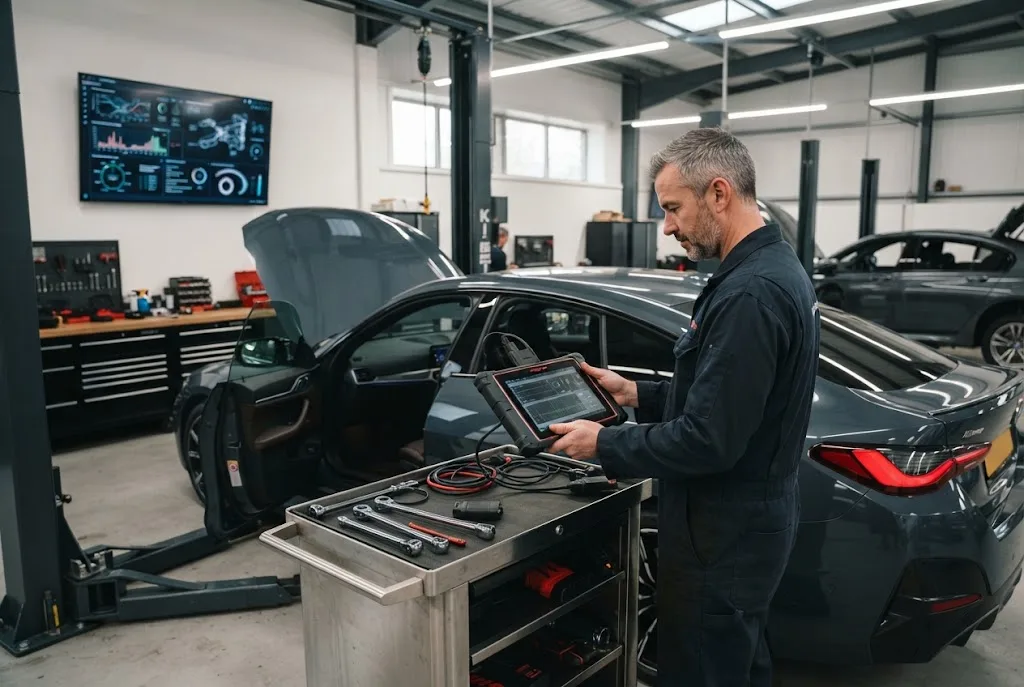
Vehicle diagnostics has become an increasingly important part of modern automotive maintenance. Today’s cars contain complex electronic systems, sensors and control units that generate information about how the vehicle is operating. When this information is combined with professional inspection and maintenance records, it can help technicians investigate faults, identify potential maintenance requirements and make better-informed repair decisions.
Diagnostic technology is also moving beyond the traditional process of connecting a scan tool to a vehicle. Digital platforms can organise diagnostic information, connect it with previous service records and provide businesses with broader maintenance data. For workshops, fleets and vehicle owners, this creates opportunities for more organised and proactive vehicle care.
However, diagnostic data should always be interpreted in context. A fault code does not necessarily identify the complete cause of a problem, and software cannot replace appropriate testing or qualified technical judgement.
What Is Vehicle Diagnostics?
Vehicle diagnostics is the process of examining information generated by a vehicle’s electronic systems to help identify faults, abnormal behaviour or maintenance requirements.
Modern vehicles use electronic control units and sensors to monitor many aspects of operation. When a system detects an abnormal condition, it may store diagnostic information that can be retrieved using appropriate equipment.
A technician can use this information as part of a broader diagnostic process. Depending on the fault, further physical inspection, measurements or component testing may be necessary before a repair decision is made.
This distinction matters because diagnostic technology provides information rather than an automatic answer. The technician’s interpretation remains an important part of accurate vehicle repair.
How Modern Vehicle Diagnostics Has Evolved
Traditional diagnostics often focused on retrieving fault information after a warning light appeared. Modern systems can provide a much broader view of vehicle behaviour.
Connected vehicles can generate large amounts of information relating to performance, system status and maintenance. When that information is stored consistently, it can potentially be analysed over time rather than considered only during an individual workshop visit.
This development connects with the broader growth of AI-powered auto services, where vehicle information can support automated workflows, maintenance scheduling and intelligent service management.
The result is a shift from isolated diagnostic events towards a more continuous approach to vehicle information and maintenance.
Diagnostic Analytics and Maintenance Data
Diagnostic analytics involves turning vehicle information into useful insights. A workshop may have access to diagnostic records, service history, inspection findings and previous repairs for the same vehicle.
When this information is organised properly, technicians and service advisers can gain a better understanding of the vehicle’s maintenance history.
For example, repeated diagnostic events may indicate that a vehicle has experienced a recurring issue. Reviewing the historical information can provide useful context before another repair is undertaken.
Maintenance data can also help businesses identify patterns across larger groups of vehicles. A fleet operator may discover that certain vehicles require particular maintenance more frequently, while a garage network may identify recurring service trends across its customer base.
Predictive Maintenance and Vehicle Data
Predictive maintenance aims to use available information to identify potential maintenance requirements before a failure becomes more serious. It differs from basic preventive maintenance, which generally follows a predetermined schedule.
With predictive approaches, data can potentially be analysed for patterns that indicate changing vehicle conditions. Depending on the quality and availability of the data, this may help service teams prioritise inspections or investigate potential issues earlier.
Predictive maintenance should not be treated as a guarantee. Vehicles can develop unexpected faults, and predictions are only as reliable as the information and analytical methods behind them.
Nevertheless, predictive approaches can complement routine servicing by adding another layer of information to the maintenance process.
How Connected Vehicle Analytics Supports Maintenance
Connected vehicle analytics expands diagnostic analysis beyond an individual workshop appointment. Instead of considering only what happens when a vehicle arrives at a garage, connected systems can potentially provide information across its operating life.
This can be useful for fleets where many vehicles generate maintenance information every day. Centralised analytics can help managers understand vehicle activity and identify maintenance trends across the fleet.
For individual motorists, connected information can also support digital service records and maintenance reminders. When appropriate data is available, the service platform can create a more complete picture of the vehicle’s maintenance journey.
This broader digital approach complements the development of digital car service plans, where maintenance schedules, service records and reminders can be connected through one ownership experience.
Vehicle Performance Reports
Vehicle performance reports can help translate technical information into a format that is easier for customers, fleet managers and service teams to understand.
A report might summarise completed maintenance, diagnostic findings, upcoming service requirements or other relevant vehicle information. The exact content depends on the system and the purpose of the report.
For customers, clear reporting can make conversations with service advisers easier. Instead of receiving only a technical explanation, the driver can be shown relevant information about what was inspected and why further work may be recommended.
For fleet managers, reports can provide a broader operational view. They can compare maintenance activity across vehicles and identify units that may require additional attention.
Repair Intelligence and Better Workshop Decisions
Repair intelligence refers to using organised information to support repair and maintenance decisions. It does not mean that software independently decides what should be repaired.
A technician can use diagnostic information, previous service records and inspection findings to build a more complete picture of a vehicle’s condition.
Historical information can be particularly valuable when a vehicle has experienced repeated symptoms. Knowing what has already been inspected or replaced can help technicians avoid unnecessary duplication and focus further testing appropriately.
As service platforms become more sophisticated, repair intelligence can also support service advisers. They can access clearer information when explaining a recommended repair to a customer.
AI Dashboards for Automotive Businesses
AI dashboards can provide automotive businesses with a central view of selected maintenance and operational information. Instead of examining separate spreadsheets or reports, managers can use dashboards to monitor relevant trends.
Depending on the system, an automotive dashboard could display information relating to:
- Upcoming maintenance requirements
- Diagnostic events
- Vehicle service history
- Recurring repair patterns
- Workshop activity
- Fleet maintenance trends
- Customer service activity
The value of a dashboard depends on the quality of its underlying data. A visually impressive dashboard does not automatically produce useful decisions if the information feeding it is incomplete, inconsistent or inaccurate.
Vehicle Diagnostics for Fleet Operators
Fleet operators have particular reasons to invest in better diagnostic and maintenance data. A fleet may contain dozens, hundreds or even thousands of vehicles operating across different locations.
Without organised information, it can become difficult to identify which vehicles require attention and when. Centralised fleet analytics can help managers create a clearer overview of maintenance activity.
Fleet operators can potentially use diagnostic information alongside mileage, service history and operational data to prioritise maintenance work.
Mobile servicing can complement this approach. A suitable mobile auto service can bring maintenance or diagnostic support directly to a vehicle’s location, potentially reducing unnecessary movement and downtime for suitable jobs.
The Role of Data Quality in Vehicle Diagnostics
Accurate data is fundamental to useful diagnostic analytics. If vehicle information is incomplete or entered incorrectly, the resulting analysis may be misleading.
Workshops should therefore establish consistent processes for recording diagnostic findings, service work and inspection results. Technicians should have appropriate training and systems should make it easy to enter information correctly.
Data should also be kept secure. Vehicle records may be associated with customer information, meaning businesses need suitable access controls and data-management practices.
The UK’s Information Commissioner’s Office provides guidance on data protection principles that businesses should consider when processing personal information. [ICO data protection principles](https://ico.org.uk/for-organisations/uk-gdpr-guidance-and-resources/data-protection-principles-a-guide-to-the-data-protection-principles/)
Can AI Replace Automotive Technicians?
AI can support diagnostic processes, but replacing qualified technicians entirely is a different proposition. Vehicle faults often require physical inspection, practical testing and knowledge of how different components interact.
An algorithm may identify an unusual pattern, but a technician must still determine whether that pattern represents a genuine fault, a sensor issue or another underlying problem.
The most practical use of AI is therefore as a decision-support tool. It can organise information, identify patterns and surface potentially relevant details while technicians remain responsible for professional assessment.
Vehicle Diagnostics and Hybrid Cars
Hybrid vehicles combine different powertrain technologies, creating additional diagnostic considerations. Their systems can include an internal combustion engine alongside electric drive components and high-voltage systems.
Appropriate training and equipment are essential when working with these vehicles. A diagnostic platform can provide useful information, but technicians still need the expertise required to interpret that information safely.
Our guide to hybrid servicing explores how hybrid technology affects maintenance and servicing requirements.
Vehicle Diagnostics and Electric Vehicles
Electric vehicles have different maintenance characteristics from conventional cars. They do not have the same engine-related servicing requirements, but they still contain sophisticated electronic systems, battery technology, thermal management components and other systems that require appropriate technical knowledge.
Diagnostic information can therefore play an important role in understanding EV system status and investigating potential faults.
As EV adoption develops, service providers will need suitable equipment, training and procedures. Our EV servicing guide provides further information about the changing maintenance landscape.
Benefits of Better Diagnostic Analytics
When implemented correctly, diagnostic analytics can provide several benefits for automotive businesses.
More organised information
Structured diagnostic and maintenance records make it easier to understand a vehicle’s history.
Faster access to relevant data
Technicians and service advisers can spend less time searching through disconnected records.
Improved maintenance planning
Historical patterns can help businesses identify vehicles that may require additional attention.
Better customer communication
Clearer reports can make technical information easier for service advisers to explain to customers.
Fleet visibility
Centralised data can help fleet operators understand maintenance activity across multiple vehicles.
Potentially more proactive servicing
Where reliable data is available, predictive approaches can help identify potential maintenance needs earlier.
Challenges of Automotive Data and Analytics
Greater access to vehicle data also introduces challenges. Automotive businesses need to consider data accuracy, cybersecurity, privacy, system integration and staff training.
Different platforms may store information in different formats, making integration difficult. Businesses should therefore consider whether new diagnostic systems can communicate effectively with their existing workshop management, booking and customer systems.
There is also a risk of over-relying on automated recommendations. Technology should support professional decisions rather than encourage technicians to accept every algorithmic suggestion without verification.
Transparency is equally important when customers are affected by data-driven recommendations. Service providers should be able to explain the basis for significant maintenance recommendations in a clear and understandable way.
The Future of Vehicle Diagnostics
The future of vehicle diagnostics is likely to involve increasingly connected systems. Diagnostic information, maintenance records, service plans, digital booking and workshop management can increasingly operate as parts of the same automotive ecosystem.
Artificial intelligence may help identify patterns across larger datasets, while cloud platforms can make information available to authorised users across locations.
This development is closely related to the wider growth of cloud-based automotive service platforms, which are helping workshops connect customer, vehicle and operational information.
For motorists, the ultimate benefit may be a more proactive ownership experience. For automotive businesses, the opportunity is to make maintenance decisions more informed and operational processes more efficient.
How Garages Can Prepare for Data-Driven Diagnostics
Garages do not need to implement every new technology at once. A practical starting point is to improve the quality and consistency of existing vehicle records.
Businesses can then evaluate diagnostic tools and service platforms according to their actual workflow. Integration should be a key consideration because a diagnostic system becomes more valuable when relevant information can be connected with service history, bookings and customer records.
Staff training should receive equal attention. Technicians need to understand what diagnostic information means and how it should be verified, while service advisers need to communicate technical findings accurately.
Finally, businesses should regularly review data security and access controls as their digital automotive systems expand.
Final Thoughts
Vehicle diagnostics is evolving from a relatively isolated fault-finding process into a broader data-driven part of modern automotive maintenance. Diagnostic analytics, predictive maintenance, connected vehicle information and AI dashboards can help workshops and fleets organise information and identify useful patterns.
The technology is most effective when combined with experienced technicians and reliable maintenance processes. AI can highlight information, analytics can reveal patterns and digital platforms can connect records, but professional inspection remains essential.
As vehicles and workshops become increasingly connected, better use of diagnostic data can support a more proactive, transparent and efficient approach to vehicle maintenance across the UK.
