

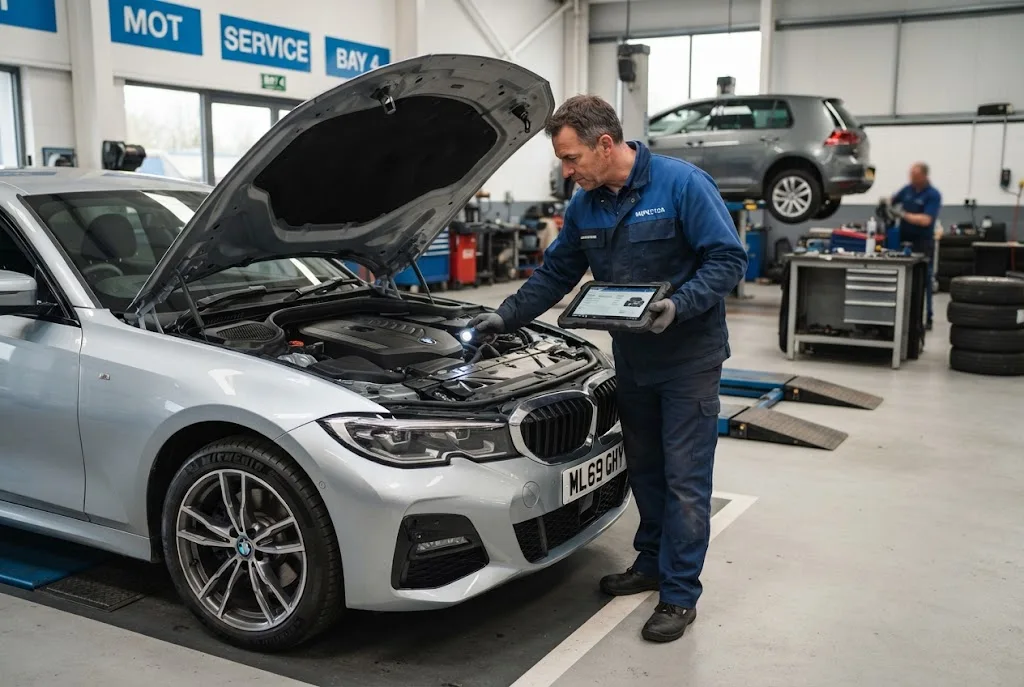
A vehicle inspection can give UK car buyers valuable information before they commit to a used vehicle. A seller’s description, photographs and service records can provide useful clues, but they may not reveal every mechanical, structural or electrical issue. An independent inspection adds another layer of evidence by examining the vehicle itself and, depending on the inspection level, testing important systems during a road test.
Buying a used car is a significant financial decision. Even a vehicle that looks excellent from the outside may have problems that are difficult to identify without professional knowledge or diagnostic equipment. A proper inspection can therefore help buyers understand the condition of a vehicle, identify potential repair costs and make a more informed purchasing decision.
What Is a Vehicle Inspection?
A vehicle inspection is a structured assessment of a car’s condition. The exact checks depend on the provider and inspection package, but professional inspections can cover mechanical components, structural areas, bodywork, electrical controls, wheels, tyres, brakes and other important systems.
Some inspections also include a road test. This gives the inspector an opportunity to assess how the vehicle behaves while driving, including areas such as steering, braking, suspension, gearbox operation and general handling.
The purpose is not simply to produce a pass-or-fail result. A useful inspection should give the buyer a clearer understanding of the vehicle’s current condition and highlight areas that may require attention.
Why a Vehicle Inspection Matters Before Buying
A pre-purchase inspection can be particularly valuable when buying a used car privately or from a source where the buyer has limited knowledge of the vehicle’s previous condition.
Visual checks can identify obvious damage, but some problems require more detailed examination. A vehicle may have worn suspension components, developing mechanical faults, corrosion, electrical issues or other defects that are not immediately obvious during a short viewing.
An independent assessment can also change the buying decision. If significant problems are identified, the buyer may decide to negotiate the price, request repairs or walk away from the vehicle altogether.
This makes an inspection useful not only for identifying faults but also for reducing uncertainty before a large financial commitment.
What Does a Professional Vehicle Inspection Check?
Inspection packages vary, so buyers should always check exactly what is included before booking. Professional inspection services can examine a broad range of vehicle areas.
For example, an inspection may cover:
- Exterior bodywork and visible damage.
- Paintwork and evidence of previous repairs.
- Engine compartment and fluid-related issues.
- Electrical systems and vehicle controls.
- Suspension and steering components.
- Brakes and related components.
- Wheels and tyres.
- Exhaust and fuel systems.
- Interior condition and controls.
- Underbody and structural areas.
- Warning lights and selected diagnostic information.
- Vehicle behaviour during a road test.
The RAC, for example, currently offers Basic, Comprehensive and Advanced inspection levels. Its Comprehensive inspection includes a 307-point mechanical and structural check, while its Advanced package adds diagnostic checks, an extended road test, brake fluid analysis and vehicle photographs. :contentReference[oaicite:0]{index=0}
Vehicle Inspection vs MOT Test
A common mistake is assuming that a current MOT means a used car does not need an additional inspection. The two serve different purposes.
An MOT is a legally required test for most vehicles once they reach the applicable age. It assesses whether the vehicle meets specific safety and environmental requirements at the time of the test.
A pre-purchase inspection is broader in purpose. It is intended to help a potential buyer understand the overall condition of a vehicle before purchase. Depending on the inspection, it may examine areas that are not covered in the same way by an MOT.
A car can therefore have a valid MOT and still benefit from an independent inspection before a purchase. Buyers should consider both the MOT history and the vehicle’s current physical and mechanical condition.
Digital Inspection Is Changing the Buying Process
Digital inspection technology is making vehicle assessments easier to document and share. Instead of relying entirely on handwritten workshop notes, inspectors can use digital systems to record findings, attach photographs and produce electronic reports.
For buyers, digital reporting can make information easier to review after the inspection. A report can be stored electronically and compared with other information about the vehicle before making a final decision.
Digital inspections can also improve consistency within automotive businesses. Inspection software can guide technicians through predefined checks, record results and create a structured report for the customer.
However, the quality of the inspection still depends on the person carrying it out and the scope of the assessment. Digital reporting is a useful tool, but it does not automatically make an inspection comprehensive.
Why Vehicle History Matters Alongside an Inspection
A physical inspection tells you about the vehicle’s condition, while a vehicle history check can reveal information that may not be visible during an inspection.
Depending on the service used, a history report can provide information about recorded mileage, outstanding finance, theft records, write-off history, registration changes and other data. RAC’s current vehicle history service, for example, includes checks relating to finance, theft, write-offs and mileage discrepancies, alongside other vehicle information. :contentReference[oaicite:1]{index=1}
This distinction is important. A car may look mechanically sound while its history raises questions about previous ownership or recorded events. Conversely, a clean history report does not guarantee that the vehicle is mechanically perfect today.
For this reason, the strongest approach is to combine history information with a physical inspection and a review of the vehicle’s documentation.
Check the Service History Too
The service history can help buyers understand how a vehicle has been maintained over its life. Look for evidence of routine servicing, major component replacement and other significant maintenance work.
Service records should be considered alongside mileage and the vehicle’s age. A pattern of regular maintenance can provide useful context, while gaps or inconsistencies may justify additional questions.
Buyers should also compare the information in the service documentation with the vehicle itself. Mileage shown in records should make sense when considered alongside the current odometer reading and other available information.
RAC’s guidance on checking car history recommends reviewing documents such as the V5C, service history and MOT information when assessing a used vehicle. :contentReference[oaicite:2]{index=2}
AA Inspection and RAC Inspection: What Should Buyers Compare?
People researching a used vehicle may come across services described as an AA inspection or RAC inspection. The important point is to compare the actual inspection scope rather than choosing a provider based only on the brand name.
Look at the number and type of checks included, whether the inspection includes a road test, whether diagnostic equipment is used, whether photographs are supplied and how the findings are presented.
An RAC inspection currently offers different levels, with the more comprehensive options providing broader mechanical and structural checks. Its inspection information also shows that packages can differ in road-test length and whether diagnostic checks or photographs are included. :contentReference[oaicite:3]{index=3}
Whatever provider you choose, read the inspection terms carefully. Some vehicle types or conditions may have different eligibility requirements, and an inspection may have limitations that affect what the engineer can assess.
When Should You Arrange a Pre-Purchase Inspection?
A pre-purchase inspection is most useful before you make an irreversible commitment to buy. Ideally, the inspection should take place after you have found a vehicle that interests you but before you complete the purchase.
This is particularly sensible when:
- You are buying an expensive used vehicle.
- The vehicle is relatively old or has high mileage.
- You cannot confidently assess mechanical condition yourself.
- The car has limited or incomplete service documentation.
- The seller is located some distance away.
- You notice unusual noises, vibrations or warning lights.
- The vehicle has a history of repairs or previous damage.
- You are considering a private sale.
If the seller refuses a reasonable independent inspection, buyers should consider why. It does not automatically prove that something is wrong, but it can be a useful warning sign when combined with other concerns.
Can an Inspection Help With Negotiation?
Yes, an inspection report can provide useful evidence during price negotiations. Instead of simply telling a seller that the car seems expensive, a buyer can discuss specific issues identified during the assessment.
For example, if tyres are approaching replacement, suspension components show wear or other maintenance is likely to be required, those findings can be considered when assessing the vehicle’s overall value.
This does not mean every identified issue should result in a pound-for-pound price reduction. Used cars naturally have some wear, and the significance of a finding depends on the vehicle’s age, mileage, condition and asking price.
The value of the inspection is that it gives the buyer more information with which to make the decision.
Inspection Findings and Future Repair Costs
One of the biggest benefits of an inspection is understanding potential future expenditure. A report may identify components that are currently serviceable but showing signs of wear, as well as defects requiring more immediate attention.
This information can help buyers plan realistically. If a vehicle requires substantial work soon after purchase, the actual cost of ownership could be much higher than the advertised purchase price.
For unexpected repair expenses, buyers can also explore options such as repair finance. However, financing a repair should be considered carefully, particularly when the repair cost is significant compared with the value of the vehicle.
Don’t Forget the Tyres and Wheels
Tyres deserve specific attention during any used-car assessment. Check their tread condition, visible damage, wear pattern and pressure. Uneven wear can sometimes provide clues about alignment, suspension or other issues.
Modern vehicles may also have tyre pressure monitoring systems. Understanding how these systems work can be useful when evaluating a vehicle with connected tyre technology. Our guide to tyre services and smart tyre technology explains how tyre monitoring, pressure sensors and predictive maintenance are becoming part of modern vehicle care.
Again, electronic warnings should complement rather than replace a physical inspection. A tyre can have a sensor that reports pressure correctly while still requiring attention because of tread wear or visible damage.
How to Prepare for a Vehicle Inspection
If you are arranging an inspection, collect as much information about the vehicle as possible beforehand. Have the registration number, seller details and location available if the inspection provider requires them.
Ask what the inspection covers and whether the report will include photographs, diagnostic information or a road test. If you have specific concerns, such as an unusual noise or previous accident damage, tell the inspection provider so you understand whether those areas can be assessed.
It is also sensible to request access to the vehicle’s documentation. A professional inspection should be considered one part of the wider buying process rather than the only source of information.
What a Vehicle Inspection Cannot Guarantee
No inspection can guarantee that a vehicle will remain trouble-free after purchase. Cars contain many components, and some faults can develop after the inspection has been completed.
An inspection is also limited by the condition in which the vehicle is presented and the scope of the service. Certain components may not be accessible without dismantling, while some intermittent faults may not appear during a short assessment.
That is why buyers should read the inspection report carefully and understand any limitations or exclusions. A professional report should help reduce uncertainty, not create unrealistic expectations.
A Smarter Way to Buy a Used Car
A vehicle inspection can be one of the most useful checks a UK buyer makes before purchasing a used car. It provides an opportunity to identify mechanical, structural and cosmetic concerns that may not be obvious during a normal viewing.
The strongest buying process combines several sources of information: a professional inspection, vehicle history, service records, MOT information and a careful review of the seller’s documentation. Each source answers different questions, and together they create a much clearer picture of the vehicle.
Digital inspection systems are making reports easier to document and share, while established inspection services can provide structured mechanical and road-test assessments. For buyers, the objective remains simple: understand what you are buying before you commit your money.
Taking this extra step can help you identify potential costs, negotiate from a stronger position and avoid purchasing a vehicle whose condition does not match the seller’s description or your expectations.
