

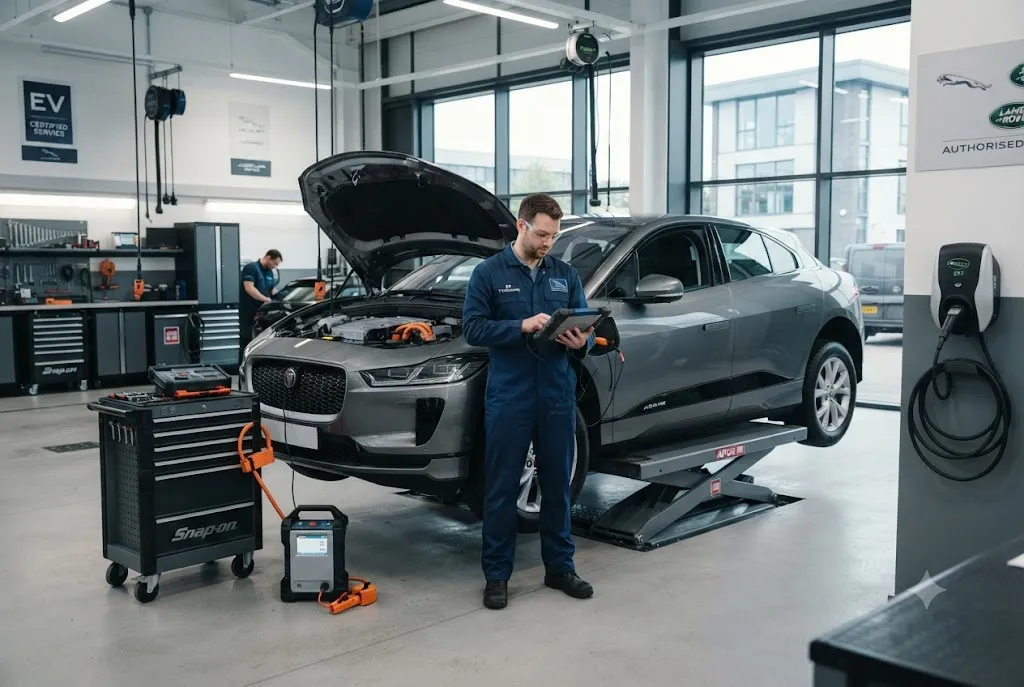
EV servicing is becoming an increasingly important part of the UK automotive aftermarket as more motorists switch to fully electric vehicles. Electric cars do not have conventional combustion engines, but they still require professional maintenance, inspections, diagnostics and repairs. Their different powertrains simply change the type of work technicians need to perform.
Modern electric vehicles combine high-voltage batteries, electric motors, power electronics, thermal management systems, software and connected technology. As a result, servicing an EV requires a different combination of mechanical knowledge, electrical competence and digital diagnostic capability.
For drivers, choosing the right garage is therefore about more than finding a workshop that can change tyres or inspect brakes. EV owners should consider whether technicians have suitable training, equipment and experience for the type of work their vehicle requires.
What Is EV Servicing?
EV servicing is the maintenance and inspection of battery-electric vehicles. Unlike conventional servicing, there is no engine oil or combustion engine to maintain, but an electric vehicle still contains many components that require regular attention.
These can include tyres, brakes, suspension, steering, cooling systems, charging equipment, electrical components and high-voltage systems. The exact requirements depend on the vehicle manufacturer and model.
EV servicing may also involve electronic diagnostic checks. Because many electric vehicle functions are controlled by software and electronic modules, technicians can need specialist equipment to identify faults and understand system behaviour.
The correct service schedule should always come from the vehicle manufacturer. Drivers should not assume that every EV requires exactly the same maintenance routine.
How EV Servicing Differs from Conventional Car Maintenance
Electric vehicles remove several maintenance requirements associated with petrol and diesel engines. There is no engine oil to replace, no conventional exhaust system and no combustion engine air intake system to maintain in the same way.
However, removing those components does not mean an EV is maintenance-free.
Tyres still wear. Brake components still require inspection. Suspension components can deteriorate. Windscreen systems, lights, steering components and other road-safety systems still need attention.
Electric vehicles also introduce components that conventional vehicles do not have, including large traction batteries, electric motors, inverters and high-voltage cabling.
This creates a different servicing profile rather than eliminating the need for professional maintenance.
EV Mechanics Need New Technical Skills
EV mechanics need to understand both conventional vehicle systems and the electrical technology used by electric powertrains. The level of competence required depends on the work being performed.
The Health and Safety Executive states that electric and hybrid vehicles introduce additional workplace hazards and that people working on them may need wider skills, specialist tools and appropriate equipment. HSE also notes that high-voltage systems can present serious electrical risks. (HSE electric and hybrid vehicle guidance)
For routine maintenance that does not involve high-voltage systems, the required procedures may differ from work directly on the electrical powertrain. Technicians should therefore understand the limits of their competence and follow appropriate vehicle-specific procedures.
This distinction is important for garages because EV servicing covers a broad range of work. A technician inspecting tyres and brakes is performing a very different task from one diagnosing or repairing a high-voltage battery system.
What Is Checked During EV Servicing?
The precise inspection depends on the manufacturer’s service schedule, but several areas commonly remain important for electric vehicle owners.
Tyres
Tyres remain one of the most important safety components on an EV. Electric vehicles can be relatively heavy because of their battery packs, while instant electric torque can also affect how the vehicle is driven.
Technicians can inspect tyre condition, tread, pressures and signs of uneven wear. Correct tyre maintenance is essential for safety, efficiency and predictable handling.
Brakes
Regenerative braking allows an EV’s electric motor to contribute to deceleration. This can reduce reliance on conventional friction brakes during some driving conditions.
Nevertheless, brake discs, pads, callipers and other components still need appropriate inspection. Reduced use does not mean conventional brakes should be ignored.
Brake condition can be particularly important on vehicles that spend long periods using regenerative braking because components may experience different usage patterns compared with conventional cars.
Suspension and steering
Suspension and steering components remain fundamental to vehicle safety. Ball joints, bushes, dampers, steering components and related parts can wear regardless of whether a vehicle is powered by petrol, diesel or electricity.
A professional EV service should therefore retain a strong focus on conventional road-safety components as well as electric systems.
Charging equipment
Technicians may also need to inspect charging-related components where appropriate. Problems with charging cables, connectors or vehicle charging systems can affect how reliably an EV can be used.
Owners should report charging problems rather than repeatedly attempting to use equipment that appears damaged or faulty.
EV Diagnostics and Software
EV diagnostics are becoming central to modern electric vehicle maintenance. Electric cars use multiple electronic control units and sensors to manage propulsion, battery operation, thermal systems, charging and other vehicle functions.
Diagnostic equipment can help technicians retrieve fault information and investigate system behaviour. However, diagnostic codes should be interpreted rather than treated as automatic instructions to replace a particular component.
Modern EV diagnosis therefore combines digital information with technical knowledge. A technician may need to compare fault codes, system readings, vehicle symptoms and manufacturer procedures before deciding what repair is appropriate.
The growing importance of diagnostics also connects directly with automotive software. Workshop management platforms can record diagnostic findings and connect technical work with customer and vehicle records.
Understanding Battery Management Systems
Battery management systems are an important part of modern electric vehicle technology. The system helps monitor and control the battery so that its cells and modules operate within appropriate parameters.
A battery management system can monitor factors such as temperature, voltage and state-of-charge information. It can also help protect the battery from operating conditions that could cause damage.
Battery management technology is therefore closely connected to EV diagnostics. If the vehicle reports a battery-related problem, technicians may need to examine electronic data before determining the appropriate next step.
Not every battery issue means the entire battery pack needs replacing. Accurate diagnosis is important because a large traction battery is a complex system containing multiple components and control functions.
EV Battery Health and Maintenance
The traction battery is one of the most valuable components in an electric vehicle, so battery condition naturally matters to owners.
Battery health can be influenced by factors including vehicle design, usage patterns, temperature and charging behaviour. However, drivers should follow the manufacturer’s recommendations rather than relying on generic advice about charging routines.
Battery health information may also be available through vehicle software or diagnostic systems. Depending on the manufacturer, technicians may have access to additional data when investigating battery performance.
If an EV develops unusual charging behaviour, warning messages, unexpected range changes or other battery-related symptoms, professional diagnosis is preferable to guessing at the cause.
EV Servicing and Thermal Management
Electric vehicles generate heat even though they do not use a combustion engine. Batteries, motors, inverters and other electronic components can require thermal management to maintain suitable operating conditions.
Cooling systems can therefore remain important during EV servicing. Depending on the vehicle design, coolant circuits may serve different components and may have manufacturer-specific maintenance requirements.
Technicians should use vehicle-specific information when checking fluids or carrying out work on thermal management systems. A generic procedure may not be appropriate for every electric vehicle.
Charging Software and Connected EV Platforms
Software has become an important part of the electric vehicle ownership experience. Charging schedules, energy management, remote vehicle functions and charging information can all depend on software.
Charging software can also connect the vehicle with home chargers, public charging networks or mobile applications. This creates a broader digital ecosystem around the vehicle.
Connected EV platforms can provide information about charging status, battery state and vehicle condition. For workshops, this increasing connectivity means that technical service may involve more digital information than traditional mechanical servicing.
However, software should complement physical inspection rather than replace it. A vehicle can report useful electronic information while still requiring professional checks of tyres, brakes, suspension and other physical components.
Why EV Mechanics Need Specialist Diagnostic Equipment
Traditional mechanical tools remain useful in EV workshops, but they are not enough for every type of electric vehicle repair.
Specialist diagnostic equipment can help technicians communicate with vehicle control systems, retrieve fault information and investigate electronic problems. Appropriate electrical test equipment may also be required for certain work.
HSE guidance emphasises that people working with electric and hybrid vehicles may require specialist tools and equipment and that the level of competence depends on the type of work being undertaken. (HSE guidance on safe EV and hybrid work)
This makes technician training and equipment investment important considerations for garages that want to expand their EV capabilities.
High-Voltage Safety in EV Workshops
High-voltage safety is one of the biggest differences between EV servicing and conventional vehicle maintenance.
HSE states that electric and hybrid vehicles can contain high-voltage components and cabling capable of causing serious electric shock. It also explains that high-voltage systems should be isolated and proven dead before relevant work is carried out, following appropriate manufacturer procedures. (HSE electric vehicle safety guidance)
For this reason, high-voltage repairs should only be performed by people with the appropriate competence, training, equipment and procedures.
Workshops should also have reliable access to manufacturer-specific technical information. EV designs vary considerably, so the correct isolation points, procedures and safety measures can differ between models.
EV Servicing and MOT Requirements
Electric vehicles are still subject to MOT requirements where applicable. The MOT inspection includes checks relevant to electric and hybrid vehicles, including battery-related items.
GOV.UK guidance states that propulsion batteries in electric and hybrid vehicles carry high voltage and require additional care when they are being tested. It also provides inspection requirements for vehicle batteries within the MOT framework. (GOV.UK MOT inspection guidance)
An MOT should not, however, be confused with a full service. A current MOT certificate does not replace the manufacturer’s recommended maintenance schedule.
Drivers should continue to follow the vehicle manufacturer’s servicing requirements and arrange professional inspections when faults or unusual symptoms occur.
Choosing the Right Garage for EV Servicing
As electric vehicles become more common, more workshops are developing EV capabilities. However, motorists should still check whether a garage is equipped for the particular type of work required.
Before booking EV servicing, drivers may want to ask:
- Does the workshop regularly work on electric vehicles?
- Are technicians appropriately trained for the required work?
- Does the garage have suitable EV diagnostic equipment?
- Can it access manufacturer-specific technical information?
- Does it have suitable procedures for high-voltage systems?
- Can it diagnose charging or battery-related faults?
For basic maintenance such as tyres, brakes and suspension, the requirements can differ from high-voltage battery repair. Understanding this distinction can help owners choose a workshop that matches the actual job.
How EV Maintenance Software Supports Workshops
As EV workshops become more digitally focused, EV maintenance software can help organise the information generated during service and repair work.
A workshop may need to manage customer details, vehicle records, booking information, inspection results and repair notes. Connecting these elements can make it easier for technicians and service advisers to understand the history of a vehicle.
Digital records can also help businesses identify recurring issues and review workshop performance. For larger businesses, centralised information can provide management teams with greater visibility across multiple locations.
This is another reason modern garages are increasingly adopting connected garage chains and digital garage networks, where customer-facing platforms and workshop systems can work together.
EV Servicing and Digital Wheel Alignment
Not every important EV service is directly related to the battery or electric motor. Wheel alignment remains an important part of vehicle maintenance.
Incorrect alignment can contribute to uneven tyre wear and affect vehicle handling. Modern digital systems can help workshops measure wheel geometry accurately and provide technicians with data to guide adjustments.
Our guide to wheel alignment explains how digital alignment systems, sensors and wheel-tracking technology are changing this area of workshop maintenance.
Preparing the UK Automotive Aftermarket for EVs
The growth of electric vehicles is changing what workshops need to invest in. Traditional mechanical skills remain valuable, but they increasingly need to be complemented by electrical knowledge, digital diagnostics and high-voltage safety procedures.
Garage businesses may also need to review their equipment, staff training, workshop processes and customer communication systems.
For established garage chains, standardising EV procedures across locations can become particularly important. Consistent training, equipment and safety processes can help create a reliable service experience across a network.
Independent workshops also have opportunities to specialise. Developing genuine EV competence can allow a garage to serve customers who may have fewer local options for specialist electric vehicle work.
The Future of EV Servicing
EV servicing is likely to become increasingly connected as electric vehicles gain more software-driven functions.
Future workshops may work with greater quantities of diagnostic data, connected vehicle information and battery health measurements. Remote diagnostics and software updates may also influence how some vehicle issues are identified and resolved.
Even with these developments, physical vehicle maintenance will remain important. Tyres, brakes, suspension, steering and other components still require inspection and replacement when worn.
The future workshop is therefore likely to combine traditional mechanical inspection with electrical diagnostics, software and connected vehicle information.
Final Thoughts on EV Servicing
EV servicing is different from conventional vehicle maintenance, but it is not simply a matter of checking the battery. Electric vehicles require attention to tyres, brakes, suspension, steering, charging systems, thermal management, diagnostics and high-voltage components.
For motorists, the best approach is to follow the manufacturer’s service schedule and choose a workshop with suitable EV training, equipment and experience. For garages, developing the right combination of technical skills, safety procedures and digital capability will become increasingly important.
As the UK automotive market continues to adopt electric vehicles, EV servicing will become a core capability rather than a niche workshop service. Businesses that combine qualified EV mechanics with reliable diagnostics, battery expertise and connected workshop technology will be well positioned to support the next generation of motorists.
