

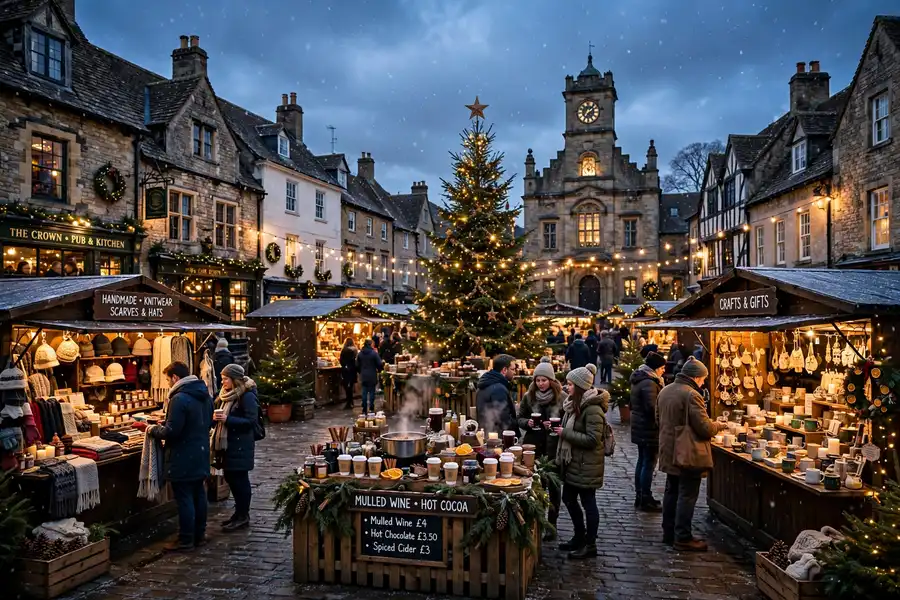
Every winter, town squares across the UK fill with wooden stalls, warm lights and the smell of mulled wine. UK Christmas markets have become a firm part of the season, and the best ones reward a little planning. This guide covers where to go, when to go and how to enjoy the markets without overspending or freezing.
A good market trip starts with timing. Weekday evenings are usually quieter than Saturday afternoons, and the first week of opening often feels calmer than the final weekend before Christmas. If you can only go at the weekend, arrive when the stalls open rather than at midday.
Which UK Christmas markets are worth the trip?
Manchester, Birmingham, Edinburgh and Bath run the largest markets, each with well over 100 stalls. Manchester spreads across several city centre squares, so it suits a full day out. Birmingham’s Frankfurt market is the biggest German-style market outside Germany and Austria, and it sits right beside the city’s craft market.
Smaller markets can be just as rewarding. York’s St Nicholas Fair fills a medieval street with local makers, while Winchester’s market sits in the cathedral close and feels more peaceful than the big city events. If you prefer food over shopping, look for markets that list their street food traders in advance and plan your meals around them.
Before you travel, check the market’s own website for opening dates. Most large markets open in mid-November and close a few days before Christmas, but dates shift each year. A quick check saves a wasted journey.
Plan your travel and stay
Many markets sit in city centres where parking is scarce and costly. Trains and park-and-ride services usually work better, and they let everyone in the group enjoy the mulled wine. If you are driving, read our UK road trip guide for planning a driving holiday that actually runs to schedule.
Staying overnight turns a rushed visit into a relaxed break. Book early, because hotels near the markets fill weeks ahead, and prices rise sharply in December. Our guide on how to choose a hotel in the UK explains what to check before you book, from cancellation terms to location.
If you are driving an electric car, plan charging stops before you leave. Cold weather shortens range, and city centre chargers can be busy on market weekends. Our EV software and smart mobility guide explains how drivers plan charging around a day out.
Eating and drinking at the markets
Food is half the pleasure. Bratwurst, hog roast, churros and hot chocolate are market staples, and most stalls now list allergens on request. Prices vary, so carry a mix of card and cash. Some smaller stalls still prefer cash, and card machines can struggle in cold weather.
Eating out at a market follows the same courtesy as any restaurant. If a stallholder or server goes out of their way for you, a small tip is welcome, though it is never expected at a takeaway stall. Our guide to restaurant tipping in the UK sets out when tipping makes sense and how much is normal.
One practical tip: eat before the evening rush. Queues for popular food stalls can pass 20 minutes after six o’clock, while the same stall may serve you in two minutes at four.
Buying gifts without the guesswork
Markets shine for gifts you cannot find on the high street. Handmade candles, local gin, knitted hats and wooden toys all make thoughtful presents. Set a budget before you arrive and stick to it, because it is easy to spend twice what you planned when every stall looks inviting.
If you are buying beauty gifts, try before you buy where the stall allows it. Many brands now let you test shades and scents through your phone, and our guide to virtual try-on technology explains how AR shopping works. For online gift hunting, live shopping for beauty and fashion shows how live streams can help you find presents without leaving home.
Keep receipts for anything you might return, and ask whether the stallholder trades online after the market closes. A surprising number do, which makes exchanges far easier.
Make the most of the day
Dress for standing outside. Warm layers, waterproof shoes and gloves matter more than style when you will be outdoors for three hours. A small backpack beats a shoulder bag, since it leaves both hands free for food and shopping.
Visit the market twice if you can: once in daylight to see the crafts properly, and once after dark when the lights come on. The same market feels like a different place in the evening, and the atmosphere is the part people remember most.
Finally, leave room in your plans for the unexpected. The best market memories often come from a stall you had not planned to visit, a local choir singing carols, or a quiet corner with a hot drink while the crowds pass by.
Markets beyond the big cities
The largest markets get the attention, but smaller towns often host the most charming events. Places like Bath, Winchester, York and Chester run markets that feel local rather than commercial, with makers from the surrounding area selling food, drink and crafts you will not find anywhere else.
Smaller markets also mean shorter queues and easier parking. If you dislike crowds, pick a market in a town rather than a city, and go on a weekday. You will still find mulled wine, handmade gifts and carol singers, but you will have room to enjoy them.
Some villages run one-day Christmas fairs rather than month-long markets. These are worth seeking out, since they often feature local schools, churches and charities. Check community noticeboards and local tourism websites, because these events rarely appear in national guides.
Whatever size of market you choose, the same planning rules apply. Check the dates, arrive early, and leave time to wander. A market rewards slow browsing far more than a rushed visit, and the smaller events often hide the best finds.
What to wear and carry
Comfort matters more than style at a winter market. Wear warm, waterproof shoes with good grip, since cobbled squares get slippery in rain or frost. Layer your clothing so you can adjust as you move between cold outdoor stalls and warm indoor cafes.
Carry a small backpack with water, a phone charger and a reusable cup. Many stalls now offer a discount if you bring your own cup for hot drinks, and it saves on single-use waste. Keep your wallet or phone in a zipped pocket, since crowded markets attract pickpockets like any busy place.
If you are shopping for larger items, bring a sturdy tote bag. Markets sell everything from wreaths to wooden toys, and paper carrier bags rarely survive a wet afternoon.
Your festive market plan
Pick one market, check its dates, book travel and a hotel early, set a gift budget, and dress warmly. Do those five things and the day largely takes care of itself. UK Christmas markets reward the visitors who arrive prepared and leave in no hurry, so give yourself the whole day and enjoy it.
